
Broward: 954-341-4323
Palm Beach: 561-558-0770

MEGA SHOWROOM:
9853 W. Sample Rd,
Coral Springs, FL 33065
HOURS: M-F: 9am-6pm SAT: 10am-4pm

Tag: central vacuum accessories

  • Vacuum Brush Roll Not Spinning? Powerhead Problems in Davie

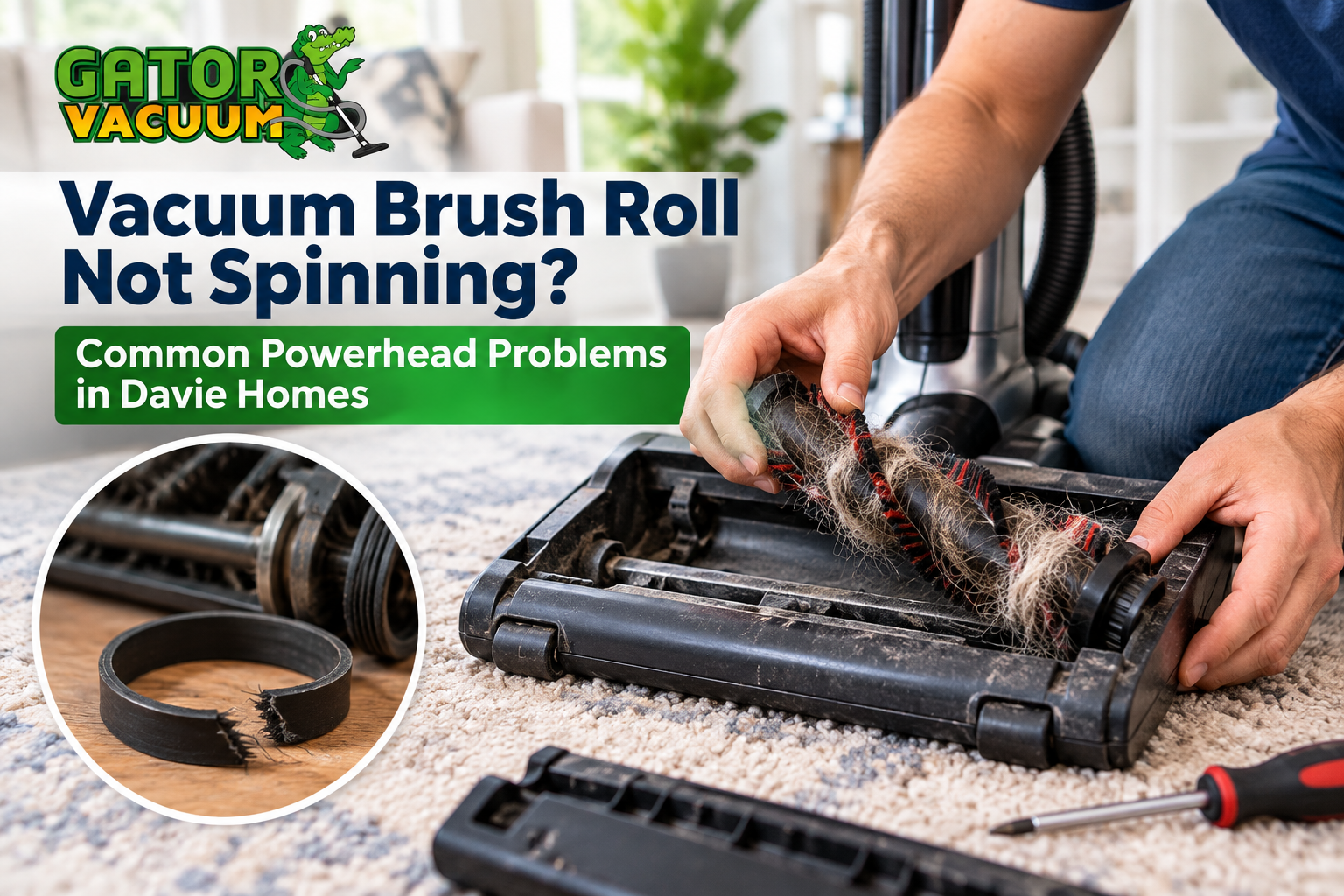
    Vacuum Brush Roll Not Spinning? Powerhead Problems in Davie

    Vacuum Brush Roll Not Spinning? Common Powerhead Problems in Davie Homes

    If your vacuum still has strong suction but your carpet suddenly is not getting clean, the problem may not be the vacuum motor or central vacuum system at all. In many cases, the real culprit is the powerhead brush roll.

    A vacuum powerhead is designed to do more than simply move across the floor. The rotating brush roll, powered by a separate motor or belt system depending on the powerhead design, agitates carpet fibers and helps loosen dirt, pet hair, dust, and debris so the vacuum can remove it more effectively.

    When the vacuum brush roll stops spinning, your vacuum may continue to run and still have excellent suction. However, cleaning performance can drop dramatically, especially on carpet.

    For homeowners in Davie, Florida, understanding the most common powerhead problems can help you determine whether your vacuum needs a simple cleaning, a replacement part, or professional vacuum repair.

    At Gator Vacuum & Sewing, we help homeowners troubleshoot and repair vacuum cleaners, central vacuum accessories, powerheads, hoses, and related components. If your powerhead has stopped working properly, the issue may be easier to fix than you think.

    What Does the Brush Roll Do?

    The brush roll is one of the most important components inside a powered vacuum head.

    As you push the powerhead across carpet, the brush roll spins rapidly. Bristles, agitators, or brush strips work their way through the carpet fibers to loosen debris. The vacuum’s suction then carries that loosened debris through the airflow system.

    This combination of agitation and suction is especially important for:

    • Carpeted bedrooms

    • Living rooms

    • Area rugs

    • Pet hair

    • Ground-in dirt

    • Fine debris trapped between carpet fibers

    • High-traffic areas

    When the brush roll stops spinning, the vacuum may sound like it is operating normally. You may even notice that the suction at the hose is still strong.

    But if the brush roll is not rotating, the powerhead is not doing its part.

    That is why one of the most common complaints we hear is:

    “My vacuum has suction, but it isn’t picking up the dirt like it used to.”

    In many cases, the powerhead is the first place to investigate.

    1. Hair and Debris Wrapped Around the Brush Roll

    One of the simplest—and most common—reasons a brush roll stops spinning is hair buildup.

    Long hair, pet hair, thread, string, carpet fibers, and other debris can become tightly wrapped around the ends of the brush roll. Over time, the buildup can create enough resistance to slow the brush roll or stop it completely.

    This is particularly common in homes with:

    • Dogs

    • Cats

    • Long-haired family members

    • Multiple pets

    • High-pile carpeting

    Hair may also wrap around the brush-roll bearings or end caps rather than simply collecting in the middle of the brush.

    If the brush roll is difficult to turn by hand when the powerhead is disconnected from the vacuum, debris may be preventing it from moving properly.

    Regularly checking and cleaning the brush roll can help prevent unnecessary wear.

    However, if the brush roll has already become damaged or the bearings have seized, cleaning alone may not solve the problem.

    2. A Stretched or Broken Powerhead Belt

    Some powered vacuum heads use a belt to transfer power from the motor to the brush roll.

    Over time, belts can stretch, crack, become brittle, or break.

    A stretched belt may allow the brush roll to turn, but not at the proper speed. In other cases, the brush roll may start spinning and then stop when it encounters resistance from carpet.

    A completely broken belt will usually result in a brush roll that does not move at all.

    You may hear the powerhead motor running while the brush remains stationary.

    That is a classic indication that the powerhead belt may be broken, stretched, or slipping.

    Replacing the belt can sometimes restore the powerhead to proper operation. However, it is important to use the correct belt for the specific powerhead. Installing the wrong belt can result in poor performance or premature failure.

    3. Worn Brush Roll Bearings

    The brush roll needs to rotate smoothly.

    At each end of the brush roll are components that allow it to rotate. Depending on the design, these may include bearings, bushings, end caps, or other supports.

    Over time, these components can wear out.

    When a brush-roll bearing begins to fail, you may notice:

    • A grinding sound

    • A squealing noise

    • Increased vibration

    • A brush roll that turns unevenly

    • The brush roll becoming difficult to turn

    • The powerhead shutting down when the brush encounters carpet

    A worn bearing can also put additional stress on the belt and powerhead motor.

    If you continue using the powerhead while the brush roll is binding, you may turn what could have been a relatively simple repair into a larger problem.

    4. Electrical Connection Problems

    Powered vacuum heads require electricity to operate the brush-roll motor.

    Depending on your vacuum system, power may travel through the hose, wand, electrical contacts, wiring, or connections inside the powerhead.

    A poor electrical connection can cause intermittent operation.

    For example, your powerhead may:

    • Work sometimes and stop other times

    • Start when the handle is moved into a certain position

    • Stop when the hose or wand moves

    • Have no brush-roll motor activity

    • Work briefly and then shut off

    Dirty, worn, loose, or damaged electrical contacts can interfere with the flow of electricity.

    This is one reason it is important not to immediately assume that a failed brush roll means the entire powerhead needs to be replaced.

    The problem could be an electrical connection, switch, wiring issue, or another replaceable component.

    5. A Failed Powerhead Switch

    Many powered vacuum heads have a switch that controls the brush-roll motor.

    A worn switch can eventually fail due to repeated use.

    If the switch no longer makes reliable electrical contact, the brush roll may not turn even though the vacuum itself continues to operate.

    A switch problem may be more likely if the powerhead has been used frequently for many years.

    You may notice that the powerhead works intermittently or that the brush roll starts and stops unexpectedly.

    Before replacing the entire powerhead, it can be worthwhile to have the switch and electrical circuit inspected.

    6. Powerhead Motor Problems

    The brush roll is typically driven by a motor inside the powerhead.

    Like any electric motor, it can eventually wear out.

    A failing powerhead motor may produce unusual noises, become excessively hot, operate intermittently, or fail to run at all.

    Motor problems can sometimes be caused by excessive resistance from a jammed brush roll. If hair and debris prevent the brush from rotating, the motor may have to work much harder than it was designed to.

    Over time, this additional load can contribute to motor wear.

    If the brush roll is clean, the belt is intact, the electrical connections appear normal, and the switch is functioning, the motor may need further testing.

    Depending on the powerhead, replacing the motor or another internal component may be possible.

    7. The Brush Roll Itself May Be Worn Out

    Sometimes the problem isn’t that the brush roll has stopped spinning.

    Instead, the brush roll may be spinning but no longer cleaning effectively.

    Brush strips and bristles wear down over time. The brush roll can also become damaged, bent, cracked, or worn at the ends.

    When the bristles become significantly worn, they may no longer agitate carpet effectively.

    This can be especially noticeable in homes with heavy carpet traffic.

    You may find that:

    • The brush roll spins but doesn’t pick up embedded debris

    • Carpet doesn’t look as clean after vacuuming

    • Pet hair remains behind

    • The vacuum needs multiple passes over the same area

    • The brush roll appears visibly worn

    Replacing a worn brush roll may restore the cleaning performance of the powerhead without requiring replacement of the entire unit.

    8. The Powerhead May Be Clogged

    While most people think about clogs inside the vacuum hose, the powerhead itself can also become obstructed.

    Debris can accumulate around the brush roll, intake opening, belt area, or other internal passages.

    A clog can restrict airflow and increase the load on the brush-roll system.

    If your powerhead suddenly becomes louder, stops spinning, or begins overheating, inspect it for visible obstructions.

    Always disconnect the powerhead from the vacuum system before attempting to remove debris or inspect moving components.

    How to Tell What Is Wrong With Your Powerhead

    If your vacuum brush roll is not spinning, start with a few basic observations.

    Check #1: Is the vacuum itself running?

    If the vacuum motor is running and you still have suction, the issue may be isolated to the powerhead.

    Check #2: Is the brush roll completely stationary?

    If the powerhead motor is running but the brush roll isn’t moving, a belt or mechanical problem may be responsible.

    Check #3: Does the brush roll turn freely?

    With the powerhead disconnected, carefully check whether the brush roll can rotate normally.

    If it is difficult to turn, look for wrapped hair, debris, or possible bearing problems.

    Check #4: Do you hear unusual noises?

    Grinding, squealing, clicking, or burning smells can indicate a mechanical or electrical problem.

    Check #5: Does the powerhead work intermittently?

    Intermittent operation can point toward a switch, electrical connection, wiring, or motor problem.

    Should You Replace the Powerhead or Repair It?

    This is a common question from homeowners.

    The answer depends on the condition and design of the powerhead.

    If the powerhead housing, motor, and major components are in good condition, replacing a belt, brush roll, switch, bearing, or other individual component may be a practical repair.

    However, if multiple components have failed or the powerhead is severely worn, replacement may make more sense.

    A professional inspection can help determine which option provides the best value.

    At Gator Vacuum & Sewing, we can help you identify the source of the problem and determine whether you need a vacuum powerhead repair, replacement brush roll, belt, electrical component, or complete powerhead replacement.

    Don’t Ignore a Powerhead That Has Stopped Spinning

    It can be tempting to continue using a vacuum when the brush roll stops working because the vacuum still has suction.

    But suction alone does not provide the same carpet-cleaning action as a properly functioning powered brush roll.

    A powerhead that is struggling to turn can also place additional stress on its belt, motor, bearings, and other components.

    Addressing the problem early may help prevent additional damage.

    For Davie homeowners, getting the right replacement part can also be important. Vacuum powerheads are not universal, and different models can use different brush rolls, belts, motors, electrical connections, and switches.

    That is why identifying the exact powerhead and vacuum model is an important part of the repair process.

    Professional Vacuum Powerhead Repair in Davie

    When your vacuum brush roll is not spinning, don’t assume that your entire vacuum cleaner has failed.

    The problem may be as simple as tangled hair or a broken belt. It could also involve worn bearings, a faulty switch, electrical connections, a damaged brush roll, or a failing powerhead motor.

    The good news is that many powerhead problems can be diagnosed and repaired without replacing the entire vacuum system.

    Gator Vacuum & Sewing serves homeowners looking for help with vacuum repair, central vacuum accessories, powerheads, replacement parts, and related vacuum problems in Davie and surrounding South Florida communities.

    If your vacuum still has suction but your carpets aren’t getting clean, the brush roll and powerhead should be one of the first places to look.

    Whether you need a replacement brush roll, belt, powerhead component, or professional troubleshooting, getting the problem diagnosed correctly can help restore your vacuum’s cleaning performance and extend the life of your equipment.

    Is your vacuum brush roll not spinning? Bring your powerhead or vacuum to Gator Vacuum & Sewing for help identifying the problem and finding the right repair or replacement solution.

    If your vacuum has strong suction but the brush roll still is not spinning, the issue may be inside the powerhead rather than the main vacuum motor. Gator Vacuum & Sewing provides professional vacuum repair services for problems involving belts, brush rolls, motors, switches, and electrical connections.

    A powerhead that stops spinning, works intermittently, or makes unusual noises can sometimes be repaired without replacing the entire vacuum. Our vacuum repair in Davie service can help identify whether the problem is caused by hair buildup, a worn belt, damaged bearings, or another component.

    If basic cleaning does not restore the brush roll, it may be time for a professional inspection. Visit our vacuum repair service page to learn more about troubleshooting and repair options for vacuum cleaners, powerheads, and related components.

  • Best Vacuum Options for Coconut Creek Homes with Tile Floors, Pets, and Area Rugs

    Best Vacuum Options for Coconut Creek Homes with Tile Floors, Pets, and Area Rugs

    Choosing the right vacuum cleaner isn’t always as simple as buying the latest model online. Coconut Creek homeowners often have a unique combination of flooring and cleaning needs, from ceramic tile and luxury vinyl plank to area rugs, pet hair, and Florida’s ever-present dust and allergens. The best vacuum for one home may not be the best fit for another.

    Whether you’re replacing an older vacuum or investing in a new cleaning system, understanding the strengths of different vacuum types can help you make a smarter decision. At Gator Vacuum & Sewing, we help customers find the right vacuum based on their home, flooring, and lifestyle—not just what’s popular.

    Consider Your Home’s Flooring First

    Most homes in Coconut Creek feature hard surface flooring, especially ceramic tile, porcelain tile, laminate, or luxury vinyl. While these floors are easier to maintain than wall-to-wall carpeting, they also allow dust, pet hair, and fine debris to collect along grout lines, corners, and baseboards.

    Many homes also include:

    • Area rugs
    • Runner rugs
    • Carpeted bedrooms
    • Entry mats
    • Pet bedding areas

    The ideal vacuum should transition easily between these different surfaces without sacrificing cleaning performance.

    Upright Vacuums: Great for Homes with Mixed Flooring

    If your home includes several area rugs or carpeted bedrooms, an upright vacuum may be an excellent choice.

    Benefits of Upright Vacuums

    • Powerful suction for deep carpet cleaning
    • Excellent pet hair removal
    • Larger dust capacity
    • Easy storage
    • Adjustable brush rolls for multiple floor types

    Modern upright vacuums are designed to clean hard floors without scattering debris while still providing strong agitation for rugs and carpets.

    They’re an excellent all-around solution for families who have both tile and carpet throughout the home.

    Canister Vacuums: A Favorite for Florida Homes

    Many homeowners with mostly tile flooring discover that a canister vacuum offers greater flexibility.

    Unlike upright models, canister vacuums separate the motor from the cleaning wand, making them lighter to maneuver around furniture and easier to use on stairs.

    Why Coconut Creek Homeowners Love Canister Vacuums

    • Glides easily across tile floors
    • Excellent under furniture
    • Gentle on delicate area rugs
    • Quiet operation
    • Superior edge cleaning
    • Ideal for blinds, upholstery, and ceiling fans

    Because much of Florida’s dust settles on hard flooring, a high-quality canister vacuum often provides exceptional cleaning without requiring multiple passes.

    Cordless Vacuums: Convenient for Everyday Cleaning

    Cordless stick vacuums have become increasingly popular, especially for busy households.

    They’re ideal for:

    • Quick kitchen cleanups
    • Pet hair between deep cleanings
    • Small apartments
    • Touch-up cleaning
    • Daily maintenance

    However, many homeowners are surprised to learn that cordless vacuums aren’t always intended to replace a full-size vacuum.

    Keep Expectations Realistic

    While battery technology has improved dramatically, cordless models generally have:

    • Smaller dust bins
    • Limited runtime
    • Less power than premium corded vacuums
    • Smaller cleaning paths

    For larger Coconut Creek homes, a cordless vacuum often works best as a secondary vacuum rather than the primary cleaning machine.

    Pet Owners Need More Than Strong Suction

    If you share your home with dogs or cats, choosing the right vacuum becomes even more important.

    Pet hair can become embedded in rugs, collect in grout lines, and cling to upholstery.

    Look for features such as:

    • Motorized pet brushes
    • Sealed filtration systems
    • HEPA filtration
    • Tangle-resistant brush rolls
    • Easy-to-empty dust containers
    • Specialized upholstery tools

    These features make cleaning more efficient while helping reduce pet dander throughout the home.

    Allergies? Filtration Matters

    South Florida homeowners often deal with:

    • Pollen
    • Dust mites
    • Mold spores
    • Pet dander
    • Fine household dust

    A vacuum with a sealed HEPA filtration system helps trap microscopic particles instead of releasing them back into the air.

    This can improve indoor air quality and make vacuuming more comfortable for allergy sufferers.

    Don’t Forget Your Area Rugs

    Area rugs require a different approach than tile floors.

    Using an aggressive brush roll on delicate rugs can:

    • Damage fibers
    • Pull loose threads
    • Cause excessive wear
    • Make lightweight rugs bunch up

    Many premium vacuums include adjustable suction and brush roll controls, allowing you to clean everything from thick rugs to delicate runners safely.

    Central Vacuum Accessories Can Improve Performance

    If your home already has a central vacuum system, upgrading your accessories can dramatically improve cleaning without replacing the power unit.

    Popular upgrades include:

    • Electric powerheads for carpet
    • Air-driven turbo brushes
    • Soft floor brushes for tile
    • Pet grooming tools
    • Extra-long hoses
    • Telescopic wands
    • Specialty dusting tools

    Many homeowners are surprised by how much better their existing central vacuum performs with newer accessories designed for today’s flooring.

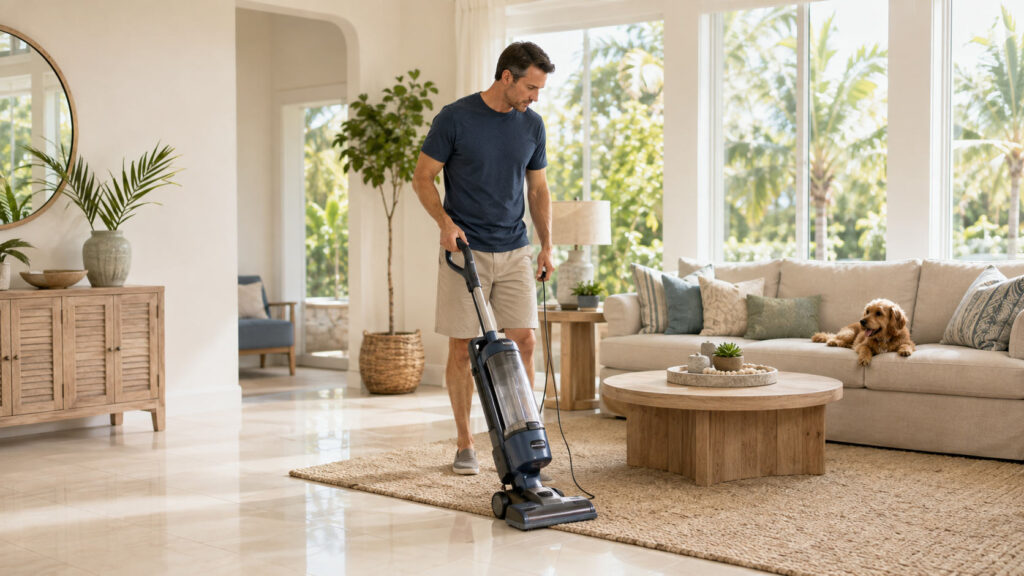
    Man using an upright vacuum where tile flooring meets an area rug as a dog rests nearby
    The right vacuum should transition effectively between tile flooring, area rugs, and pet-friendly living spaces.

    Why Buying Local Makes a Difference

    Shopping online may seem convenient, but vacuum cleaners aren’t one-size-fits-all. Specifications on a website can’t tell you how a vacuum feels to push across your floors, how easily it maneuvers around furniture, or whether it’s the right fit for your cleaning routine.

    When you visit a local showroom, you can:

    • Compare different vacuum styles side by side
    • Test how each model handles
    • Learn about features and attachments
    • Receive expert recommendations based on your home
    • Ask questions about maintenance and repairs

    Perhaps most importantly, you’ll have local support long after your purchase. If your vacuum ever needs service, parts, or routine maintenance, you won’t have to ship it across the country or wait weeks for assistance.

    Which Vacuum Is Right for Your Home?

    Here’s a quick guide to help narrow your options:

    Choose an upright vacuum if you:

    • Have a mix of carpet and hard floors
    • Need strong deep-cleaning performance
    • Have multiple pets
    • Prefer an all-in-one cleaning solution

    Choose a canister vacuum if you:

    • Have mostly tile or hard flooring
    • Want easy maneuverability
    • Need versatile above-floor cleaning
    • Prefer quieter operation

    Choose a cordless vacuum if you:

    • Need quick daily cleanups
    • Have a smaller home or condo
    • Want a lightweight option for touch-ups
    • Already own a primary vacuum

    Upgrade your central vacuum accessories if you:

    • Already have a built-in central vacuum system
    • Want better cleaning performance
    • Need tools designed for pets or hard floors
    • Want to improve cleaning without replacing the power unit

    Visit Gator Vacuum & Sewing Near Coconut Creek

    Finding the right vacuum doesn’t have to be overwhelming. At Gator Vacuum & Sewing, we take the time to understand your home’s flooring, pets, allergies, and cleaning habits before recommending a vacuum. Whether you’re interested in an upright, canister, cordless model, or accessories for your central vacuum system, our knowledgeable team can help you compare options and choose the best fit for your needs.

    Stop by our showroom near Coconut Creek to see top-quality vacuum cleaners in person, ask questions, and experience the difference that expert guidance can make. We’re here to help you invest in a vacuum that delivers reliable performance for years to come.

  • Central Vacuum Hose Problems: What Parkland Homeowners Should Check First

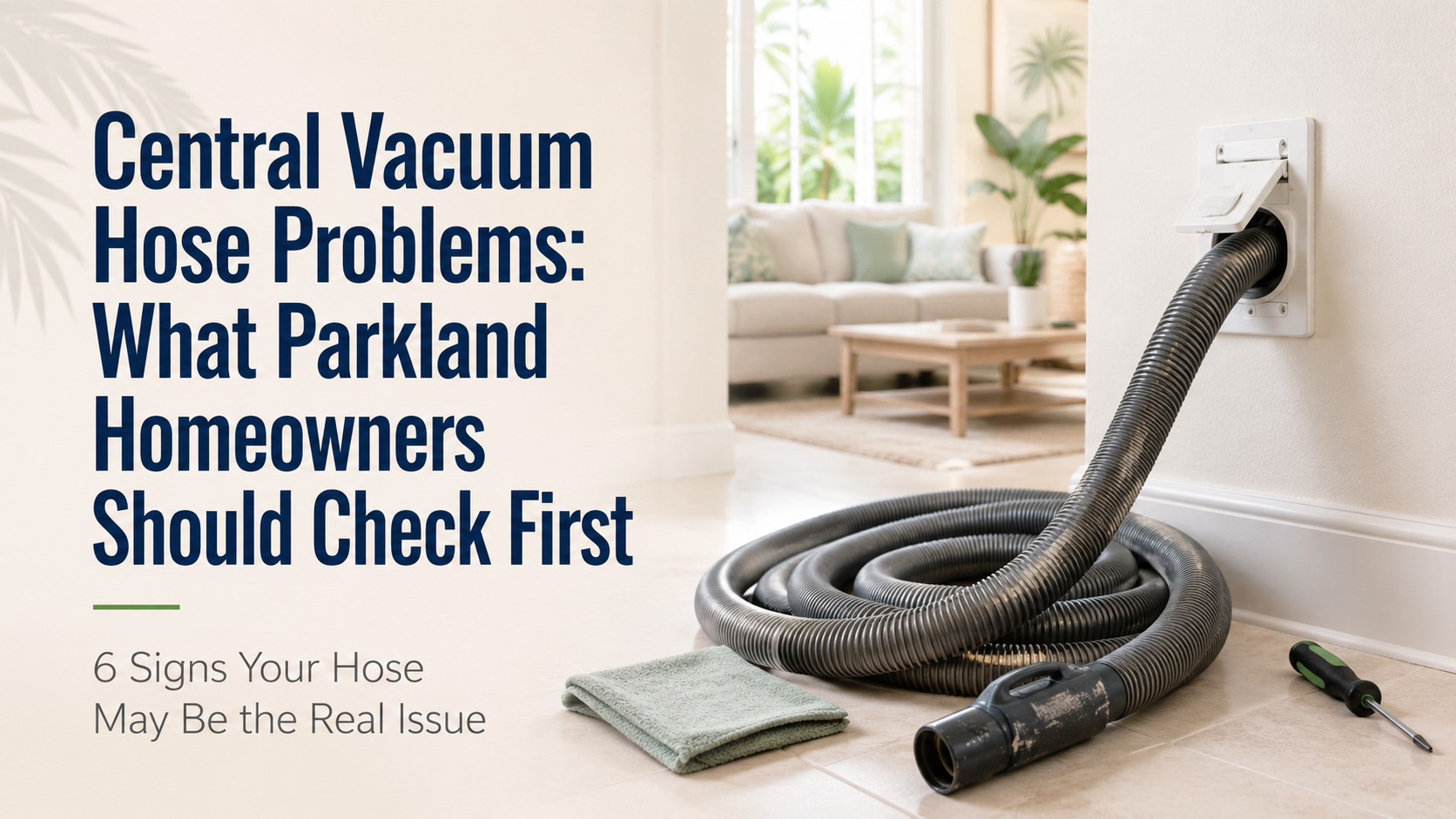
    Central Vacuum Hose Problems: What Parkland Homeowners Should Check First

    When your central vacuum suddenly loses suction or won’t turn on, it’s easy to assume the power unit has failed. However, for many Parkland homeowners, the real culprit isn’t the central vacuum system at all—it’s the hose.

    The hose is the most frequently used component of any central vacuum system. It’s pulled around furniture, stretched through hallways, bent around corners, and plugged into wall inlets thousands of times over its lifetime. As a result, hoses naturally experience more wear and tear than almost any other part of the system.

    Before you start shopping for a new power unit or scheduling a major repair, it’s worth taking a closer look at your hose. In many cases, replacing or repairing the hose can restore your system’s performance quickly and affordably.

    Why the Hose Is So Important

    Your central vacuum hose does much more than carry dirt to the vacuum system. Depending on your setup, it may also:

    • Deliver electrical power to an electric powerhead
    • Turn the vacuum system on and off
    • Control suction with an integrated switch
    • Connect securely to wall inlets
    • Support various cleaning attachments

    When any part of the hose fails, it can make the entire central vacuum system appear to be malfunctioning.

    Sign #1: Cracked or Split Hose

    One of the most common hose problems is physical damage.

    Over time, hoses can develop:

    • Small cracks
    • Splits near the handle
    • Tears from being pinched in doors
    • Worn sections from years of dragging across tile or concrete

    Even a small crack allows air to escape before it reaches the power unit, reducing suction throughout the cleaning process.

    Symptoms of a Cracked Hose

    • Weak suction
    • Whistling sounds
    • Reduced cleaning performance
    • Dirt left behind
    • Hose feels soft or collapses when in use

    Fortunately, replacing a damaged hose is often much less expensive than replacing your central vacuum system.

    Sign #2: A Clog Inside the Hose

    A clogged hose is another common issue that many homeowners mistake for a failing vacuum.

    Objects that frequently become lodged inside the hose include:

    • Pet toys
    • Socks
    • Paper towels
    • Large clumps of pet hair
    • Hair ties
    • Children’s toys
    • Excessive lint

    Because central vacuum hoses are long and flexible, debris can become trapped almost anywhere along their length.

    How to Tell if the Hose Is Clogged

    Try disconnecting the hose from both the wall inlet and your cleaning tools. Look through the hose toward a bright light. If you can’t see daylight clearly through the entire length, there’s likely an obstruction.

    Another simple test is to compare the suction directly at the wall inlet with the suction through the hose. If the inlet has strong suction but the hose does not, the hose is often the source of the problem.

    Sign #3: The Handle Switch Isn’t Working

    Many modern central vacuum hoses feature an on/off switch built into the handle.

    Over time, this switch can wear out due to frequent use.

    Common symptoms include:

    • The vacuum won’t turn on
    • The vacuum shuts off unexpectedly
    • The switch feels loose
    • The switch sticks
    • The vacuum only works intermittently

    Sometimes the switch itself is faulty. In other cases, the electrical wiring inside the handle has become damaged.

    Sign #4: Poor Electrical Connections

    Electric hoses contain wiring that powers motorized carpet brushes.

    If these electrical connections become damaged, you may notice:

    • The powerhead won’t run.
    • Carpet cleaning performance drops.
    • Sparks at the wall inlet.
    • The vacuum motor runs but the brush doesn’t spin.

    Loose electrical connections can develop over years of plugging and unplugging the hose or from accidental damage.

    Replacing a worn electric hose often restores full functionality without requiring repairs to the central vacuum unit itself.

    Sign #5: Loose Hose-to-Inlet Connection

    A hose should fit snugly into the wall inlet.

    If it feels loose, several problems can occur:

    • Air leaks
    • Reduced suction
    • Intermittent power
    • Difficulty keeping the hose connected

    Sometimes the hose cuff wears down over time. Other times, the inlet valve itself has become worn and no longer seals properly.

    Both issues are relatively inexpensive to repair compared to replacing the entire system.

    Sign #6: Attachments Don’t Fit Properly

    Not every attachment is compatible with every central vacuum hose.

    Over time, homeowners often purchase replacement tools that don’t match the diameter of their existing hose.

    Poor-fitting attachments can:

    • Fall off during cleaning
    • Leak air
    • Reduce suction
    • Scratch flooring
    • Limit cleaning efficiency

    If your tools constantly disconnect or wobble during use, it may simply be time for updated accessories designed to fit your hose correctly.

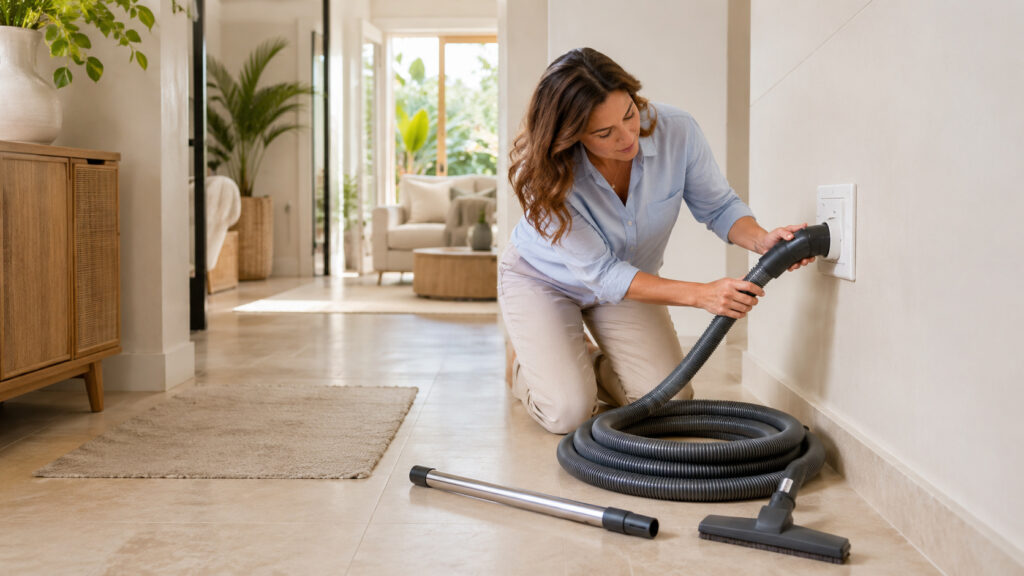
    Homeowner inspecting a central vacuum hose and wall inlet
    Checking the hose, inlet connection, and attachments can help identify many common central vacuum problems.

    When Should You Replace a Central Vacuum Hose?

    Although high-quality hoses are built to last for many years, they don’t last forever.

    Consider replacing your hose if:

    • It’s more than 10–15 years old.
    • Multiple cracks have developed.
    • Repairs no longer solve the problem.
    • The handle switch repeatedly fails.
    • Electrical connections are unreliable.
    • Suction remains weak despite clearing clogs.

    A new hose can dramatically improve your cleaning experience, especially when paired with updated accessories.

    Upgrading Your Accessories Can Improve Cleaning

    Many homeowners focus only on the hose but overlook aging attachments.

    New accessories can make your existing central vacuum system feel like new.

    Popular upgrades include:

    • Electric powerheads
    • Turbo brushes
    • Bare floor brushes
    • Pet grooming tools
    • Upholstery brushes
    • Dusting brushes
    • Crevice tools
    • Extension wands

    Modern attachment sets are lighter, more durable, and designed to clean today’s flooring more effectively.

    Preventing Future Hose Problems

    A few simple habits can extend the life of your hose:

    • Avoid pulling the hose around sharp corners.
    • Don’t pinch it in doors.
    • Store it loosely coiled rather than tightly wrapped.
    • Remove large objects from floors before vacuuming.
    • Inspect the hose regularly for cracks or wear.
    • Replace worn cuffs or handles before they cause bigger problems.

    Routine care can help your hose provide years of dependable service.

    Visit Gator Vacuum & Sewing for Central Vacuum Hose Replacement and Repair

    If your central vacuum isn’t performing the way it used to, don’t assume the power unit has failed. In many cases, the hose, handle, or accessories are the real source of the problem. Replacing a worn hose or upgrading outdated tools is often a fast and cost-effective solution that restores your system’s performance.

    At Gator Vacuum & Sewing, we carry high-quality central vacuum hoses, replacement handles, attachment kits, powerheads, and accessories for many of today’s leading central vacuum brands. Our experienced team can help you determine whether your hose needs replacement, recommend the correct parts, or inspect your system if a larger repair is needed.

    Whether you’re dealing with weak suction, electrical issues, damaged accessories, or simply need a new hose, we’re here to help homeowners throughout Parkland and the surrounding communities keep their central vacuum systems performing at their best. Visit our showroom or contact us today for expert advice, quality replacement parts, and professional central vacuum service.