
Broward: 954-341-4323
Palm Beach: 561-558-0770

MEGA SHOWROOM:
9853 W. Sample Rd,
Coral Springs, FL 33065
HOURS: M-F: 9am-6pm SAT: 10am-4pm

Tag: sewing machine maintenance

  • From Vintage Singers to Modern Marvels: Expert Care in Coconut Creek

    From Vintage Singers to Modern Marvels: Expert Care in Coconut Creek

    From Vintage Singers to Modern Marvels: Expert Care in Coconut Creek

    Sewing machines have come a long way over the decades. From the solid, all-metal workhorses of the mid-20th century to today’s feature-rich computerized models, each generation of machines brings its own strengths—and its own maintenance needs.

    In a community like Coconut Creek, where long-time residents, hobbyists, and passionate sewists all coexist, it’s not uncommon to find both ends of that spectrum in use. One home may have a beautifully preserved vintage machine passed down through generations, while another relies on a modern embroidery system capable of thousands of stitches per minute.

    What connects them? They all require expert care—and not just any care, but service from professionals who truly understand the evolution of sewing technology.

    With over 65 years of combined expertise behind the scenes, experienced technicians have seen it all. And that depth of knowledge is exactly what makes the difference when it comes to maintaining everything from vintage Singer repair to advanced computerized sewing machine service.

    The Legacy of Vintage Sewing Machines

    There’s a reason so many sewists still treasure older machines. Brands like Singer built models in the 1940s, 50s, and 60s that were designed to last a lifetime—and many of them have.

    Why Vintage Machines Still Matter

    Vintage machines are known for:

    • All-metal construction
    • Powerful motors
    • Straight-stitch precision
    • Durability that modern plastic components can’t always match

    In Coconut Creek, many residents still use machines inherited from parents or grandparents. These machines often carry sentimental value alongside their practical use.

    But age brings challenges.

    Common Issues with Vintage Machines

    • Dried or hardened lubrication
    • Worn gear or belts
    • Electrical wiring deterioration
    • Timing misalignment

    This is where true expertise comes in. Vintage Singer repair requires a deep understanding of mechanical systems—skills that can’t be replaced by modern diagnostics alone.

    The Rise of Computerized Sewing Machines

    On the other end of the spectrum, today’s sewing machines are technological marvels. With digital controls, touchscreen interfaces, and programmable stitch patterns, they offer capabilities that were unimaginable decades ago.

    Features of Modern Machines

    • Hundreds of built-in stitches
    • Automatic tension adjustment
    • Embroidery capabilities
    • USB connectivity and software integration

    For hobbyists and advanced sewists in Coconut Creek, these machines open up a world of creative possibilities.

    But they also introduce new complexities.

    Common Issues with Computerized Machines

    • Software glitches
    • Sensor malfunctions
    • Motor calibration issues
    • Electrical board failures

    Unlike vintage machines, these require specialized tools and training. Proper computerized sewing machine service isn’t just mechanical—it’s technical.

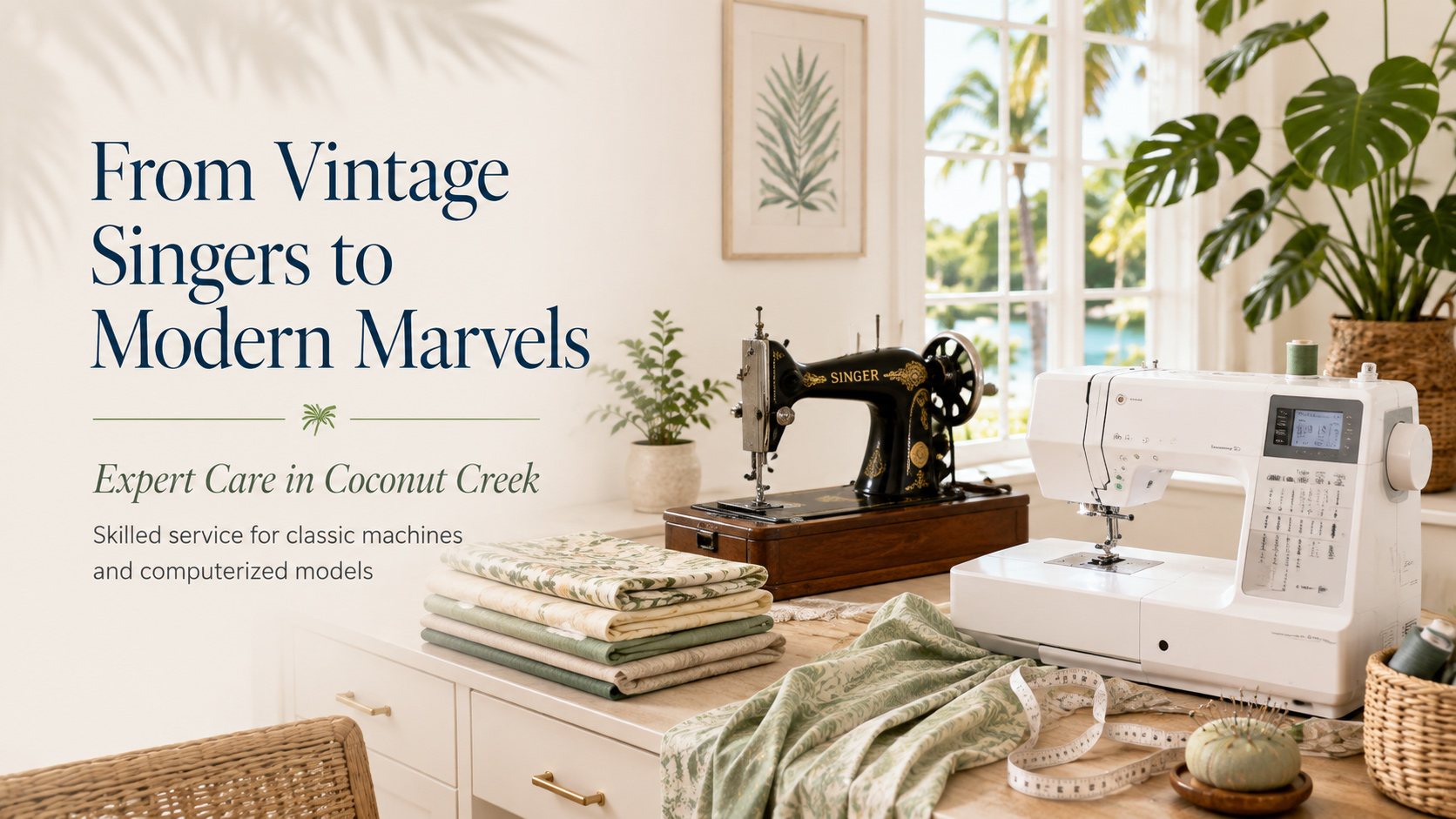
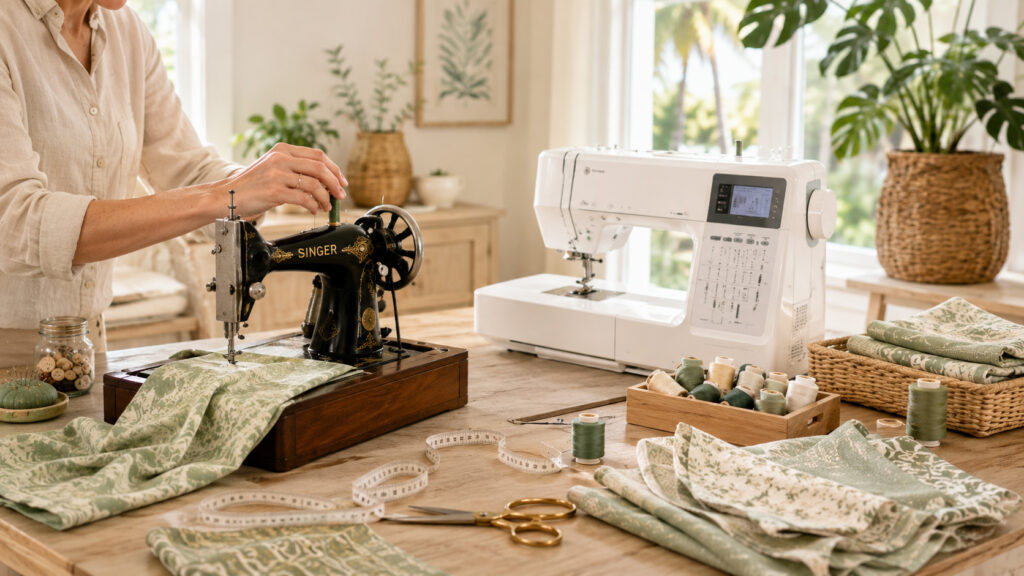
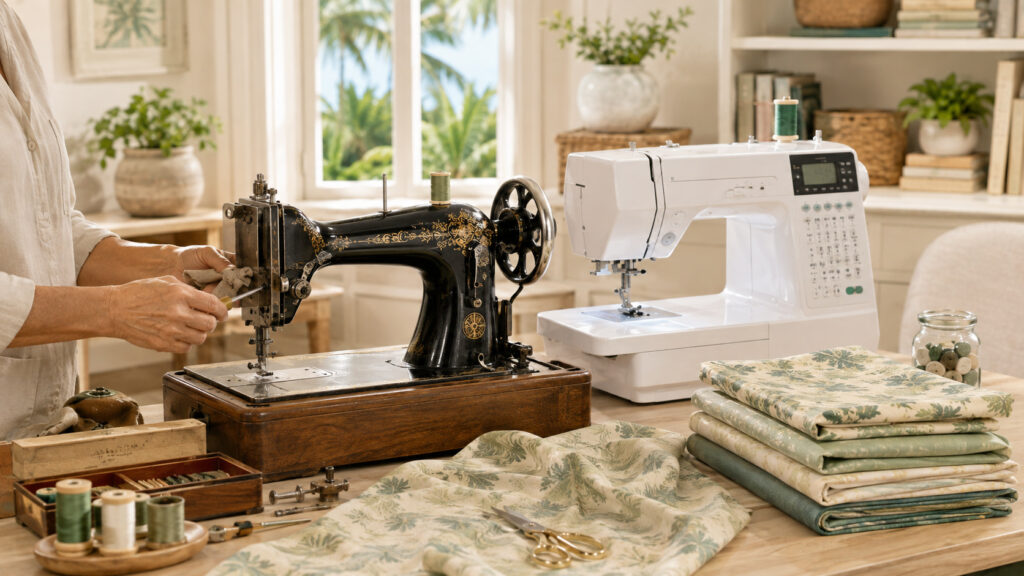
    Technician servicing a vintage sewing machine beside a modern computerized model
    Experienced technicians understand the different maintenance needs of vintage and computerized sewing machines.

    Why Experience Matters More Than Ever

    Servicing a 50-year-old mechanical machine and a modern computerized unit are two completely different disciplines. Yet in Coconut Creek, many sewists own both.

    That’s why experience isn’t just valuable—it’s essential.

    Technicians with decades of hands-on knowledge understand:

    • How older machines were engineered
    • How materials and components have evolved
    • How to diagnose problems across generations of technology

    With over 65 years of combined experience, seasoned professionals can transition seamlessly between restoring a vintage machine and troubleshooting a modern one.

    The Importance of Proper Diagnosis

    One of the biggest risks in sewing machine repair is misdiagnosis. A problem that appears simple—like skipped stitches—can have very different causes depending on the machine.

    For example:

    • On a vintage machine, it may be timing or needle alignment
    • On a computerized machine, it could involve sensors or calibration

    True Coconut Creek sewing experts know how to identify the root cause quickly and accurately, saving both time and money.

    Preserving the Past While Supporting the Future

    In a place like Coconut Creek, sewing isn’t just about function—it’s about tradition and creativity.

    For Vintage Machine Owners

    Professional service helps:

    • Restore performance
    • Extend lifespan
    • Preserve sentimental value

    A properly maintained vintage machine can continue sewing beautifully for decades to come.

    For Modern Machine Users

    Expert care ensures:

    • Consistent stitch quality
    • Reliable software performance
    • Protection of a significant financial investment

    Both types of machines deserve attention tailored to their design.

    What Sets True Experts Apart

    Not every repair shop has the capability to service both vintage and modern machines effectively. The difference lies in depth of knowledge and hands-on experience.

    When choosing a service provider in Coconut Creek, look for:

    • Proven experience across multiple machine generations
    • Ability to perform both mechanical and computerized diagnostics
    • Access to quality replacement parts
    • A thorough inspection and tune-up process

    A true expert doesn’t just fix the problem—they optimize the entire machine.

    The Value of Preventative Maintenance

    Whether your machine is 5 years old or 50, regular maintenance is key to avoiding major repairs.

    Benefits of Routine Service

    • Improved stitch quality
    • Reduced wear on components
    • Early detection of potential issues
    • Longer machine lifespan

    For vintage machines, this may mean cleaning and lubrication. For modern machines, it can include software checks and calibration.

    Either way, preventative care is always more cost-effective than reactive repairs.

    A Community That Values Craftsmanship

    Coconut Creek is home to a diverse community of sewists—retirees who have been sewing for decades, hobbyists exploring new techniques, and creators pushing the boundaries of modern embroidery.

    What they all share is a commitment to quality.

    And that commitment extends to the care of their machines.

    By trusting experienced professionals for vintage Singer repair and computerized sewing machine service, local sewists ensure their tools perform at the highest level—no matter their age or complexity.

    Final Thoughts: One Standard of Care for Every Machine

    From the timeless reliability of vintage machines to the cutting-edge capabilities of modern models, sewing technology continues to evolve. But one thing remains constant: the need for expert care.

    In Coconut Creek, sewists don’t have to choose between old and new—they can have both, supported by professionals who understand each inside and out.

    With decades of experience guiding every repair and tune-up, your machine—whether it’s a family heirloom or a modern masterpiece—gets the attention it deserves.

    Because in the end, great sewing starts with a machine you can trust.

  • Humidity and Your Sewing Machine: A South Florida Survival Guide

    Humidity and Your Sewing Machine: A South Florida Survival Guide

    If you live in Boca Raton or anywhere in Northwest Broward County, you already know the climate comes with perks: sunshine, coastal breezes, and year-round warmth. But for sewing machine owners, that same environment can quietly cause serious damage.

    Humidity, salt air, and fluctuating temperatures create the perfect conditions for internal wear, corrosion, and performance issues. Unlike obvious mechanical failures, these problems often build slowly until your machine starts squeaking, skipping stitches, or losing its smooth operation altogether.

    Whether you’re a casual hobbyist or a dedicated sewist, understanding how South Florida’s climate affects your machine and how to protect it is essential. This guide will walk you through exactly what’s happening inside your machine and how preventative sewing machine care can save you from costly repairs.

    Why South Florida’s Climate Is Tough on Sewing Machines

    Living in South Florida means dealing with two major environmental factors:

    1. High Humidity

    Humidity levels often stay above 70–80% for much of the year. Moisture in the air doesn’t just stay outside. It seeps into your home and, eventually, into your sewing machine.

    Inside your machine, that moisture can:

    • Break down lubricants
    • Cause metal parts to oxidize
    • Create sticky residue that slows movement

    2. Salt Air Exposure

    Even if you’re not directly on the coast, salt particles travel inland, especially in areas like Boca Raton and nearby communities in Northwest Broward County.

    Salt accelerates corrosion, particularly on:

    • Internal metal components
    • Electrical connections
    • Springs and tension assemblies

    Over time, this leads to stiffness, noise, and eventual part failure.

    The Warning Signs: What Humidity Damage Looks Like

    The tricky part about climate-related damage is that it doesn’t happen overnight. It develops gradually, often going unnoticed until performance is affected.

    Here are the most common signs:

    1. Squeaking or Grinding Noises

    That high-pitched squeak is often the first indicator that lubrication has broken down. Metal parts begin rubbing together instead of gliding smoothly.

    2. Sluggish Operation

    If your machine feels “tight” or slower than usual, humidity may have caused internal buildup or minor corrosion.

    3. Inconsistent Stitch Quality

    Moisture can affect tension systems and timing, leading to:

    • Skipped stitches
    • Uneven tension
    • Thread bunching

    4. Rust or Discoloration

    Visible rust is a clear sign that moisture has penetrated deeper than it should.

    5. Electrical Glitches for Computerized Machines

    Humidity can impact circuit boards and connections, causing:

    • Error messages
    • Unresponsive controls
    • Intermittent power issues

    Why DIY Fixes Often Fall Short

    When these symptoms appear, many sewists try quick fixes:

    • Adding oil
    • Cleaning the bobbin area
    • Changing needles or thread

    While helpful for basic maintenance, these steps don’t address deeper issues caused by humidity and salt exposure.

    In fact, improper oiling can sometimes make things worse by:

    • Attracting more dust and lint
    • Mixing with degraded lubricants
    • Failing to reach critical internal components

    This is where a professional sewing machine lubrication service becomes essential.

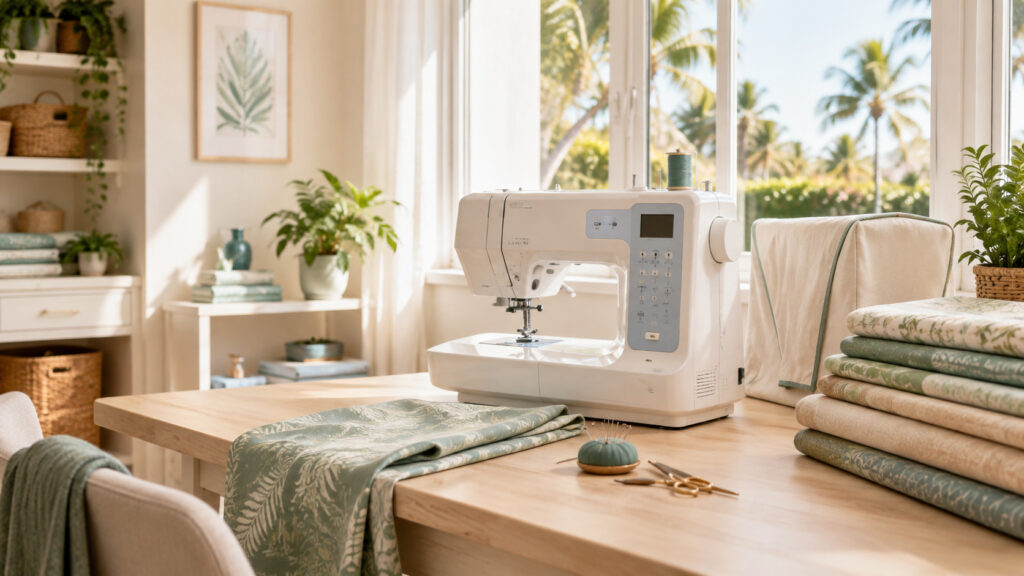
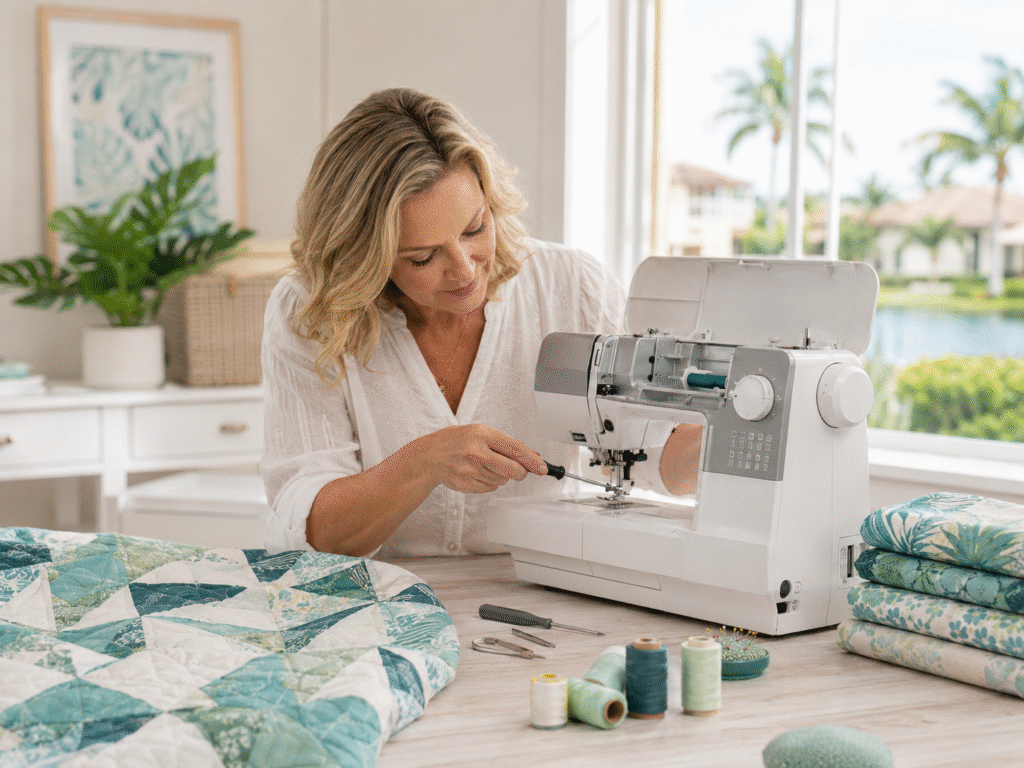
    Sewing machine on a sunlit worktable with folded fabric and sewing tools in a South Florida home
    Proper storage and routine maintenance can help protect sewing machines from South Florida’s humid climate.

    What a Professional Lubrication Service Does

    A true sewing machine lubrication service goes far beyond surface-level maintenance. It’s designed to reverse the effects of humidity and restore your machine’s performance.

    Key Steps Include:

    • Full internal cleaning to remove moisture-related residue
    • Removal of old, degraded lubricants
    • Application of manufacturer-approved oils and greases
    • Inspection for early signs of corrosion
    • Adjustment of moving parts for smooth operation

    For sewists in Boca Raton and Northwest Broward County, this type of service is not optional. It’s preventative protection.

    How Often Should You Service Your Machine in South Florida?

    In drier climates, a yearly tune-up might be enough. But in South Florida, more frequent maintenance is often necessary.

    Recommended Schedule:

    • Frequent use: Every 6–9 months
    • Moderate use: Once a year
    • Occasional use: Every 12–18 months at minimum

    Even machines that sit unused can develop issues due to humidity alone.

    Simple Ways to Protect Your Machine at Home

    While professional service is critical, there are steps you can take to reduce environmental impact between visits.

    1. Use a Machine Cover

    Keep dust and moisture out when your machine isn’t in use.

    2. Control Indoor Humidity

    If possible, use:

    • Air conditioning
    • Dehumidifiers

    Maintaining indoor humidity below 60% can significantly reduce risk.

    3. Avoid Storage in Garages or Porches

    These areas are especially vulnerable to temperature swings and moisture buildup.

    4. Run Your Machine Regularly

    Believe it or not, using your machine helps keep internal parts moving and lubricated.

    5. Use Quality Thread

    Lower-quality thread sheds more lint, which can combine with humidity to create buildup.

    The Cost of Ignoring the Problem

    Humidity damage doesn’t just affect performance. It can lead to expensive repairs if left unchecked.

    Potential consequences include:

    • Seized components
    • Corroded gears and shafts
    • Motor strain or failure
    • Electrical system damage

    In many cases, what could have been resolved with routine preventative sewing machine care turns into a major repair or even replacement.

    Why Local Expertise Matters

    Not all repair services understand the unique challenges of South Florida’s climate. West Boca sewing machine repair technicians, however, deal with these issues every day.

    They know:

    • Where corrosion is most likely to occur
    • How humidity affects different machine types
    • Which lubricants perform best in this environment

    For residents of Boca Raton and Northwest Broward County, working with specialists in South Florida sewing maintenance ensures your machine gets the care it truly needs.

    Preventative Care Is the Key to Longevity

    The best way to deal with humidity isn’t to wait for problems. It’s to prevent them.

    Regular service:

    • Keeps internal parts clean and protected
    • Maintains smooth, quiet operation
    • Extends the life of your machine
    • Protects your investment

    It’s a small step that makes a big difference.

    Final Thoughts: Protect Your Machine from the Elements

    Living in South Florida comes with undeniable advantages, but your sewing machine feels the effects of the climate every day.

    Humidity and salt air may be invisible, but their impact is real.

    By investing in routine sewing machine lubrication service and prioritizing preventative sewing machine care, you can keep your machine running smoothly: no squeaks, no slowdowns, and no surprises.

    For sewists in Boca Raton and across Northwest Broward County, the solution is simple:

    Stay ahead of the climate, and your machine will stay ahead of every project.

  • Beyond the Bobbin: How Vacuum Technology Keeps West Boca Sewing Rooms Pristine

    Beyond the Bobbin: How Vacuum Technology Keeps West Boca Sewing Rooms Pristine

    In the elegant homes of Boca Raton, particularly the upscale enclaves of West Boca, sewing rooms are more than just functional spaces. They are curated studios. Precision matters. Cleanliness matters. Most importantly, the longevity of your equipment matters.

    While most sewing enthusiasts focus on thread quality, needle selection, and machine maintenance schedules, there is one silent threat that often goes overlooked: fabric lint and microscopic debris. These particles do not simply make a mess; they can quietly sabotage even the most advanced sewing machines.

    Let’s go beyond the bobbin and explore how modern vacuum technology plays a critical role in protecting your sewing investment, why professional Boca Raton sewing machine repair services matter, and why homeowners in West Boca are turning to specialized vacuum solutions to keep their creative spaces pristine.

    The Hidden Enemy in Every Sewing Room: Lint

    Every stitch you sew creates debris. Cotton fibers, polyester threads, batting dust, and microscopic particles from cutting fabrics can accumulate quickly. At first glance, it may seem harmless, like a little fuzz around your workspace.

    But here is the reality:

    • Lint is abrasive.
    • It is highly flammable.
    • It builds up inside mechanical components.
    • It is electrostatically attracted to motors and circuit boards.

    Inside your sewing machine, lint can clog feed dogs, jam tension assemblies, and restrict airflow around the motor. Over time, this can lead to overheating, inconsistent stitching, and premature wear.

    For owners of premium machines, especially embroidery or computerized units, this is not simply an inconvenience. It is a costly risk.

    Why Traditional Cleaning Is Not Enough

    Most sewists are taught to use small brushes or canned air to clean their machines. While these methods may help on the surface, they can push lint deeper into the machine rather than removing it entirely.

    Here is why that can be a problem:

    • Compressed air redistributes debris into hard-to-reach areas.
    • Manual brushes lack suction and may leave fine particles behind.
    • Standard household vacuums can be too aggressive or imprecise.

    This is where vacuum technology designed for delicate environments becomes essential.

    The Role of Advanced Vacuum Technology in Sewing Spaces

    Modern vacuum systems, especially those designed for precision cleaning, offer a completely different approach. Instead of scattering lint, they capture and contain it, helping prevent it from re-entering the air or settling back into your machine.

    High-performance vacuums used in sewing rooms can provide several important advantages.

    1. Controlled Suction Power

    Too much suction may damage delicate components, but too little suction will not remove embedded debris. Premium vacuums provide a better balance, allowing you to clean carefully around:

    • Bobbin cases
    • Feed dogs
    • Thread paths
    • Motor vents

    2. HEPA Filtration

    Lint is not limited to visible dust. It also includes microscopic fibers that can linger in the air. HEPA filtration helps capture these particles, improving air quality and preventing them from immediately settling back onto your machine and workspace.

    3. Specialized Attachments

    Crevice tools, micro nozzles, and soft-bristle heads allow for more precise cleaning. These attachments are ideal for intricate sewing machine areas, worktable edges, cabinetry, and tight corners throughout the sewing room.

    Why West Boca Homes Demand a Higher Standard

    In West Boca, sewing rooms are often integrated into beautifully designed interiors featuring custom cabinetry, dedicated craft rooms, and even climate-controlled studios. Cleanliness is not only about function. It is also about maintaining a refined environment.

    Homeowners in this area often expect:

    • Dust-free surfaces
    • Quiet, efficient equipment
    • Minimal disruption to their living space
    • Long-lasting, high-performance tools

    A basic vacuum may not meet these expectations. That is why many homeowners turn to premium brands such as SEBO, which are known for combining powerful suction, quiet operation, and advanced filtration.

    Why a SEBO Vacuum Is Ideal for Sewing Rooms

    When it comes to sewing room vacuum solutions, not all vacuums are created equal. SEBO has built a reputation for precision engineering, making its machines a natural fit for environments where detail matters.

    Gator Vacuum & Sewing Co. can help homeowners evaluate vacuum options that suit both their sewing space and their everyday cleaning needs.

    Ultra-Fine Filtration

    SEBO vacuums feature sealed filtration systems designed to capture extremely small lint and dust particles, helping prevent them from recirculating throughout the sewing space.

    Adjustable Suction Settings

    From delicate silk fibers to dense quilting debris, adjustable suction allows you to tailor the vacuum’s power to the task while helping protect both your fabrics and equipment.

    Quiet Operation

    In serene West Boca homes, noise matters. Quiet vacuum operation allows homeowners to clean their sewing rooms without unnecessarily disrupting the calm of the surrounding living space.

    Longevity and Reliability

    Like a high-quality sewing machine, a premium vacuum is an investment. Durable construction helps provide dependable and consistent cleaning performance over time.

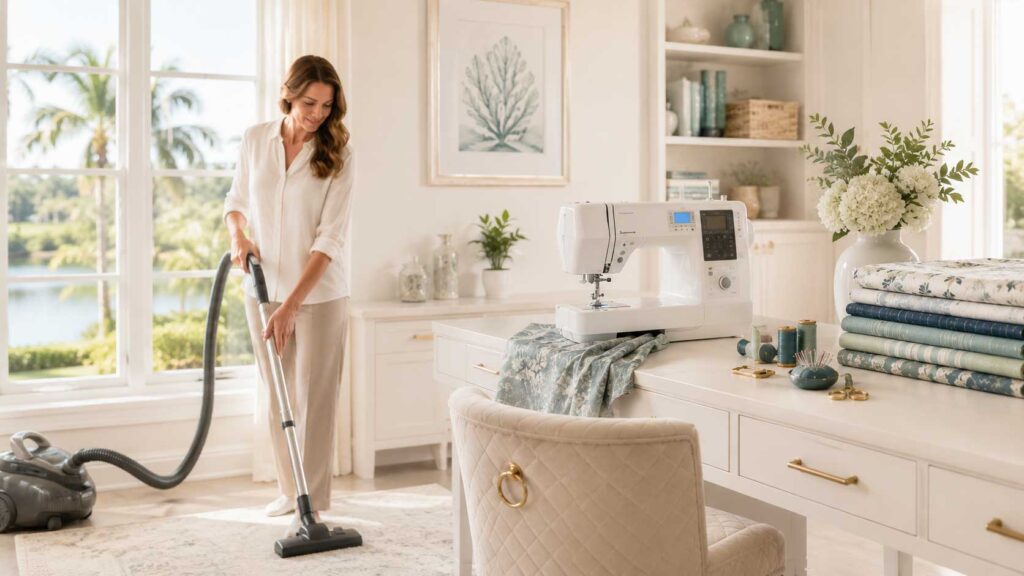
    Woman vacuuming a bright sewing room with a sewing machine and folded fabrics
    Regular vacuuming helps reduce fabric lint and airborne debris throughout the sewing area.

    The Connection Between Vacuuming and Machine Longevity

    Think of your vacuum as part of your sewing machine maintenance routine, not as a completely separate tool.

    Regular vacuuming around your sewing machine and workspace can:

    • Help prevent lint from entering internal components
    • Reduce strain on motors and ventilation areas
    • Support more consistent stitch quality
    • Help extend the lifespan of your machine

    Skipping this step can contribute to buildup and performance problems that may eventually require professional servicing.

    Best Practices for Keeping Your Sewing Room Pristine

    Consistency is the key to protecting your sewing space. The following routine works especially well in carefully maintained environments such as West Boca sewing rooms.

    Daily Maintenance

    • Vacuum around your sewing area after each session.
    • Remove visible lint from the exterior of your machine.
    • Empty scrap bins and dispose of thread clippings.

    Weekly Deep Cleaning

    • Use a precision vacuum attachment to clean accessible machine areas.
    • Vacuum floors, baseboards, cabinetry, and nearby surfaces.
    • Clean cutting mats, shelves, and worktables.

    Monthly Care

    • Inspect vents and motor areas for visible buildup.
    • Replace or clean vacuum filters as recommended.
    • Evaluate the overall cleanliness and air quality of the sewing room.

    Air Quality: The Overlooked Factor

    Lint does not simply settle; it floats. In enclosed sewing rooms, airborne fibers can accumulate quickly, affecting both the machine and the comfort of the person using the space.

    High-quality vacuum systems with HEPA filtration can:

    • Reduce airborne irritants
    • Improve breathing comfort
    • Help prevent dust from settling on fabrics and equipment

    For West Boca homeowners who value clean, polished interiors, this is a significant advantage.

    Creating a True Sewing Sanctuary

    A pristine sewing room is not only about aesthetics. It is also about performance, longevity, efficiency, and peace of mind.

    When your sewing space is properly maintained:

    • Your machine can run more smoothly.
    • Your projects are less likely to be contaminated by dust and debris.
    • Your workflow becomes more efficient.
    • Your creativity can continue with fewer interruptions.

    Investing in proper vacuum technology can transform a sewing room from a simple workspace into a true creative sanctuary.

    Local Expertise Matters

    For residents searching for sewing room vacuum solutions, it is important to work with professionals who understand both sewing machines and vacuum systems.

    A trusted local vacuum and sewing center can help you:

    • Choose the right vacuum for your space.
    • Match suction levels and attachments to your cleaning needs.
    • Provide maintenance tips tailored to your setup.
    • Service both vacuum cleaners and sewing machines.

    This combination of expertise helps ensure that your entire sewing environment works together seamlessly. Homeowners experiencing mechanical or stitching problems can also learn more about professional sewing machine repair in Boca Raton.

    Final Thoughts: Beyond the Bobbin

    Sewing is an art of precision, but precision requires protection. While threads, needles, and tension settings often take center stage, the cleanliness of the surrounding environment plays an equally important role.

    Lint may be small, but its impact is anything but.

    By incorporating advanced vacuum technology, especially high-performance options such as SEBO, you are not simply cleaning your sewing room. You are helping safeguard your machine, preserve your projects, and elevate your entire sewing experience.

    In the refined homes of West Boca, where every detail matters, that level of care is not optional; it is expected.

  • The “Drive-In” Advantage: Why Shipping Your Sewing Machine Is a Risk

    The “Drive-In” Advantage: Why Shipping Your Sewing Machine Is a Risk

    The “Drive-In” Advantage: Why Shipping Your Sewing Machine Is a Risk

    When your sewing machine starts acting up with skipped stitches, strange noises, or tension issues, the first instinct is to get it fixed as quickly as possible. But how you choose to service your machine can make a bigger difference than you might think.

    For many sewists, especially in areas like Margate and Tamarac, the choice often comes down to two options:

    • Ship it off to a repair center and wait
    • Drive it to a local expert and get it handled fast

    At first glance, shipping might seem convenient. But it introduces risks, delays, and uncertainties that can turn a simple repair into a frustrating experience.

    Let’s break down why more local sewists are choosing the “drive-in” advantage and why shipping your machine is often not worth the risk.

    What Really Happens When You Ship Your Machine

    Shipping a sewing machine isn’t like mailing a small package. These are precision instruments with delicate internal components that rely on exact alignment.

    When you ship your machine, it typically goes through:

    • Multiple handling points
    • Conveyor systems
    • Truck transport over long distances
    • Warehousing before and after repair

    Even with careful packaging, that journey can take a toll.

    The Hidden Risks of Shipping

    1. Internal Misalignment

    Sewing machines depend on precise timing between the needle, hook, and feed system. A hard bump or drop during transit can shift that alignment even slightly.

    The result?

    • Skipped stitches
    • Timing issues
    • Reduced stitch quality

    And here’s the frustrating part: your machine might come back “repaired” but still not perform the way it should.

    2. Cracked Frames and Structural Damage

    Many machines, especially modern ones, contain internal frames and components that aren’t designed to absorb shock.

    Shipping can lead to:

    • Hairline cracks in frames
    • Broken plastic housing
    • Loosened internal mounts

    These issues aren’t always visible right away, but they can cause long-term problems.

    3. Electrical and Computerized Component Damage

    For computerized machines, shipping introduces another layer of risk:

    • Circuit board sensitivity to vibration
    • Loose connections from impact
    • Static or environmental exposure

    A machine that left with a minor issue could return with a much bigger one.

    4. Lost or Delayed Packages

    It doesn’t happen often, but when it does, it’s a nightmare.

    Shipping delays, lost packages, or damage claims can leave you without your machine for weeks or longer.

    The Time Factor: Weeks vs. Days

    Beyond physical risks, shipping comes with a major downside: time.

    Mail-In Repair Timeline:

    • Shipping to facility: 3–7 days
    • Intake and queue: 1–3 weeks
    • Repair time: Varies
    • Return shipping: Another 3–7 days

    Total: Often 3–6 weeks or more

    Local “Drive-In” Service Timeline:

    For sewists near Margate and Tamarac, local service offers a completely different experience:

    • Drop off your machine in person
    • Receive a same-day sewing estimate
    • Repairs are often completed within 24–48 hours

    No shipping. No waiting weeks. No uncertainty.

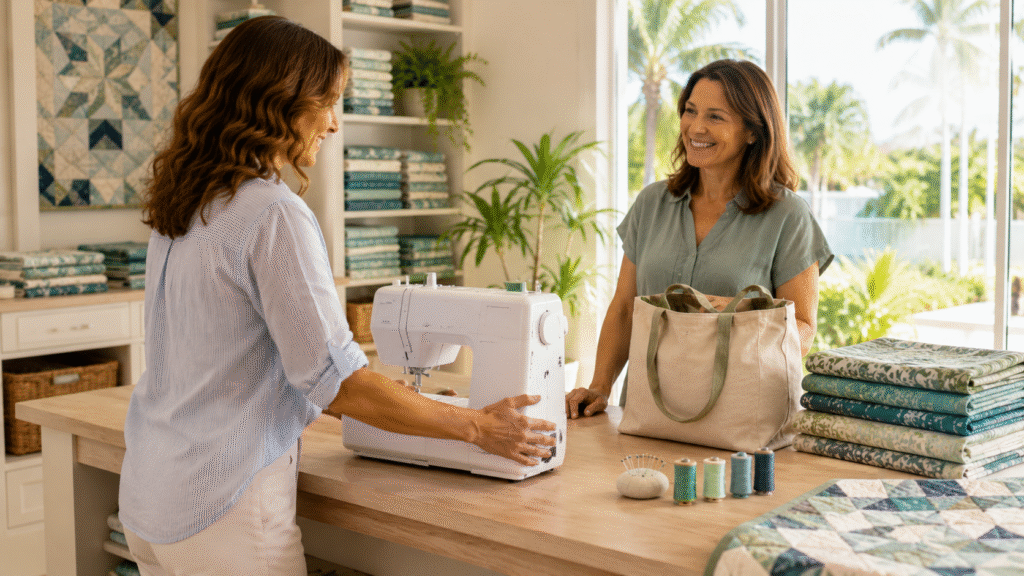
    Customer dropping off a sewing machine with a local repair professional in Margate
    Face-to-face service allows customers to explain machine problems directly and receive a faster, more accurate diagnosis.

    The Convenience of Staying Local

    Driving your machine to a nearby shop isn’t just safer; it’s easier.

    Benefits of Local Drop-Off:

    • No packing or boxing required
    • No risk of shipping damage
    • Face-to-face communication with technicians
    • Faster diagnosis and turnaround

    For residents in Margate and Tamarac, a short drive can save weeks of downtime.

    Better Communication, Better Results

    When you ship your machine, communication is limited to forms, emails, or customer service representatives who may not be technicians.

    With a local Margate sewing machine repair provider, you can:

    • Explain the issue in detail
    • Demonstrate problems if needed
    • Ask questions directly to the expert

    This leads to:

    • More accurate diagnostics
    • Fewer misunderstandings
    • Better overall results

    Protecting Your Investment

    A sewing machine, especially a high-quality one, is a significant investment. Whether you use it for quilting, garment making, or embroidery, its performance matters.

    Shipping adds unnecessary risk to that investment.

    Local service, on the other hand, keeps your machine:

    • In a controlled environment
    • Handled by experienced professionals
    • Protected from transit-related damage

    The Real Value of Fast Turnaround

    Time without your machine isn’t just inconvenient. It can disrupt projects, deadlines, and even income for those who sew professionally.

    That’s why fast sewing machine turnaround is such a game-changer.

    Instead of putting your work on hold for weeks, local service allows you to:

    • Get back to projects quickly
    • Maintain productivity
    • Avoid unnecessary stress

    Why More Sewists Are Choosing the “Drive-In” Advantage

    In communities like Margate and Tamarac, the shift toward local service is clear.

    Sewists are prioritizing:

    • Speed
    • Safety
    • Reliability
    • Personal service

    They’ve experienced the difference, and once you do, it’s hard to go back to shipping.

    When, (If Ever) Shipping Makes Sense

    To be fair, shipping may be necessary in very specific situations:

    • Highly specialized repairs only available from manufacturers
    • Warranty-required service centers

    But for most maintenance and repairs, a local shop provides a better experience.

    Final Thoughts: Skip the Shipping, Save the Stress

    Your sewing machine is a precision tool that deserves careful handling, not a cross-country journey through shipping hubs.

    For sewists in Margate and Tamarac, Gator Vacuum & Sewing Co. offers a simple solution:

    Drive it in. Get a same-day sewing estimate. Enjoy a fast sewing machine turnaround. Most importantly, protect your machine from unnecessary risk.

    Because when it comes to repairs, the shortest distance between the problem and the solution is often just a short drive away.

  • Why “On-Premises” Sewing Repair Matters for Coral Springs Sewing Enthusiasts

    Why “On-Premises” Sewing Repair Matters for Coral Springs Sewing Enthusiasts

    For passionate quilters and sewing enthusiasts, a sewing machine isn’t just a tool—it’s an investment, a creative partner, and often a centerpiece of daily life. Whether you’re piecing together intricate quilt blocks or finishing heirloom-quality projects, your machine’s performance matters. That’s why the way your machine is serviced matters just as much.

    If you’re located in or around Coral Springs, choosing on-premises sewing machine repair can make a significant difference in the longevity, safety, and performance of your equipment. More importantly, it provides peace of mind that simply isn’t possible when machines are shipped off-site.

    Let’s break down why this approach is especially valuable for Broward County quilters—and why it positions Gator Vacuum as a trusted authority in the local sewing community.

    What Is On-Premises Sewing Machine Repair?

    On-premises sewing machine repair means your machine is serviced in-house, at the same location where you bring it—rather than being boxed up and shipped to a third-party repair center.

    While shipping-based repair models have become more common, they introduce risks, delays, and a lack of transparency. On-premises service, on the other hand, keeps your machine close, secure, and handled by technicians you can meet.

    For quilters working with high-end machines, think computerized embroidery units, long arms, or specialty quilting machines, this distinction is critical.

    Protecting Your Investment: Why Shipping Isn’t Ideal

    Modern sewing and quilting machines can cost anywhere from several hundred to several thousand dollars. These machines are not only expensive—they’re also highly sensitive.

    Risks of Shipping Your Machine

    When a machine is shipped out for repair, it faces several potential issues:

    • Physical Damage in Transit: Even with careful packaging, shipping carriers can be unpredictable. Internal components can shift, crack, or misalign.
    • Loss or Misplacement: While rare, lost packages do happen—and replacing a specialized sewing machine isn’t easy.
    • Environmental Exposure: Heat, humidity, and handling conditions can affect delicate electronics and calibration.

    For quilters in Coral Springs, avoiding these risks altogether is a major advantage of choosing a local, on-site solution.

    Immediate Accountability and Transparency

    One of the biggest benefits of Coral Springs sewing machine repair that happens on premises is transparency.

    When you drop off your machine locally:

    • You know exactly where it is at all times
    • You can ask questions directly
    • You can receive updates without going through a third-party system

    There’s no guessing, no waiting on vague shipping timelines, and no wondering who is actually handling your machine.

    This level of visibility builds trust—and for serious hobbyists and professionals alike, that trust is invaluable.

    Direct Access to a Certified Sewing Technician

    Another major advantage of on-premises repair is the ability to interact directly with a certified sewing technician.

    Instead of dealing with a customer service representative or a generic repair ticket system, you can:

    • Explain specific issues in detail
    • Demonstrate unusual sounds or stitching problems
    • Ask for maintenance tips tailored to your machine

    This face-to-face interaction often leads to faster diagnosis and more accurate repairs.

    Why Certification Matters

    A certified sewing technician brings specialized training and experience to the table. They understand:

    • Brand-specific engineering and components
    • Advanced computerized systems
    • Precision calibration techniques

    For quilters who rely on perfect stitch quality and tension consistency, this level of expertise is essential.

    Faster Turnaround Times for Active Quilters

    Quilters rarely want to be without their machines for long—especially during active projects, seasonal crafting, or gift-making periods.

    Shipping-based repair services can take weeks when you factor in:

    • Transit time, both ways
    • Processing delays
    • Repair queue backlogs

    With on-premises sewing machine repair, turnaround times are typically much faster. Since everything is handled locally, technicians can begin work sooner and complete repairs more efficiently.

    For Broward County quilters, that means less downtime and more time creating.

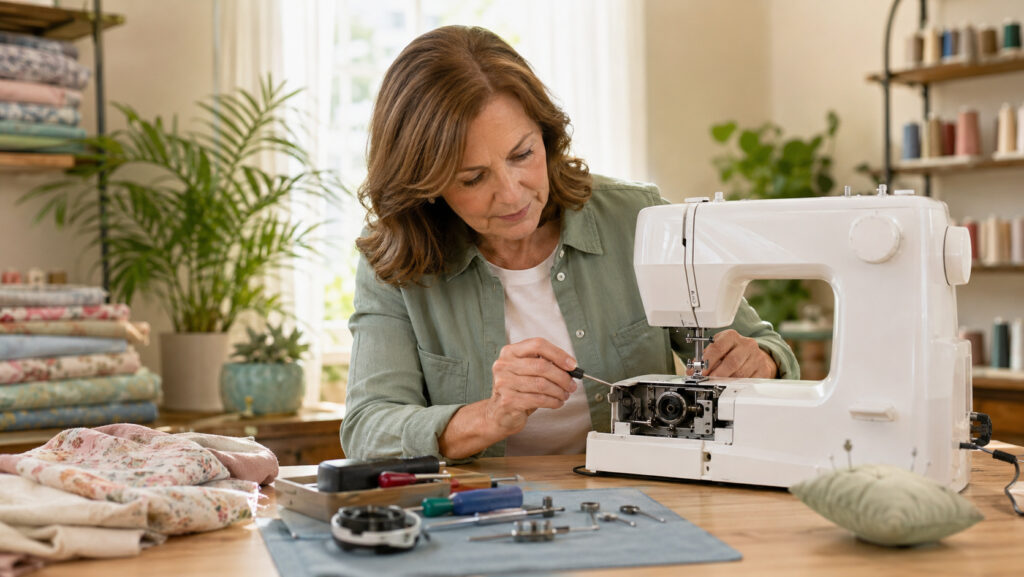
    Sewing enthusiast inspecting a machine for local Coral Springs sewing machine repair
    On-premises repair gives sewing enthusiasts direct local service, safer handling, and greater peace of mind.

    The Coral Springs Showroom Advantage

    For sewing enthusiasts in Coral Springs and the surrounding Broward area, having a local showroom isn’t just convenient—it’s a hub for the entire sewing community.

    A dedicated showroom offers:

    • A central drop-off and pick-up location
    • Access to knowledgeable staff
    • Opportunities to explore accessories, upgrades, and new machines

    But more importantly, it creates a space where quilters can connect, learn, and feel supported.

    Supporting the Local Sewing Community

    Choosing a Coral Springs sewing service that operates on-premises doesn’t just benefit you—it strengthens the local sewing ecosystem.

    When you support a local repair provider:

    • You help sustain skilled technical jobs in the area
    • You contribute to a community of makers and hobbyists
    • You ensure continued access to specialized services nearby

    For many quilters, this sense of community is just as important as the technical benefits.

    Better Preventative Maintenance and Care

    On-premises service isn’t only about fixing problems—it’s also about preventing them.

    Because technicians can inspect your machine in person, they’re better equipped to:

    • Identify early signs of wear
    • Clean and lubricate internal components properly
    • Calibrate tension and timing with precision

    They can also give you personalized advice based on how you use your machine—whether you’re quilting daily or sewing occasionally.

    This proactive approach helps extend the life of your machine and maintain consistent performance.

    Peace of Mind for High-End Machines

    Many quilters in Coral Springs use advanced machines with computerized features, embroidery modules, and specialized attachments.

    These machines require careful handling and expert knowledge.

    With on-premises sewing machine repair, you get:

    • Controlled handling environments
    • Specialized tools and diagnostic equipment
    • Technicians familiar with complex systems

    Most importantly, you eliminate the anxiety that comes with shipping a valuable piece of equipment across the country.

    Personalized Service You Can’t Get Online

    In an increasingly digital world, personalized service stands out more than ever.

    When you bring your machine to a local showroom:

    • You’re treated as more than just a ticket number
    • Your specific needs and projects are taken into account
    • You build relationships with technicians and staff

    This kind of service creates a better overall experience—and often leads to better repair outcomes.

    Why Gator’s Approach Stands Out

    Gator’s commitment to on-premises sewing machine repair sets it apart in a crowded market.

    By choosing not to ship machines out, Gator ensures:

    • Maximum safety for your equipment
    • Full control over the repair process
    • Direct communication between customers and technicians

    This approach reflects a deeper philosophy: your machine deserves expert care, handled locally, by professionals who take pride in their work.

    Final Thoughts: A Smarter Choice for Coral Springs Quilters

    For quilters in Coral Springs and across Broward County, the benefits of on-premises repair are clear.

    From protecting your investment to ensuring faster turnaround times and providing direct access to a certified sewing technician, local service offers unmatched value.

    When your machine stays in the hands of trusted professionals—right here in your community—you gain confidence, convenience, and quality all at once. So when your tools are working at their best, so can you.

  • Sewing Machine Tune-Up Checklist for Tamarac and Coconut Creek Sewers

    Sewing Machine Tune-Up Checklist for Tamarac and Coconut Creek Sewers

    Whether you are a hobby sewer, quilter, embroidery enthusiast, or someone finally pulling a sewing machine out of the closet after months of sitting unused, regular maintenance plays a major role in keeping your machine sewing smoothly. Many common sewing problems start with simple issues like lint buildup, worn needles, dried lubrication, or tension imbalance.

    At Gator Vacuum and Sewing, customers from Tamarac, Coconut Creek, and surrounding South Florida communities often bring in sewing machines that simply need a professional tune-up to restore proper performance.

    If your machine has started making strange noises, skipping stitches, jamming, or struggling with basic fabrics, this sewing machine tune-up checklist can help you identify when it is time for maintenance or professional Coconut Creek sewing machine service.

    Why Regular Sewing Machine Maintenance Matters

    Sewing machines contain precision mechanical parts that operate at high speeds. Over time, dust, lint, thread fibers, dried oil, and general wear affect how efficiently the machine runs.

    Even machines that have not been used recently can develop issues from sitting too long. Lubricants dry out, belts age, and internal components stiffen over time.

    Routine tune-ups help:

    • Improve stitch quality
    • Reduce thread breakage
    • Prevent jamming
    • Extend machine lifespan
    • Protect internal components
    • Improve fabric feeding
    • Reduce motor strain
    • Catch small problems before major repairs develop

    For sewers in Tamarac and Coconut Creek, regular servicing is especially helpful because South Florida humidity and household dust can contribute to internal buildup over time.

    Sewing Machine Tune-Up Checklist

    Use this checklist to inspect your machine before starting your next sewing project.

    1. Check for Excessive Dust and Lint Buildup

    Lint accumulation is one of the most common causes of sewing machine problems.

    Check areas including:

    • Bobbin compartment
    • Feed dogs
    • Needle plate
    • Tension area
    • Thread pathways

    Heavy lint buildup can interfere with stitch formation and cause feeding problems.

    If your machine has not been cleaned in months or years, professional internal cleaning may be necessary.

    Warning Signs:

    • Machine feels sluggish
    • Increased noise
    • Fabric feeding poorly
    • Frequent jams
    • Visible lint around moving parts

    2. Inspect the Needle

    A worn or bent needle can create multiple sewing problems.

    Replace the needle if:

    • It has been used heavily
    • The tip looks dull
    • The machine skips stitches
    • Fabric snags during sewing
    • Thread breaks repeatedly

    Many sewing issues are solved simply by installing a fresh needle appropriate for the fabric being used.

    3. Listen for Strange Noises

    A properly functioning sewing machine should run relatively smoothly and consistently.

    Grinding, knocking, squeaking, or clicking noises may indicate:

    • Lack of lubrication
    • Timing problems
    • Internal debris
    • Motor strain
    • Loose components

    Unusual sounds should never be ignored because they often signal developing mechanical problems.

    At Gator Vacuum and Sewing, technicians inspect internal moving parts and lubrication systems during professional tune-ups.

    4. Test Stitch Quality

    Sew several test lines on scrap fabric before beginning important projects.

    Watch for:

    • Uneven stitches
    • Loose loops
    • Skipped stitches
    • Thread bunching
    • Puckered fabric
    • Inconsistent stitch length

    These issues often point to tension imbalance, timing problems, or worn components.

    5. Check Thread Tension

    Tension problems are one of the biggest frustrations for both beginner and experienced sewers.

    Signs of incorrect tension include:

    • Loops underneath fabric
    • Tight pulling stitches
    • Tangled thread
    • Uneven seam appearance
    • Frequent thread snapping

    Sometimes tension problems result from incorrect threading, but persistent tension issues may require professional adjustment and cleaning.

    6. Inspect the Bobbin Area

    The bobbin system is critical to stitch formation.

    Check for:

    • Thread buildup
    • Lint accumulation
    • Damaged bobbins
    • Improper bobbin winding
    • Scratched bobbin cases

    A dirty or damaged bobbin area can quickly lead to nesting thread and poor stitching.

    7. Evaluate Fabric Feeding

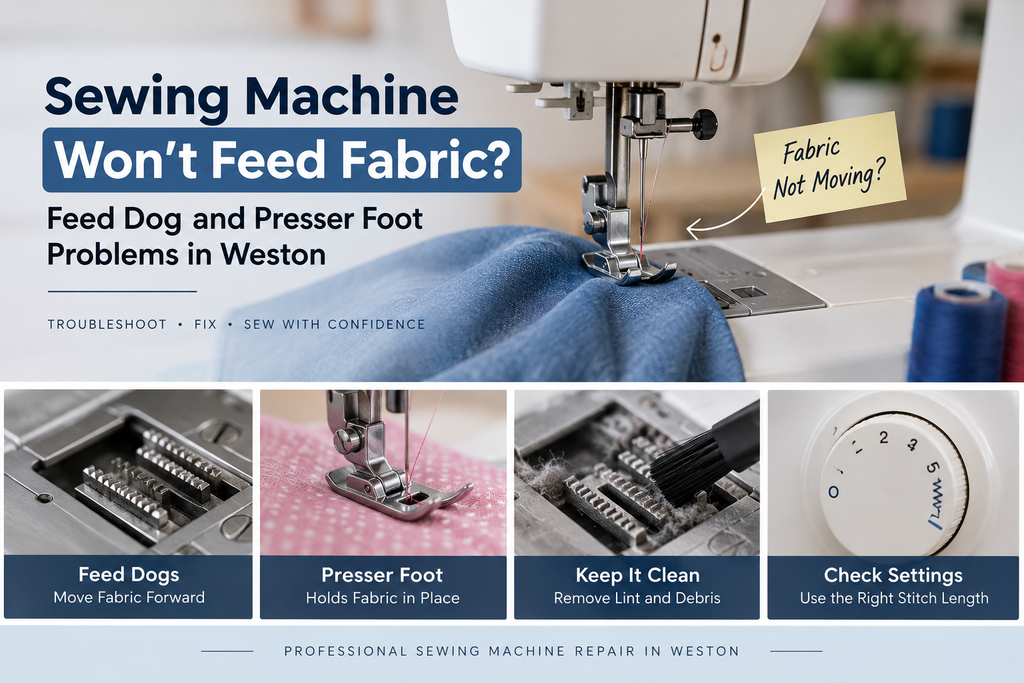
    Feed dogs move fabric beneath the needle at a consistent rate.

    Your machine may need servicing if:

    • Fabric stalls during sewing
    • Material bunches up
    • Stitch lengths vary
    • Thick fabrics become difficult to sew

    Feed dog cleaning and adjustment are common parts of a professional sewing machine tune-up.

    8. Check for Thread Breaking

    Frequent thread breakage is a strong indicator that something is wrong.

    Possible causes include:

    • Incorrect tension
    • Burrs along the thread path
    • Timing problems
    • Dull needles
    • Poor-quality thread
    • Internal buildup

    If thread continues breaking after changing needles and rethreading the machine, professional inspection may be necessary.

    9. Examine Power and Speed Consistency

    Pay attention to how the machine responds while sewing.

    Warning signs include:

    • Slow startup
    • Inconsistent speed
    • Hesitation while sewing
    • Motor overheating
    • Burning smells

    These symptoms may indicate motor, pedal, or belt issues that should be professionally inspected.

    10. Confirm Proper Lubrication

    Older sewing machines especially require proper lubrication to prevent wear and stiffness.

    If your machine:

    • Feels tight while turning
    • Sounds dry
    • Has been stored for years
    • Runs loudly

    It may need lubrication and cleaning.

    Using improper household oils can damage internal components, which is why professional servicing is often recommended.

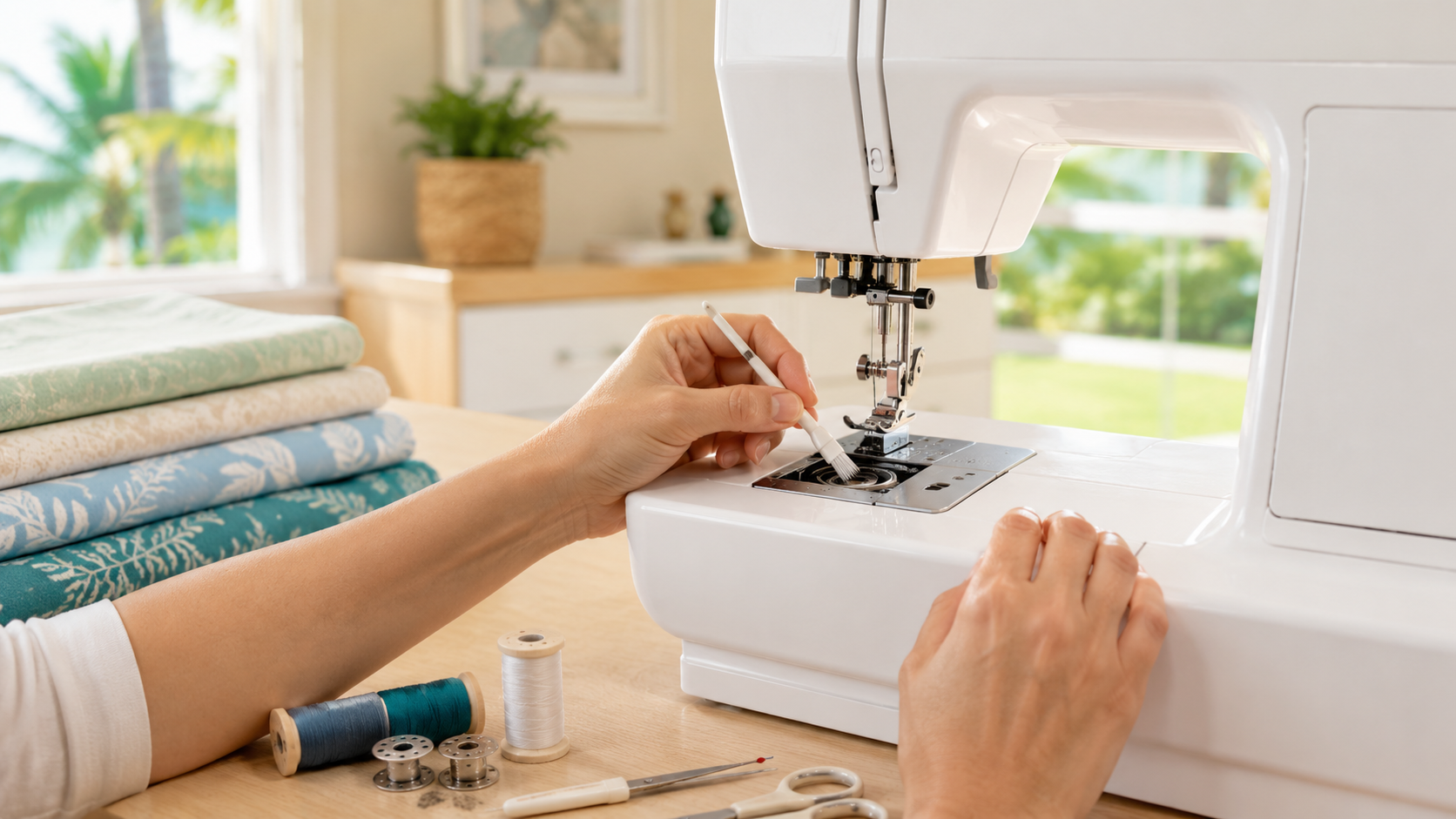
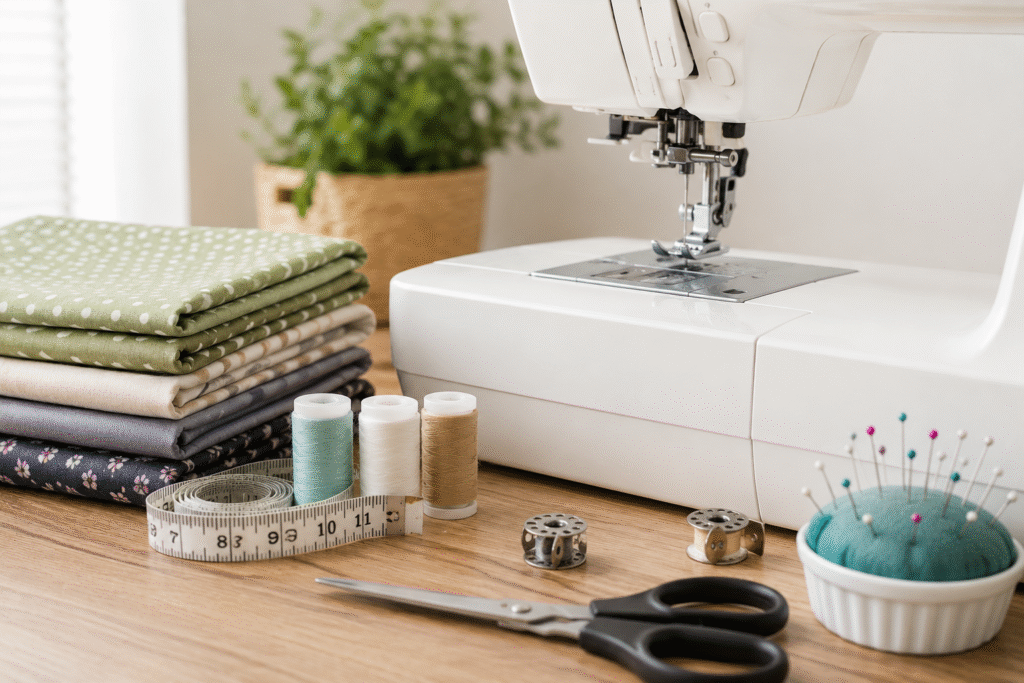
    Close-up of a sewing machine with fabric, thread, scissors, bobbins, measuring tape, and sewing maintenance supplies
    Regular cleaning, fresh needles, and proper maintenance help keep sewing machines running smoothly.

    Signs Your Sewing Machine Needs Professional Service

    While basic maintenance helps, some issues require experienced repair technicians.

    You should consider professional sewing machine service if:

    • The machine jams frequently
    • Timing appears off
    • Stitches remain uneven after troubleshooting
    • Tension problems continue
    • Internal cleaning has not been done in years
    • The machine smells hot during operation
    • The machine has been dropped or transported recently
    • Needle strikes occur repeatedly
    • Sewing quality continues to decline

    At Gator Vacuum and Sewing, professional tune-ups help restore performance for many sewing machine brands and models.

    What a Professional Sewing Machine Tune-Up Usually Includes

    Many people are surprised how detailed a proper tune-up actually is.

    Professional sewing machine service may include:

    • Internal cleaning
    • Removal of lint and thread buildup
    • Lubrication of moving parts
    • Timing adjustments
    • Tension calibration
    • Feed dog inspection
    • Motor testing
    • Belt inspection
    • Bobbin system adjustments
    • Mechanical alignment checks
    • General performance testing

    These services help improve reliability and reduce long-term wear.

    Why Tamarac and Coconut Creek Sewers Benefit From Routine Maintenance

    Many local sewing machine owners use their equipment for:

    • Quilting
    • Embroidery
    • Alteration work
    • Crafting
    • Costume sewing
    • Home décor projects
    • Small business sewing

    Machines that are used heavily or stored improperly can develop problems faster without regular maintenance.

    South Florida’s dust and humidity also make periodic cleaning especially important for long-term sewing machine care.

    Pulling a Sewing Machine Out After Months in Storage?

    One of the most common situations technicians see is a sewing machine that has been sitting unused in a closet for months or even years.

    Machines coming out of storage often experience:

    • Hardened lubricants
    • Dust accumulation
    • Stiff movement
    • Tension problems
    • Dry belts
    • Threading issues

    Before starting a large project, it is smart to inspect the machine carefully or schedule a professional tune-up to avoid frustration later.

    Professional Sewing Machine Service for Tamarac and Coconut Creek

    If your sewing machine is skipping stitches, making unusual noises, breaking thread, or simply overdue for maintenance, a professional tune-up can often restore smoother, quieter performance.

    At Gator Vacuum and Sewing, customers throughout Tamarac, Coconut Creek, and surrounding South Florida areas trust experienced technicians for sewing machine cleaning, tune-ups, timing adjustments, and repairs.

    Routine servicing helps protect your investment, improve sewing quality, and keep your machine operating reliably for years to come.