

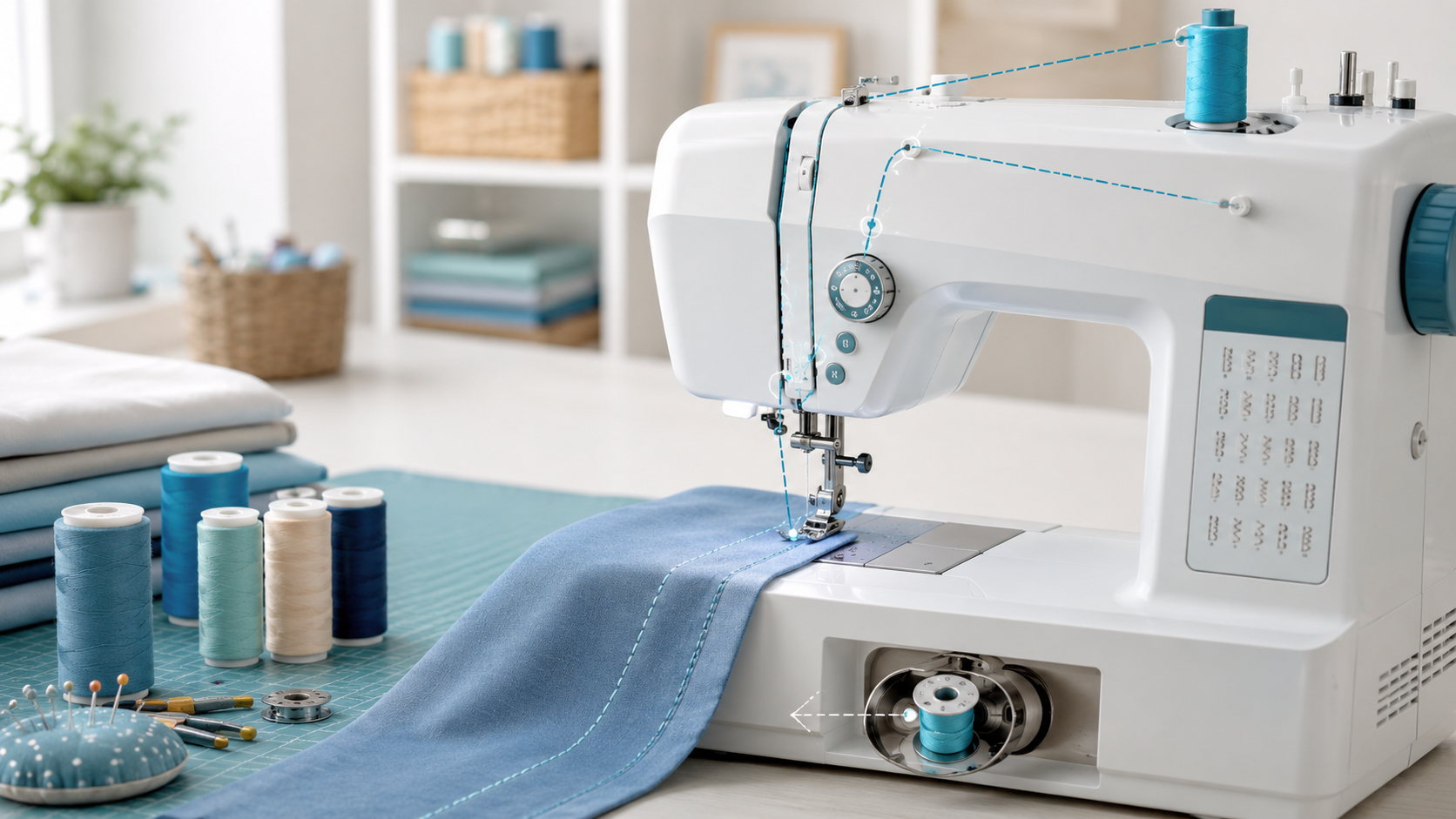
Why Understanding Thread Physics Is the Key to Better Stitches
If you’ve ever stepped away from your sewing machine frustrated by uneven stitches, loops, puckering, or thread bunching, you’re not alone. Tension issues are one of the most common sewing machine problems, and they are also one of the most misunderstood.
For hobbyists and serious sewists in Tamarac and the surrounding South Florida communities, learning how sewing machine tension works can make the difference between constant troubleshooting and smooth, professional-looking results.
This guide breaks down the science behind sewing machine tension, how to identify common problems, and why professional service is often the real solution, not just turning a dial and hoping for the best.
What Is Sewing Machine Tension Really?
At its core, sewing machine tension is a balancing act between two threads:
- The top thread from your spool
- The bobbin thread from below
These threads interlock inside the fabric to create a stitch. Ideally, that intersection point happens in the middle of your fabric layers.
When tension is correct:
- Stitches look even on both sides
- There are no visible loops or pulling
- Fabric lies flat without puckering
When tension is even slightly off, that balance is disrupted.
The Physics Behind Perfect Stitches
Your sewing machine uses tension discs, springs, and thread guides to control how much resistance is applied to the top thread. Meanwhile, the bobbin has its own tension system, usually controlled by a small screw or calibrated spring.
The goal is equilibrium. Think of it like a tug-of-war inside the fabric:
- If the top thread pulls too hard, the bobbin thread gets dragged upward
- If the bobbin pulls too hard, the top thread gets pulled downward
- If both are balanced, the knot stays hidden between the fabric layers
This is why random adjustments rarely fix the issue. You are not just changing one setting. You are affecting an entire stitch-forming system.
Common Signs of Sewing Machine Tension Problems
Loops on the Bottom of Fabric
Loops underneath the fabric usually indicate that the top thread tension is too loose or the machine is not threaded correctly.
Loops on the Top of Fabric
Loops on top of the fabric often mean the bobbin tension is too loose, or the top tension is too tight.
Puckered Fabric
Puckering can happen when excessive tension pulls threads too tightly through the fabric.
Uneven or Skipped Stitches
Skipped stitches may look like a tension problem, but they can also point to needle issues, thread problems, or timing concerns.
Bird-Nesting
Bird-nesting is a severe form of thread bunching, often caused by tension imbalance, threading mistakes, lint buildup, or a combination of problems.
Why “Resetting Tension” Is More Than Turning a Dial
Many people believe fixing tension is as simple as adjusting the numbered dial on the machine. In reality, resetting sewing machine tension may involve:
- Rebalancing the entire thread path
- Cleaning internal components
- Ensuring proper threading under the correct conditions
- Checking bobbin calibration
- Testing stitch formation under load
This is why tension issues often persist even after several adjustments. A true reset requires precision, experience, and proper testing, which is why it is a core part of a professional sewing machine tune-up.
The Hidden Culprit: Lint and Debris
In South Florida’s humid environment, especially in areas like Tamarac, lint buildup can happen faster than many sewists realize.
Every stitch produces microscopic debris that collects in key areas of the machine, including:
- Tension discs
- Bobbin cases
- Feed dog areas
- Thread guides
This buildup creates inconsistent resistance, which directly affects tension. Even when the settings are technically correct, debris can throw everything off.
Thread, Needle, and Fabric: The Tension Triangle
Tension does not exist in isolation. It is influenced by three important variables:
1. Thread Type
Different threads have different thicknesses, textures, and stretch levels. The wrong thread can create resistance problems that look like machine failure.
2. Needle Size and Condition
A worn, bent, or incorrect needle can disrupt thread flow and create false tension symptoms.
3. Fabric Composition
Lightweight cotton behaves very differently from heavy denim, layered quilts, or stretchy fabric. If the thread, needle, and fabric are not matched properly, tension problems are much more likely.
When Tension Problems Are Actually Timing Problems
Sometimes what looks like a tension issue is related to sewing machine timing.
Timing refers to the precise coordination between:
- The needle descending
- The hook catching the thread
- The formation of each stitch
If timing is slightly off, stitches may skip, thread may loop unpredictably, and tension adjustments may not solve the problem. This is why professional sewing machine timing checks are important when tension problems keep coming back.
DIY Troubleshooting: What You Can Try First
Before seeking professional service, there are a few steps you can try at home:
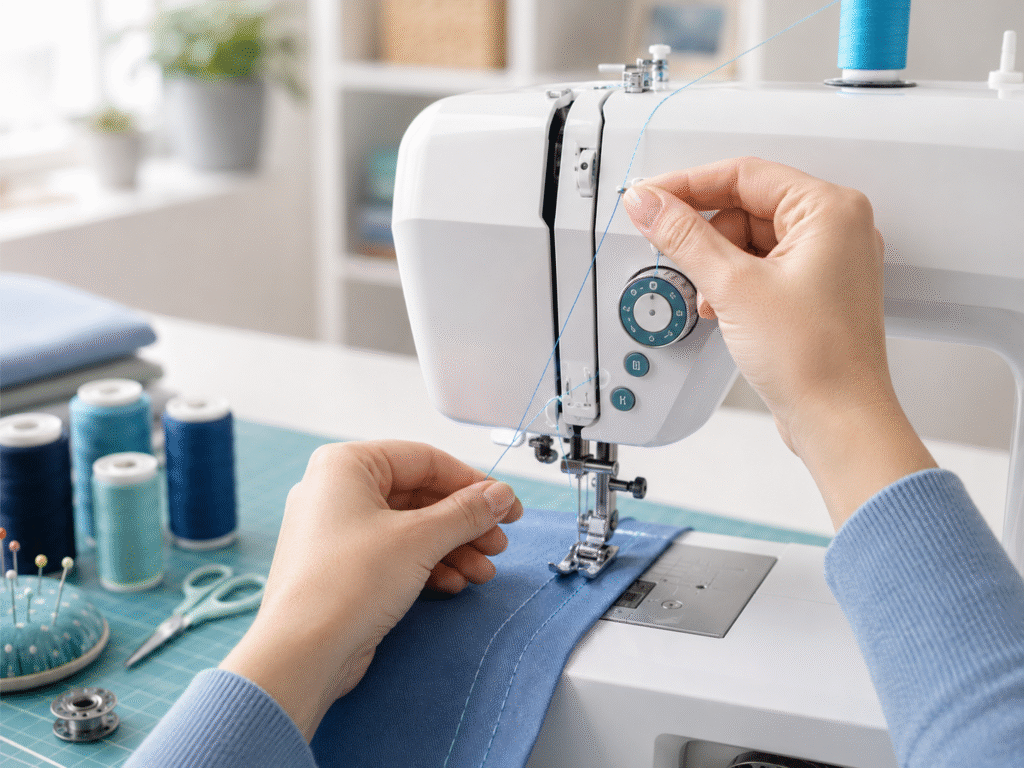
- Rethread your machine: Completely remove and rethread with the presser foot up to help the thread seat properly.
- Change the needle: A fresh needle can resolve many stitch inconsistencies.
- Check the bobbin: Make sure it is wound evenly and inserted correctly.
- Clean accessible areas: Remove visible lint from the bobbin area and feed dogs.
- Test on scrap fabric: Always test adjustments before returning to your project.
If these steps do not resolve the issue, the problem may be deeper than a basic tension adjustment.
Why Professional Sewing Machine Service Makes the Difference
A true professional sewing machine repair goes far beyond surface-level fixes. Experienced technicians can inspect, clean, calibrate, and test the machine as a complete system.
Professional service may include:
- Disassembling and cleaning internal components
- Calibrating top and bobbin tension systems
- Inspecting for wear or damage
- Testing stitch formation under real sewing conditions
- Adjusting timing when necessary
For sewists in Tamarac and nearby communities, working with a local sewing machine service provider helps restore your machine to smoother, more reliable performance.
The Role of Regular Sewing Machine Tune-Ups
Tension issues rarely appear overnight. They usually build gradually as components wear, lint accumulates, and thread paths become less consistent.
Routine sewing machine service helps:
- Maintain consistent stitch quality
- Prevent larger mechanical issues
- Extend the life of the machine
- Reduce frustration during sewing projects
Think of it like maintaining a car. Waiting until something breaks is almost always more expensive than preventive care.
Local Sewing Machine Support in Tamarac
One of the biggest benefits of living in the South Florida sewing community is access to local expertise. Instead of shipping your machine away for weeks, a nearby Tamarac sewing machine service provider can offer faster and more personal support.
Gator Vacuum serves customers throughout the Coral Springs, Tamarac, and South Florida area with sewing machine service, vacuum service, parts, and local support.
For active sewists, this convenience can be especially valuable when working on time-sensitive projects, repairs, alterations, quilting, or regular creative work.
Quick Q&A: Sewing Machine Tension Problems
Why does my sewing machine keep making loops under the fabric?
Loops under the fabric often point to loose top tension, incorrect threading, or thread that is not seated properly in the tension discs. Rethreading the machine with the presser foot up is a good first step.
Can I fix sewing machine tension myself?
Basic tension issues can sometimes be corrected by rethreading, changing the needle, checking the bobbin, and cleaning visible lint. If the problem continues, the machine may need professional cleaning, calibration, or timing adjustment.
How do I know if it is a tension problem or a timing problem?
If tension adjustments do not improve the stitch quality, or if the machine is skipping stitches, breaking thread, or looping unpredictably, timing may be part of the issue.
Final Thoughts: Master the Balance
Sewing machine tension is not just a setting. It is a system. A delicate balance of physics, mechanics, threading, fabric, and maintenance determines the quality of every stitch.
For sewists in Tamarac and throughout South Florida, mastering that balance starts with understanding how tension works and continues with proper maintenance.
Whether you are dealing with minor inconsistencies or ongoing frustration, remember:
- Not all tension issues can be solved at home
- Lint and wear can affect stitch quality
- Timing may be part of the problem
- Professional service is often the fastest path back to smooth stitching
Because sewing, like every good craft, comes down to balance. When your machine is clean, calibrated, and in sync, every project becomes smoother, easier, and more enjoyable.