


Broward: 954-341-4323
Palm Beach: 561-558-0770

MEGA SHOWROOM:
9853 W. Sample Rd,
Coral Springs, FL 33065
HOURS: M-F: 9am-6pm SAT: 10am-4pm

Tag: vacuum losing suction

  • Why South Florida Sand Is Tough on Vacuums in Pompano Beach Homes

    Why South Florida Sand Is Tough on Vacuums in Pompano Beach Homes

    Why South Florida Sand and Fine Dust Are Tough on Vacuums in Pompano Beach Homes

    If you live in Pompano Beach, you already know that sand has a way of getting everywhere.

    It comes home from the beach on shoes, towels, beach bags, clothing, and pets. It gets tracked in from the garage, pool deck, patio, and backyard. Even when you don’t live directly on the beach, South Florida’s outdoor lifestyle means your vacuum may be dealing with far more sand and fine dust than the average household vacuum was designed to handle.

    That constant exposure can take a toll on your vacuum.

    Sand can collect in brush rolls, bags, dirt containers, hoses, and filters. Fine dust can restrict airflow and cause a vacuum to lose performance. When sand is mixed with pet hair, carpet fibers, and everyday household dirt, your vacuum may have to work even harder.

    Understanding how South Florida sand affects your vacuum can help you choose the right equipment and know when routine maintenance is needed.

    Sand Doesn’t Stay at the Beach

    One of the biggest challenges for Pompano Beach homeowners is simply how easily sand travels.

    A trip to the beach doesn’t have to involve walking through the house with sandy feet for sand to end up indoors. Small particles can cling to shoes, clothing, towels, bags, and pets.

    The same thing happens around other outdoor areas of the home.

    Pool decks, patios, garages, driveways, screened porches, and outdoor entertaining areas can all introduce dirt and fine particles into the house.

    Over time, that debris collects in the places where you spend the most time.

    That’s why some Pompano Beach homeowners may find themselves vacuuming more frequently than they expected.

    Why Fine Dust Can Be a Problem

    Large pieces of debris are usually easy for a vacuum to collect. Fine dust is different.

    Very small particles can move through the vacuum’s airflow and accumulate on filters. As the filter becomes loaded with dust, airflow can become restricted.

    When airflow drops, the vacuum may not pick up debris as effectively.

    You might notice:

    • The vacuum doesn’t seem as powerful

    • Sand is left behind after cleaning

    • You need to make multiple passes

    • The vacuum sounds different

    • The filter becomes dirty quickly

    • The machine appears to run hotter

    • Cleaning takes longer than it used to

    A dirty filter isn’t always the only possible cause of reduced suction, but it is one of the first things worth checking.

    Sand Can Fill Your Vacuum Faster Than You Think

    Sand is heavy compared with ordinary household dust.

    If you’re regularly vacuuming sand from tile floors, entryways, rugs, and other areas, the vacuum’s bag or dirt container can fill faster than it would in a home with less outdoor debris.

    This is especially important for homeowners who wait until a bag is completely full before changing it.

    Depending on the vacuum, a full or heavily loaded bag can affect airflow and cleaning performance.

    Bagless machines require their own maintenance routine. Dirt containers need to be emptied, and filters may need to be cleaned or replaced according to the manufacturer’s recommendations.

    The important thing is to monitor the vacuum rather than assuming it can continue operating at peak performance indefinitely.

    Sand and Your Vacuum’s Brush Roll

    The brush roll is another component that can take a beating from frequent sand pickup.

    When a powered brush roll is operating on carpet or rugs, it is constantly making contact withdebris. Sand can work into areas around the brush roll while hair, string, and fibers can wrap around it.

    For homes with pets, this can become an even bigger issue.

    A brush roll may end up dealing with a combination of:

    • Sand

    • Pet hair

    • Human hair

    • Carpet fibers

    • Threads

    • Dust

    • Larger pieces of debris

    Over time, buildup can interfere with the brush roll’s ability to spin properly.

    Checking and cleaning the brush roll regularly is one of the easiest ways to help prevent unnecessary problems.

    Tile Floors Need the Right Vacuum Attachment

    Pompano Beach homes often have tile and other hard flooring because these surfaces are practical for Florida living.

    But cleaning sand from tile isn’t always as simple as it looks.

    Fine sand can settle into grout lines, collect around baseboards, and gather underneath furniture. A vacuum that is excellent on carpet isn’t necessarily the best tool for every hard-floor surface.

    That’s where the right attachment becomes important.

    A dedicated bare-floor tool can help collect fine dust and larger particles while allowing the vacuum to move smoothly across hard flooring.

    If your home has mostly tile with a few area rugs, you may want a vacuum system that can transition easily between those surfaces rather than relying on one attachment for everything.

    What About Area Rugs?

    Area rugs can hide sand surprisingly well.

    Instead of remaining on top of the floor, particles can work down between rug fibers. Walking across the rug can push them even deeper.

    A vacuum with appropriate agitation can help loosen this debris so the vacuum can collect it.

    However, different rugs require different cleaning approaches. A powerful brush roll may be useful for some rugs and inappropriate for others.

    If your home contains tile, delicate area rugs, carpet, or multiple flooring types, choosing the right combination of vacuum and attachments is important.

    Pets Can Bring Even More Sand Indoors

    For many Pompano Beach homeowners, pets are part of the sand problem.

    Dogs in particular can bring sand into the house after walks, trips to the beach, time around the pool, or playing outdoors.

    Once that sand mixes with pet hair, vacuum maintenance becomes even more important.

    Pet hair can wrap around a brush roll while sand and fine dust collect throughout the vacuum. A vacuum designed for pet hair and equipped with appropriate attachments can make frequent cleanup easier.

    If you have pets and live in a home with a lot of hard flooring, a combination of a good bare-floor tool and a pet-focused attachment may be particularly useful.

    Don’t Forget About Your Central Vacuum System

    Central vacuum systems can be an excellent option for larger homes, but they still require maintenance.

    If you’re frequently picking up sand and fine dust, pay attention to the condition of the central vacuum’s bag or dirt container and filters.

    The hose and floor attachments should also be checked if you notice a sudden decrease in pickup.

    A clog doesn’t necessarily mean the main power unit has failed.

    Sometimes the problem is in the hose, wand, floor tool, inlet, or tubing.

    If only one inlet has poor suction, the problem may be localized. If suction is weak throughout the home, the power unit, filter, bag, tubing, or other components may need to be inspected.

    How Pompano Beach Homeowners Can Reduce Vacuum Wear

    You don’t have to eliminate every grain of sand from your home. Instead, a few simple habits can reduce how much work your vacuum has to do.

    Put Mats at Exterior Doors

    Good entry mats can catch some sand and dirt before it reaches the rest of the house.

    Consider mats near doors leading from garages, patios, pool areas, and other outdoor spaces.

    Create a Shoe-Free Area

    Shoes can carry a surprising amount of sand indoors. Keeping shoes near the entrance can help reduce the amount of outdoor debris reaching your floors.

    Shake Out Beach Towels Outside

    Beach towels can hold a lot of sand. Shaking them out outdoors before bringing them into the house can keep a significant amount of debris off your floors.

    Check the Vacuum Regularly

    Don’t wait for the vacuum to stop working before performing basic maintenance.

    Check the:

    • Filter

    • Bag or dirt container

    • Brush roll

    • Belt

    • Hose

    • Floor attachments

    • Wheels

    • Electrical cord

    Small maintenance issues are generally easier to address before they become larger problems.

    What Should You Look for When Buying a Vacuum for Sand?

    If you’re replacing an older vacuum, think about the environment where you’ll be using it.

    For a Pompano Beach home, useful features may include effective filtration, good airflow, appropriate dirt capacity, easy maintenance, and attachments designed for different flooring types.

    You may also want to consider:

    Strong Filtration

    Fine dust requires effective filtration. A vacuum that can maintain good airflow as it collects fine particles can be helpful in homes that see a lot of dust and sand.

    Easy Filter Maintenance

    Filters eventually collect dust. Look for a vacuum where routine filter maintenance is straightforward and replacement filters are readily available.

    Appropriate Floor Tools

    If your home has tile, hardwood, rugs, and carpet, look for a system with tools designed for those different surfaces.

    Good Dirt Capacity

    If you vacuum frequently, a larger bag or dirt container can reduce how often you have to stop and empty the machine.

    Pet Attachments

    If pets are part of the household, consider a vacuum with tools designed to handle pet hair.

    Replacement Parts

    A vacuum is easier to maintain when replacement bags, filters, belts, brushes, and other parts are readily available.

    When Sand Pickup Becomes a Vacuum Problem

    Frequent sand pickup is normal in South Florida, but repeated performance problems shouldn’t be ignored.

    If your vacuum suddenly has weak suction, makes unusual noises, smells like it’s overheating, or repeatedly clogs, it may be time to have it checked.

    The same applies if your vacuum is leaving noticeable amounts of sand behind even after multiple passes.

    A professional vacuum inspection can help determine whether the problem is a clogged hose, dirty filter, worn belt, brush-roll issue, airflow restriction, or another mechanical problem.

    For central vacuum systems, professional service can also help identify problems with the power unit, tubing, inlets, hoses, and attachments.

    Gator Vacuum & Sewing Can Help

    South Florida living is hard on vacuums. Between beach sand, pool areas, patios, pets, shoes, garages, and fine household dust, your vacuum may see considerably more use than you realize.

    The good news is that the right vacuum and the right maintenance routine can make a big difference.

    Gator Vacuum & Sewing helps homeowners with vacuum sales, parts, bags, filters, attachments, maintenance, and repairs. Whether you’re looking for a vacuum that can handle tile and rugs, need better tools for pet hair and sand, or have a central vacuum system that isn’t performing the way it should, getting the right equipment can make every day cleaning much easier.

    If sand seems to be taking over your Pompano Beach home—or your vacuum is struggling to keep up—stop by Gator Vacuum & Sewing for help finding the right cleaning solution for your floors and lifestyle.
    Sand and fine dust can put extra stress on filters, brush rolls, hoses, and other vacuum components. If your machine is losing suction or leaving sand behind even after routine maintenance, our vacuum repair services can help identify the underlying problem.
    A vacuum that runs hotter, clogs frequently, or struggles with fine debris may have an airflow restriction or worn component. Gator Vacuum & Sewing provides professional vacuum repair in Pompano Beach for homeowners dealing with sand, dust, pet hair, and performance issues.
    If cleaning the filter, emptying the bag, and checking the brush roll do not restore performance, professional inspection may be the next step. Visit our vacuum repair service page to learn more about repair options for upright, canister, and central vacuum systems.
  • Vacuum Keeps Clogging? Common Causes & Fixes in Coral Springs

    Vacuum Keeps Clogging? Common Causes & Fixes in Coral Springs

    Why Does My Vacuum Keep Clogging? A Coral Springs Troubleshooting Guide

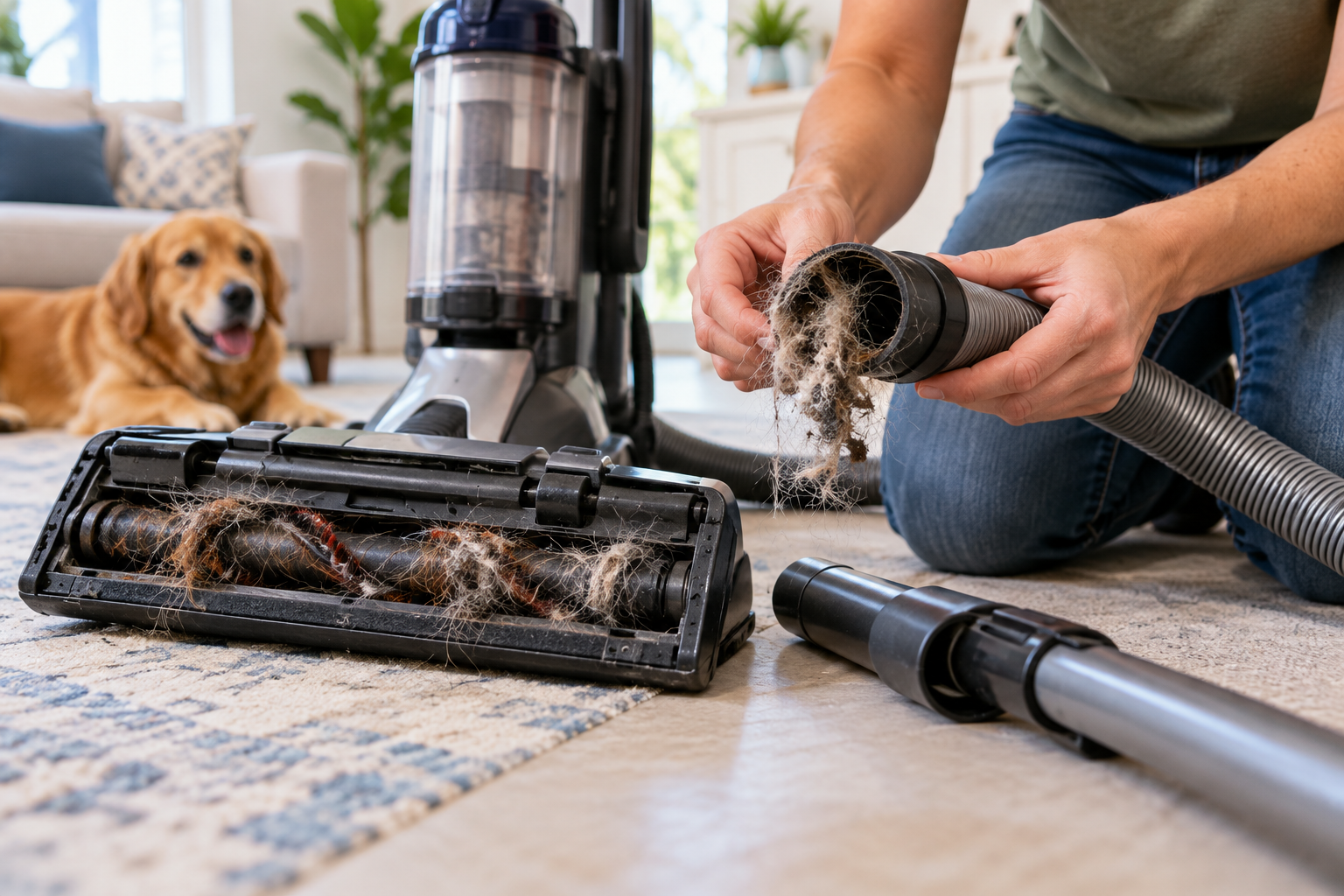
    If your vacuum keeps clogging, clearing the blockage only to have the problem return a few minutes, days, or weeks later, there may be more going on than a piece of debris stuck in the hose. Recurring vacuum clogs can be caused by pet hair, oversized debris, dirty filters, blocked hoses or wands, poorly fitting attachments, and restricted airflow.

    For Coral Springs homeowners, frequent clogging can become especially frustrating when you rely on your vacuum to keep up with pets, children, tile, hardwood, carpeting, and everyday household messes. Understanding what is causing the repeated blockage can help you determine whether the problem is simple maintenance or a sign that your vacuum needs professional repair.

    At Gator Vacuum & Sewing, we help homeowners troubleshoot and repair vacuum cleaners and central vacuum systems. If your vacuum continues to clog after you’ve cleared the obvious blockage, our technicians can inspect the machine and identify the underlying problem.

    Why Does My Vacuum Keep Clogging?

    A vacuum should be able to move dirt and debris through its airflow system without repeatedly becoming blocked. When clogging happens over and over, something may be restricting that airflow or causing debris to collect where it shouldn’t.

    Some of the most common causes include:

    • Excessive pet hair

    • Large or oversized debris

    • Dirty or clogged filters

    • Blocked vacuum hoses

    • Obstructions in the wand

    • Clogged brush rolls or floor heads

    • Attachments that do not fit properly

    • Airflow restrictions

    • Internal blockages

    • Damaged or deteriorated vacuum components

    The first step is finding out where the blockage is occurring.

    1. Pet Hair Can Cause Recurring Vacuum Clogs

    Pet owners often deal with more frequent vacuum blockages. Dog and cat hair can collect inside hoses, wands, brush rolls, and floor attachments, especially when large amounts of hair are picked up at once.

    Long pet hair can wrap around a brush roll rather than traveling smoothly through the vacuum. Hair can also combine with dust, lint, and other debris to create a dense obstruction.

    If you have pets and your vacuum repeatedly clogs, check the brush roll and floor head for wrapped hair. Make sure the hose and wand are also free of accumulated debris.

    Regularly removing hair from the brush roll can help prevent larger blockages from developing.

    2. Oversized Debris May Be Blocking the Air Path

    Vacuum cleaners are designed to pick up dirt, dust, crumbs, hair, and other appropriately sized debris. They aren’t designed to swallow everything that happens to be on the floor.

    Small toys, paper, tissues, socks, plastic pieces, leaves, and other larger objects can become lodged inside a hose or wand.

    This is particularly common when vacuuming quickly or when children or pets have left objects on the floor.

    Before vacuuming, look for larger objects that could be accidentally pulled into the machine. If something has already become lodged inside the hose, continuing to run the vacuum can sometimes compact the obstruction farther into the airway.

    3. A Dirty Filter Can Reduce Airflow

    A vacuum filter that is heavily loaded with dust and debris can restrict airflow. When air cannot move through the vacuum properly, the machine may lose suction and become more prone to clogging.

    Check your vacuum’s filter according to the manufacturer’s maintenance recommendations. Depending on the model, the filter may need to be cleaned, washed, replaced, or serviced periodically.

    It’s important to use the correct filter for your particular vacuum. A filter that is damaged, incorrectly installed, or excessively dirty can affect the way the entire vacuum operates.

    If you’ve cleaned or replaced the filter but the vacuum still has poor airflow and repeatedly clogs, the filter may not be the actual source of the problem.

    4. Check the Vacuum Hose for Obstructions

    A blocked hose is one of the first things to check when a vacuum suddenly loses suction or repeatedly clogs.

    Disconnect the hose and inspect both ends. Look for visible debris and listen for unusual airflow restrictions. Hair, paper, toys, and compacted dirt can become lodged farther inside the hose where they aren’t immediately visible.

    A central vacuum hose can present a similar problem. If the power unit operates but suction at the hose is weak, there may be a blockage somewhere between the hose, wall inlet, tubing, or power unit.

    Do not assume the power unit is defective simply because the system isn’t picking up properly. The obstruction could be somewhere in the airflow path.

    5. Don’t Forget the Wand

    The wand is another common location for a blockage.

    If your vacuum uses a wand between the hose and floor attachment, disconnect the components and inspect the wand separately. A long, narrow wand can trap debris that is difficult to see from the outside.

    If suction is strong at the hose but becomes weak after the wand or floor attachment is connected, that can help narrow down where the restriction is located.

    Testing each section individually is often more useful than repeatedly running the complete vacuum and hoping the blockage clears itself.

    6. Check the Floor Head and Brush Roll

    Sometimes what looks like a hose clog is actually a blockage in the floor head.

    Hair, string, carpet fibers, and debris can accumulate around the brush roll. In some cases, the brush roll can become so packed with material that airflow and cleaning performance are affected.

    Inspect the underside of the floor head and remove accumulated debris. If the brush roll doesn’t rotate properly, makes unusual noises, or appears damaged, the problem may require more than routine cleaning.

    A damaged brush roll, belt, bearing, or other floor-head component can affect how well the vacuum moves debris through the cleaning path.

    7. Poorly Fitting Attachments Can Affect Airflow

    Vacuum attachments should fit securely and create a proper connection. If an attachment, wand, hose, or floor tool doesn’t fit correctly, air can escape from the connection.

    An attachment that is loose, cracked, damaged, or incorrectly matched to the vacuum can interfere with normal airflow.

    This can sometimes create a confusing situation where the vacuum appears to have a clog because cleaning performance is poor, when the actual issue is an airflow leak or improper connection.

    Check each connection point for cracks, looseness, damaged seals, or components that don’t seatproperly.

    8. Reduced Airflow Is an Important Clue

    Repeated clogging and reduced airflow often go hand in hand.

    If your vacuum is making an unusual sound, losing suction, overheating, or becoming clogged in the same location repeatedly, pay attention to the pattern. The location of the blockage can provide useful information about what’s happening inside the machine.

    For example, if the vacuum repeatedly clogs at the floor head, the problem may involve the brush roll or cleaning head. If the hose repeatedly becomes blocked, there could be an issue with the type of debris being picked up or an airflow restriction farther down the system.

    If the machine has poor suction everywhere, the cause may be more extensive.

    What If I Keep Clearing the Same Clog?

    If you clear a blockage and the exact same problem keeps happening, it’s worth looking beyond the debris itself.

    Repeated clogging can indicate:

    • A damaged or restricted hose

    • A blockage farther inside the vacuum

    • A dirty or incorrectly installed filter

    • A problem with the brush roll

    • An airflow restriction

    • A damaged attachment

    • A problem with the vacuum’s internal airflow system

    • A component that isn’t operating correctly

    At that point, repeatedly clearing the clog may only be treating the symptom.

    When Should You Have Your Vacuum Professionally Inspected?

    Not every vacuum clog requires a repair technician. Many simple blockages can be resolved at home with routine cleaning and maintenance.

    However, professional vacuum repair may be appropriate if:

    • Your vacuum repeatedly clogs after being thoroughly cleaned

    • Suction remains weak after clearing the hose

    • The vacuum overheats

    • You notice unusual noises or odors

    • The brush roll isn’t operating correctly

    • The same area repeatedly becomes blocked

    • The vacuum shuts off during use

    • The machine has poor airflow even with a clean filter

    • You suspect an internal obstruction

    • Your central vacuum system has weak suction at multiple inlets

    A technician can inspect the vacuum’s airflow path and components to determine whether the problem is a simple blockage or something requiring repair.

    What About Central Vacuum Systems?

    Recurring clogs can also happen with central vacuum systems.

    Because central vacuums use wall inlets and tubing installed throughout the home, a blockage isn’t necessarily located in the hose. An obstruction can occur at an inlet, inside the tubing, at a connection point, or near the power unit.

    If one central vacuum inlet has poor suction while other inlets work normally, that can provide an important clue that the restriction is localized.

    If every inlet has reduced suction, the problem may be closer to the power unit, filter, collection container, or main airflow system.

    Professional central vacuum repair can help locate restrictions that aren’t easily accessible to the homeowner.

    How to Help Prevent Vacuum Clogs

    A few simple maintenance habits can reduce the chance of recurring blockages.

    Empty the Vacuum Regularly

    Don’t allow the dirt container or bag to become excessively full. Follow your vacuum manufacturer’s recommendations for emptying or replacing it.

    Clean the Brush Roll

    If you have pets, inspect the brush roll regularly for hair, string, and carpet fibers.

    Maintain the Filter

    Clean or replace filters as recommended for your specific vacuum model.

    Avoid Vacuuming Large Objects

    Pick up toys, paper, plastic, clothing, and other oversized objects before vacuuming.

    Inspect Hoses and Wands

    If your vacuum’s suction suddenly changes, check the hose and wand before assuming the motor has failed.

    Use the Correct Attachments

    Make sure accessories are designed for your vacuum and fit securely.

    Don’t Let a Recurring Clog Turn Into a Bigger Vacuum Problem

    A single clog is usually just a maintenance issue. A vacuum that repeatedly clogs, loses airflow, overheats, or stops cleaning properly deserves more attention.

    If you’ve already cleared the hose, cleaned the filter, checked the brush roll, and inspected the attachments but your vacuum still keeps clogging, there may be an underlying airflow or mechanical problem.

    Gator Vacuum & Sewing provides vacuum repair and central vacuum service for homeowners in Coral Springs and surrounding South Florida communities. Our technicians can help diagnose recurring clogs, suction problems, airflow restrictions, and other vacuum issues.

    If your vacuum keeps clogging and you’re tired of clearing the same blockage over and over, bring it to Gator Vacuum & Sewing for professional troubleshooting and repair.

    Frequently Asked Questions About Vacuum Clogs

    Why does my vacuum keep clogging with pet hair?

    Pet hair can accumulate around the brush roll, inside hoses, and throughout the cleaning path. Long hair can also combine with dust and debris to create dense blockages. Regular brush-roll cleaning and filter maintenance can help, but persistent clogging may indicate an airflow restriction or component problem.

    Why does my vacuum lose suction after it gets clogged?

    A blockage restricts the movement of air through the vacuum. Even after removing the visible debris, additional material may remain farther inside the hose, wand, floor head, or internal airflow path.

    Why does my central vacuum keep clogging?

    Central vacuum systems can develop blockages in the hose, wall inlet, tubing, or near the power unit. If only one inlet has weak suction, the restriction may be localized. If suction is weak throughout the home, the problem may involve the main system.

    Can a dirty filter cause a vacuum to clog?

    Yes. A heavily loaded filter can restrict airflow and reduce vacuum performance. Follow the manufacturer’s instructions for cleaning or replacing the filter.

    When should I take my vacuum to a repair shop?

    Consider professional inspection if your vacuum continues to clog after routine maintenance, has persistent low suction, overheats, makes unusual noises, shuts off unexpectedly, or repeatedly develops a blockage in the same location.

    How can I prevent my vacuum from clogging?

    Empty the bag or dirt container regularly, maintain the filter, clean pet hair from the brush roll, remove large objects before vacuuming, and periodically inspect the hose, wand, and floor attachment for debris.

    Where can I get vacuum repair in Coral Springs?

    Gator Vacuum & Sewing provides vacuum repair services in Coral Springs and the surrounding area. If your vacuum has a recurring clog or another problem that basic maintenance isn’t resolving, professional troubleshooting can help identify the cause.

    If your vacuum continues to clog even after you’ve checked the hose, filter, and brush roll, the problem may require a closer inspection. Our vacuum repair services can help identify airflow restrictions, worn components, and other issues that basic cleaning may not resolve.

    A vacuum that repeatedly loses suction, overheats, or develops the same clog may be dealing with more than routine debris buildup. Gator Vacuum & Sewing offers professional vacuum repair in Coral Springs to diagnose the underlying cause and help restore proper performance.

    If you’ve already tried basic troubleshooting and the problem keeps returning, professional service can save you from repeatedly clearing the same blockage. Visit our vacuum repair service page to learn more about repair options for upright, canister, and other vacuum systems.