
Broward: 954-341-4323
Palm Beach: 561-558-0770

MEGA SHOWROOM:
9853 W. Sample Rd,
Coral Springs, FL 33065
HOURS: M-F: 9am-6pm SAT: 10am-4pm

Author: admin

  • Central Vacuum Maintenance Tips for Coconut Creek Homeowners

    Central Vacuum Maintenance Tips for Coconut Creek Homeowners

    Central Vacuum Maintenance Tips for Coconut Creek Homeowners

    A central vacuum system is one of the most convenient cleaning upgrades a homeowner can have. It offers powerful suction, quieter operation, improved indoor air quality, and less hassle compared to dragging a portable vacuum from room to room. But like any home system, regular maintenance is essential to keep it operating efficiently year after year.

    Many Coconut Creek homeowners rarely think about their central vacuum until something goes wrong. By the time weak suction, strange noises, or overheating appear, the system may already be dealing with unnecessary wear and tear. Fortunately, a little preventative maintenance can go a long way toward avoiding expensive repairs and extending the life of your central vacuum system.

    At Gator Vacuum & Sewing Co., we help South Florida homeowners keep their systems running properly with professional central vacuum maintenance, repairs, and replacement parts. Here are some of the most important central vacuum maintenance tips every Coconut Creek homeowner should follow.

    Why Central Vacuum Maintenance Matters

    Unlike portable vacuums that are constantly visible, central vacuum systems are mostly hidden behind walls, inside garages, utility rooms, or closets. Because they operate out of sight, homeowners often forget they still require routine care.

    A neglected system can develop:

    • Weak suction
    • Overheating motors
    • Dust buildup
    • Clogged tubing
    • Reduced airflow
    • Poor cleaning performance
    • Shortened motor lifespan

    Routine maintenance helps prevent these problems while improving the overall efficiency of your home cleaning system.

    Empty the Dirt Canister Regularly

    One of the easiest but most important maintenance tasks is emptying the collection canister before it becomes overly full.

    When debris accumulates too high inside the canister:

    • Airflow becomes restricted
    • Suction power decreases
    • Dust odors may develop
    • Motors work harder than necessary

    For most Coconut Creek homeowners, checking the canister every few months is a good habit. Homes with pets, children, or heavy carpet use may require more frequent emptying.

    A simple schedule can prevent unnecessary strain on the system and help maintain strong suction throughout the home.

    Clean or Replace Central Vacuum Filters

    Filters play a major role in both airflow and indoor air quality. Over time, dust and debris clog the filter material, making the motor work harder to pull air through the system.

    Depending on your central vacuum model, your system may use:

    • Washable filters
    • Disposable filters
    • Self-cleaning filtration systems
    • HEPA-style filtration

    Dirty filters can lead to:

    • Reduced suction
    • Motor overheating
    • Dust escaping into the air
    • Burning smells
    • Increased wear on internal components

    Many homeowners forget about filters entirely because they are hidden inside the power unit. Checking and cleaning them at least once or twice a year can make a noticeable difference in system performance.

    Inspect Vacuum Hoses for Damage

    Your hose handles constant movement, bending, and pulling during everyday use. Even small cracks or leaks can reduce suction dramatically.

    During routine maintenance, inspect the hose for:

    • Splits or tears
    • Loose handle connections
    • Air leaks
    • Crushed sections
    • Electrical connection problems

    If you hear hissing noises or notice weak suction only when using a particular hose, the hose itself may be the problem.

    Replacing a damaged hose early is far less expensive than allowing the system to overwork itself compensating for lost airflow.

    Check Wall Inlets Throughout the Home

    Wall inlet valves are another overlooked component of central vacuum systems. Over time, inlet doors can loosen, seals can wear out, or debris can collect inside the opening.

    A yearly inspection should include:

    • Testing suction at each inlet
    • Checking for loose mounting plates
    • Inspecting inlet doors for proper sealing
    • Cleaning visible debris around the opening

    If one inlet has noticeably weaker suction than the others, it may indicate a blockage or leak within that section of tubing.

    For larger homes in Coconut Creek, catching these issues early can help avoid more complicated repairs later.

    Listen for Changes in Motor Sound

    Your central vacuum motor usually develops a familiar operating sound over time. If the motor suddenly sounds louder, rougher, or inconsistent, it may be warning you about a developing issue.

    Pay attention to:

    • Grinding noises
    • High-pitched whining
    • Rattling sounds
    • Excessive vibration
    • Intermittent operation

    Motor changes often indicate:

    • Worn bearings
    • Internal debris buildup
    • Cooling issues
    • Electrical problems
    • Aging motor components

    Ignoring unusual sounds can eventually lead to total motor failure. Professional inspection can often identify problems before the motor completely burns out.

    Test Suction Throughout the House

    One of the best ways to monitor your system’s health is by testing suction at multiple inlets periodically.

    Walk through the house and check:

    • Suction consistency
    • Airflow strength
    • Hose responsiveness
    • Carpet cleaning performance

    Weak suction in one area may indicate:

    • A clogged line
    • Cracked tubing
    • An inlet leak
    • A blockage behind the wall

    If the entire system feels weaker than normal, the issue may involve the filter, canister, hose, or motor itself.

    Routine testing helps homeowners spot problems before they become major repairs.

    Watch for Clogs Before They Become Serious

    Central vacuum systems can accidentally collect items that should never enter the tubing system, including:

    • Small toys
    • Socks
    • Large paper products
    • Excessive pet hair
    • Construction debris

    Partial clogs often develop gradually, reducing airflow little by little until cleaning performance becomes noticeably weaker.

    Warning signs include:

    • Reduced suction
    • Strange airflow sounds
    • Debris backing up
    • System overheating

    Professional clog removal tools can safely clear blockages without damaging hidden tubing inside your walls.

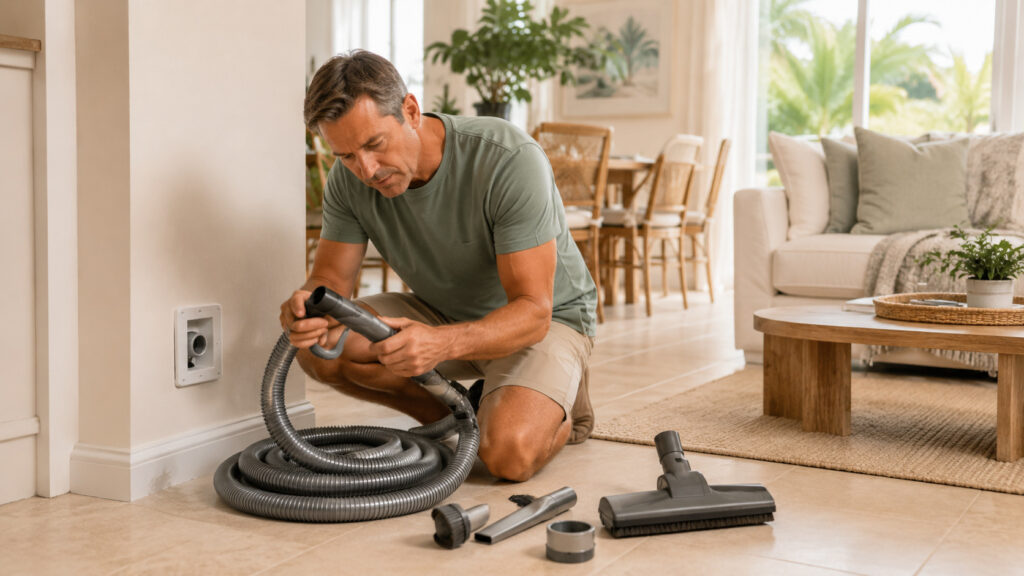
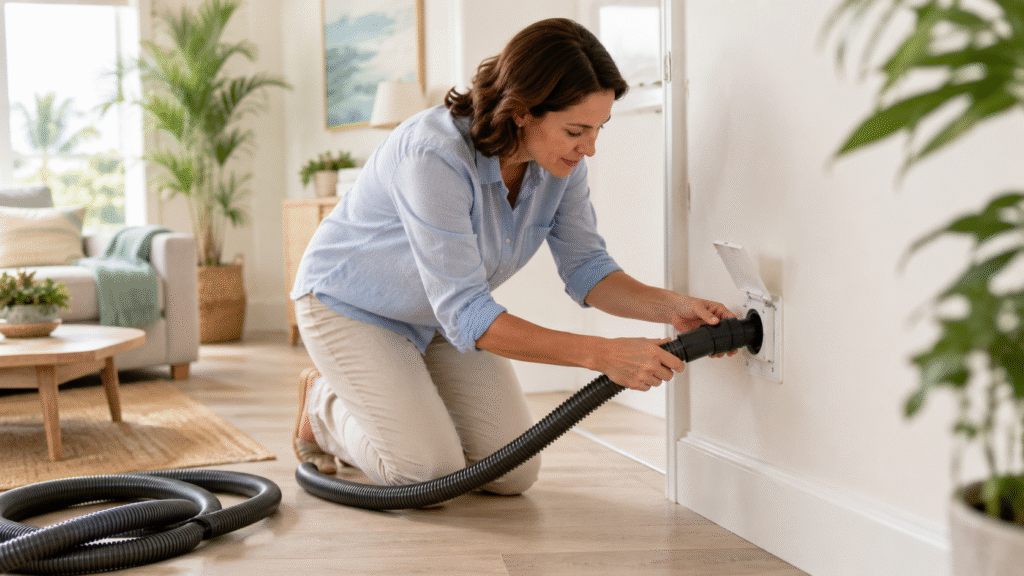
    Homeowner checking a central vacuum hose at a wall inlet inside a Coconut Creek home
    Testing suction at each wall inlet can help homeowners catch central vacuum problems before they become major repairs.

    South Florida Homes Need Extra Attention

    Coconut Creek homeowners often deal with factors that increase central vacuum maintenance needs, including:

    • High humidity
    • Sand and fine dust
    • Pet hair
    • Heavy year-round cleaning demands
    • Tile flooring with grout dust
    • Seasonal allergens

    These conditions can place additional stress on filters and motors, making routine maintenance even more important in South Florida homes.

    Seasonal Central Vacuum Maintenance Checklist

    Here’s a simple yearly checklist homeowners can follow to keep their central vacuum system running efficiently:

    Every 3–6 Months

    • Empty dirt canister
    • Inspect hose for cracks
    • Check suction performance
    • Clean visible debris from wall inlets

    Every 6–12 Months

    • Clean or replace filters
    • Inspect motor sound
    • Test every wall inlet
    • Check powerhead and attachments
    • Inspect for air leaks

    As Needed

    • Remove clogs
    • Replace damaged hoses
    • Repair inlet valves
    • Schedule professional diagnostics

    Following a simple maintenance routine can help avoid costly repairs and improve the lifespan of the entire system.

    Professional Central Vacuum Maintenance Near Coconut Creek

    While homeowners can handle basic maintenance tasks, professional inspections help identify hidden problems before they turn into expensive failures. At Gator Vacuum & Sewing Co., we help Coconut Creek homeowners maintain, troubleshoot, and repair central vacuum systems from many major brands.

    Whether you need service for an existing system or want to learn more about built-in vacuums in Coconut Creek, working with a local specialist can help keep your home cleaning system running the way it should.

    Professional maintenance can include:

    • Full airflow testing
    • Motor inspection
    • Filter replacement
    • Clog detection
    • Hose diagnostics
    • Inlet repair
    • Suction performance testing
    • System troubleshooting

    Regular service helps protect your investment while keeping your home cleaner and your system operating at peak performance.

    Central Vacuum Maintenance FAQs for Coconut Creek Homeowners

    How often should I empty my central vacuum canister?

    Most homeowners should check the canister every few months. Homes with pets, children, heavy carpet use, or frequent cleaning may need to empty it more often.

    What causes weak suction in a central vacuum system?

    Weak suction can be caused by a full canister, clogged filter, damaged hose, blocked tubing, loose inlet valve, or motor issue. Testing suction at multiple inlets can help narrow down where the problem may be coming from.

    When should I call a professional for central vacuum service?

    If your system has unusual motor sounds, overheating, a burning smell, repeated clogs, or suction loss throughout the entire home, it is a good idea to schedule professional diagnostics before the issue gets worse.

    Keep Your Central Vacuum Running Strong

    A central vacuum system is designed to last for many years, but only if it receives proper care along the way. Simple maintenance steps like emptying the canister, cleaning filters, checking hoses, and monitoring suction can prevent many common problems before they start.

    For Coconut Creek homeowners, staying proactive with central vacuum maintenance can improve cleaning performance, extend motor life, and reduce the likelihood of unexpected breakdowns.

    If your system has lost suction, developed unusual noises, or simply hasn’t been inspected in years, Gator Vacuum & Sewing Co. is here to help with professional central vacuum maintenance and repair services.

    Gator Vacuum & Sewing Co. also supports homeowners with related local services, including Coconut Creek sewing machine repair, making it a convenient resource for vacuum and sewing machine service needs in the area.

  • Central Vacuum vs. Upright Vacuum: What Works Best for Broward County Homes?

    Central Vacuum vs. Upright Vacuum: What Works Best for Broward County Homes?

    Central Vacuum vs. Upright Vacuum: What Works Best for Broward County Homes?

    Choosing the right vacuum system for your home is more important than many homeowners realize. In Broward County, homes deal with unique cleaning challenges year-round, including tile floors covered in sand, pet hair trapped in area rugs, humidity-related dust buildup, and allergens like pollen that constantly make their way indoors.

    For many homeowners in areas like Coral Springs, Parkland, Tamarac, Boca Raton, and Fort Lauderdale, the question often comes down to this: should you stick with a traditional upright vacuum, or invest in a central vacuum system?

    The answer depends on your home size, cleaning habits, flooring, allergies, pets, and long-term goals. Both systems have advantages, but understanding the real differences can help you make the best decision for your family and budget.

    For homeowners looking for local vacuum expertise, Gator Vacuum helps South Florida residents compare, repair, service, and upgrade vacuum systems for the way local homes are actually used.

    Why Broward County Homes Have Different Cleaning Needs

    South Florida homes experience cleaning conditions that homeowners in other parts of the country may not deal with as heavily. Sand, humidity, pollen, pet hair, and open floorplans can make vacuum performance more important than simply buying the cheapest option available.

    • Fine sand tracked in from beaches, sidewalks, patios, and garages
    • Tile and luxury vinyl floors that show dust easily
    • Pet hair buildup from year-round shedding
    • High humidity that contributes to dust accumulation
    • Seasonal pollen and allergens
    • Large open floorplans with more square footage to clean
    • Multi-story homes with stairs and hard-to-reach spaces

    Because of these factors, choosing the right vacuum setup can make everyday cleaning easier, healthier, and more efficient.

    What Is a Central Vacuum System?

    A central vacuum system is a built-in cleaning system installed inside the home. Instead of carrying a heavy vacuum around, homeowners plug a lightweight hose into wall inlets connected to tubing hidden inside the walls.

    Dust and debris travel through the tubing into a large power unit, usually installed in the garage, utility room, or laundry area. Central vacuum systems are especially popular in larger Broward County homes because they offer powerful suction, quieter operation, and convenient whole-home cleaning.

    What Is an Upright Vacuum?

    An upright vacuum is the traditional portable vacuum most people are familiar with. The motor, filter, dirt container, brushroll, and handle are built into one movable unit.

    Upright vacuums are widely used because they are affordable, easy to purchase, and simple to store in smaller homes. However, performance varies greatly depending on the brand, model, filtration system, and how often the vacuum is maintained.

    Convenience: Which Vacuum Is Easier to Use?

    Central Vacuum Advantages

    For larger homes, central vacuum systems are often far more convenient. Instead of dragging a heavy machine from room to room, you only carry the hose, wand, and cleaning attachment.

    • Easier cleaning on stairs
    • Simpler movement through multi-story homes
    • Less strain while cleaning around furniture
    • Less physical effort compared to carrying a full upright vacuum
    • Helpful for homeowners with back pain, mobility concerns, or large homes

    Many newer systems also include retractable hose options that store inside the wall, making setup even faster and reducing the need for bulky storage.

    Upright Vacuum Advantages

    Upright vacuums are useful for quick grab-and-go cleaning. Smaller condos or apartments may benefit from a compact upright vacuum, especially if storage space is limited.

    However, carrying the full vacuum around the house can become tiring, especially on stairs, in larger floorplans, or when cleaning multiple rooms in one session.

    Suction Power and Deep Cleaning Performance

    One of the biggest differences between central vacuum systems and upright vacuums is suction power. Central vacuum systems typically have larger motors and more airflow capacity because the power unit is permanently installed away from the living space.

    Central Vacuums Typically Offer Stronger Suction

    Because the motor is larger and permanently installed, central vacuum systems usually provide stronger suction, higher airflow, and better performance for whole-home cleaning.

    • Better deep carpet cleaning
    • More effective pet hair removal
    • Stronger pickup for sand, grit, and fine dust
    • Larger dirt canisters that help maintain performance longer
    • Improved results for area rugs and high-traffic rooms

    This can be especially helpful in Broward County homes with tile floors, large rugs, pets, and frequent outdoor-to-indoor foot traffic.

    Upright Vacuums Can Lose Performance Faster

    Portable upright vacuums can work well, but they often lose performance faster when dust bins fill, filters clog, belts wear down, or brushrolls become tangled with hair.

    • Full dust bins can reduce suction
    • Clogged filters can weaken airflow
    • Brushrolls can tangle with pet hair
    • Smaller motors may struggle with deep carpet or heavy debris
    • Lower-cost models may scatter fine dust instead of capturing it

    Indoor Air Quality and Allergies

    Indoor air quality is a major concern in South Florida homes. Dust, pollen, pet dander, and humidity-related buildup can affect comfort, especially for families with allergies, asthma, or pets.

    Central Vacuums Improve Indoor Air Quality

    One of the biggest advantages of a central vacuum system is that dirt and allergens are moved away from the living space. Instead of recirculating microscopic dust particles back into the room, a central vacuum system sends debris to a remote collection container.

    • Reduced dust circulation
    • Less pet dander in the living space
    • Lower pollen exposure indoors
    • Fewer odors from collected debris
    • Cleaner air while vacuuming

    For families with allergies, asthma, or pets, this can make a noticeable difference in everyday comfort.

    Upright Vacuums Can Recirculate Dust

    Some high-quality upright vacuums include strong filtration, but many portable vacuums can still leak fine particles back into the air, especially when filters are dirty, seals weaken, or bags are not installed properly.

    HEPA upright vacuums can perform well, but budget models may scatter dust while vacuuming, which can be frustrating in homes where allergies or air quality are a concern.

    Pet Hair Cleanup

    Pet owners in Broward County know how quickly fur can accumulate on tile floors, upholstery, area rugs, and carpeted rooms.

    Central Vacuum Systems Excel With Pet Hair

    Central vacuum systems are often better for pet-heavy homes because the stronger suction and larger airflow capacity can remove embedded hair more effectively.

    • Stronger suction helps remove embedded fur
    • Larger motors handle heavier debris loads
    • Better airflow can reduce clogging
    • Specialized powerheads improve carpet grooming
    • Larger collection containers reduce frequent emptying

    Many homeowners can also upgrade an existing central vacuum with newer powerheads, electric hose kits, or improved attachments instead of replacing the entire system.

    Upright Vacuums Vary Widely

    Some upright vacuums perform well with pets, while others constantly clog, overheat, or wrap hair around the brushroll.

    • Tangled brushrolls
    • Frequent dust bin emptying
    • Reduced suction
    • Burnt belts
    • Overheating during heavy use

    Noise Levels

    Central Vacuums Are Much Quieter Indoors

    Since the motor is located away from the living area, central vacuum systems operate much more quietly inside the home. This is especially appreciated in homes with children, pets, remote workers, or multiple people sharing the same space during the day.

    Upright Vacuums Are Louder

    Traditional upright vacuums place the motor directly next to the user, which creates more noise during cleaning. For households with noise-sensitive pets or family members working from home, this can become a real downside.

    Technician inspecting a wall-mounted central vacuum system in a clean residential garage.

    Storage and Appearance

    Central Vacuum Systems Save Space

    Because the motor is hidden away in a garage, utility room, or laundry area, homeowners only need to store the hose, wand, and attachments. This can reduce closet clutter and keep the home looking cleaner.

    In upscale Broward County homes where storage and appearance matter, this is a valuable benefit.

    Upright Vacuums Take Up More Room

    Portable vacuums require storage for the full machine, attachments, replacement filters or bags, and sometimes charging docks for cordless models. This can become inconvenient in smaller closets or laundry rooms.

    Maintenance and Repairs

    Central Vacuum Systems Often Last Longer

    A properly maintained central vacuum system can last 15 to 25 years or longer. Many common issues are repairable, including motors, circuit boards, hoses, inlets, and powerheads.

    Because the system is built into the home, repairs are often more cost-effective than replacing the entire unit. Routine maintenance may include emptying the canister, replacing bags or filters, cleaning attachments, and inspecting hoses.

    For local service, homeowners can learn more about central vacuum repair in Broward County through Gator Vacuum’s service-area information.

    Upright Vacuums Usually Have Shorter Lifespans

    Many consumer upright vacuums last around 5 to 8 years on average, while cheaper models may fail sooner in homes with pets, sand, or heavy use.

    • Broken brushrolls
    • Weak batteries
    • Belt failures
    • Cracked hoses
    • Motor burnout

    In many cases, replacing an upright vacuum becomes more practical than repairing it, especially when the machine is lower-cost or parts are difficult to source.

    Upfront Cost vs. Long-Term Value

    Upright Vacuums Cost Less Initially

    A traditional upright vacuum is usually cheaper upfront. This makes upright vacuums attractive for apartments, temporary living situations, smaller homes, and budget-conscious buyers.

    Central Vacuums Offer Better Long-Term Value

    Although installation costs are higher, central vacuum systems often provide a longer lifespan, better durability, stronger whole-home cleaning performance, and a lower replacement frequency over time.

    For larger Broward County homes, many homeowners find the investment worthwhile, especially when the system improves convenience, indoor air quality, and daily cleaning performance.

    Which Vacuum Is Best for Tile Floors?

    Tile flooring is common throughout South Florida. The right vacuum system should remove sand, dust, pet hair, and debris without scattering particles across the floor.

    Central Vacuums Perform Extremely Well on Tile

    With the right attachments, central vacuums are excellent for tile floors. Strong airflow helps capture debris instead of pushing it around, while hard-floor attachments can clean delicate surfaces without scratching.

    • Removes fine dust effectively
    • Picks up sand without scattering it
    • Helps clean grout lines more efficiently
    • Works well for large tile areas and open floorplans
    • Can be paired with specialized hard-floor tools

    Upright Vacuums Can Scatter Debris

    Some upright vacuums struggle on hard floors because the brushroll may push sand, blow dust outward, or scratch delicate surfaces. Hard-floor-specific models perform better, but quality matters greatly.

    When an Upright Vacuum Makes Sense

    An upright vacuum may still be the best option if you live in a small condo or apartment, move frequently, need a lower upfront cost, or only vacuum occasionally.

    • You live in a small condo or apartment
    • You need a lower upfront cost
    • You move frequently
    • You only vacuum occasionally
    • You want a portable secondary vacuum

    For smaller spaces, a quality upright vacuum can work perfectly well, especially when the home does not have pets, heavy carpet, or large amounts of sand and dust.

    When a Central Vacuum System Makes Sense

    A central vacuum system is often the better investment for larger homes, pet-heavy households, allergy-sensitive families, and homeowners who want stronger suction with less noise.

    • You own a larger home
    • You have pets
    • Family members have allergies
    • You vacuum frequently
    • You want quieter operation
    • You want stronger suction
    • You want long-term durability
    • You already have an existing central vacuum system

    In many cases, repairing or upgrading an older central vacuum is far more affordable than homeowners expect.

    Should You Repair or Replace Your Existing Central Vacuum?

    Many Broward County homeowners assume an older central vacuum system must be replaced entirely when performance drops. Often, the issue is much simpler.

    • A worn hose
    • A clogged line
    • An aging motor
    • Old accessories
    • A failing powerhead
    • A dirty filter or full canister

    Upgrading accessories or repairing the existing unit can dramatically improve cleaning performance at a fraction of the cost of a new installation.

    A professional inspection can help determine whether a repair makes sense, whether an accessory upgrade would help, or whether a full replacement is truly necessary. You can also learn more about the company’s local experience on the Gator Vacuum About Us page.

    Central Vacuum vs. Upright Vacuum: Quick Comparison

    CategoryCentral VacuumUpright Vacuum
    Suction PowerUsually strongerVaries by model
    Indoor Air QualityBetter debris removal from living spaceMay recirculate fine dust
    Pet HairExcellent with the right powerheadCan clog or tangle
    NoiseQuieter indoorsLouder near the user
    StorageStores hose and attachments onlyRequires space for full machine
    Best ForLarger homes, pets, allergies, frequent cleaningSmaller homes, condos, lower upfront budgets

    FAQ: Central Vacuum vs. Upright Vacuum

    Is a central vacuum better than an upright vacuum?

    For many larger homes, yes. Central vacuum systems usually offer stronger suction, quieter operation, better indoor air quality, and easier whole-home cleaning. However, an upright vacuum may still be practical for smaller homes, condos, or occasional use.

    Are central vacuums good for tile floors?

    Yes. Central vacuums work very well on tile floors when paired with the right hard-floor attachments. They can remove sand, dust, and pet hair without scattering debris across the floor.

    Can an old central vacuum be repaired?

    In many cases, yes. Weak suction or poor performance may be caused by a clogged hose, worn motor, aging powerhead, blocked line, or old accessories. A repair or accessory upgrade may restore performance without replacing the entire system.

    Which vacuum is better for pet hair?

    Central vacuum systems are often better for pet hair because they provide stronger suction, larger debris capacity, and better airflow. The right powerhead or attachment can also make a major difference on rugs, carpets, upholstery, and tile floors.

    Final Thoughts

    Both upright vacuums and central vacuum systems can clean effectively, but they serve different needs. For many Broward County homeowners, central vacuum systems offer stronger suction, improved air quality, easier whole-home cleaning, better pet hair removal, longer lifespan, and greater convenience.

    Meanwhile, upright vacuums remain a practical option for smaller homes, lower budgets, and lighter cleaning needs.

    If your current vacuum system struggles with pet hair, sand, dust, or allergies, it may be time to explore repair options, accessory upgrades, or a more powerful cleaning solution designed for the demands of South Florida living.

  • The Tamarac Guide to Troubleshooting Sewing Machine Tension Issues

    The Tamarac Guide to Troubleshooting Sewing Machine Tension Issues

    Why Understanding Thread Physics Is the Key to Better Stitches

    If you’ve ever stepped away from your sewing machine frustrated by uneven stitches, loops, puckering, or thread bunching, you’re not alone. Tension issues are one of the most common sewing machine problems, and they are also one of the most misunderstood.

    For hobbyists and serious sewists in Tamarac and the surrounding South Florida communities, learning how sewing machine tension works can make the difference between constant troubleshooting and smooth, professional-looking results.

    This guide breaks down the science behind sewing machine tension, how to identify common problems, and why professional service is often the real solution, not just turning a dial and hoping for the best.

    What Is Sewing Machine Tension Really?

    At its core, sewing machine tension is a balancing act between two threads:

    • The top thread from your spool
    • The bobbin thread from below

    These threads interlock inside the fabric to create a stitch. Ideally, that intersection point happens in the middle of your fabric layers.

    When tension is correct:

    • Stitches look even on both sides
    • There are no visible loops or pulling
    • Fabric lies flat without puckering

    When tension is even slightly off, that balance is disrupted.

    The Physics Behind Perfect Stitches

    Your sewing machine uses tension discs, springs, and thread guides to control how much resistance is applied to the top thread. Meanwhile, the bobbin has its own tension system, usually controlled by a small screw or calibrated spring.

    The goal is equilibrium. Think of it like a tug-of-war inside the fabric:

    • If the top thread pulls too hard, the bobbin thread gets dragged upward
    • If the bobbin pulls too hard, the top thread gets pulled downward
    • If both are balanced, the knot stays hidden between the fabric layers

    This is why random adjustments rarely fix the issue. You are not just changing one setting. You are affecting an entire stitch-forming system.

    Common Signs of Sewing Machine Tension Problems

    Loops on the Bottom of Fabric

    Loops underneath the fabric usually indicate that the top thread tension is too loose or the machine is not threaded correctly.

    Loops on the Top of Fabric

    Loops on top of the fabric often mean the bobbin tension is too loose, or the top tension is too tight.

    Puckered Fabric

    Puckering can happen when excessive tension pulls threads too tightly through the fabric.

    Uneven or Skipped Stitches

    Skipped stitches may look like a tension problem, but they can also point to needle issues, thread problems, or timing concerns.

    Bird-Nesting

    Bird-nesting is a severe form of thread bunching, often caused by tension imbalance, threading mistakes, lint buildup, or a combination of problems.

    Why “Resetting Tension” Is More Than Turning a Dial

    Many people believe fixing tension is as simple as adjusting the numbered dial on the machine. In reality, resetting sewing machine tension may involve:

    • Rebalancing the entire thread path
    • Cleaning internal components
    • Ensuring proper threading under the correct conditions
    • Checking bobbin calibration
    • Testing stitch formation under load

    This is why tension issues often persist even after several adjustments. A true reset requires precision, experience, and proper testing, which is why it is a core part of a professional sewing machine tune-up.

    The Hidden Culprit: Lint and Debris

    In South Florida’s humid environment, especially in areas like Tamarac, lint buildup can happen faster than many sewists realize.

    Every stitch produces microscopic debris that collects in key areas of the machine, including:

    • Tension discs
    • Bobbin cases
    • Feed dog areas
    • Thread guides

    This buildup creates inconsistent resistance, which directly affects tension. Even when the settings are technically correct, debris can throw everything off.

    Thread, Needle, and Fabric: The Tension Triangle

    Tension does not exist in isolation. It is influenced by three important variables:

    1. Thread Type

    Different threads have different thicknesses, textures, and stretch levels. The wrong thread can create resistance problems that look like machine failure.

    2. Needle Size and Condition

    A worn, bent, or incorrect needle can disrupt thread flow and create false tension symptoms.

    3. Fabric Composition

    Lightweight cotton behaves very differently from heavy denim, layered quilts, or stretchy fabric. If the thread, needle, and fabric are not matched properly, tension problems are much more likely.

    When Tension Problems Are Actually Timing Problems

    Sometimes what looks like a tension issue is related to sewing machine timing.

    Timing refers to the precise coordination between:

    • The needle descending
    • The hook catching the thread
    • The formation of each stitch

    If timing is slightly off, stitches may skip, thread may loop unpredictably, and tension adjustments may not solve the problem. This is why professional sewing machine timing checks are important when tension problems keep coming back.

    DIY Troubleshooting: What You Can Try First

    Before seeking professional service, there are a few steps you can try at home:

    • Rethread your machine: Completely remove and rethread with the presser foot up to help the thread seat properly.
    • Change the needle: A fresh needle can resolve many stitch inconsistencies.
    • Check the bobbin: Make sure it is wound evenly and inserted correctly.
    • Clean accessible areas: Remove visible lint from the bobbin area and feed dogs.
    • Test on scrap fabric: Always test adjustments before returning to your project.

    If these steps do not resolve the issue, the problem may be deeper than a basic tension adjustment.

    Hands threading a sewing machine with blue thread while checking tension near the needle and tension dial
    Carefully threading a sewing machine and checking the thread path can help identify common tension issues.

    Why Professional Sewing Machine Service Makes the Difference

    A true professional sewing machine repair goes far beyond surface-level fixes. Experienced technicians can inspect, clean, calibrate, and test the machine as a complete system.

    Professional service may include:

    • Disassembling and cleaning internal components
    • Calibrating top and bobbin tension systems
    • Inspecting for wear or damage
    • Testing stitch formation under real sewing conditions
    • Adjusting timing when necessary

    For sewists in Tamarac and nearby communities, working with a local sewing machine service provider helps restore your machine to smoother, more reliable performance.

    The Role of Regular Sewing Machine Tune-Ups

    Tension issues rarely appear overnight. They usually build gradually as components wear, lint accumulates, and thread paths become less consistent.

    Routine sewing machine service helps:

    • Maintain consistent stitch quality
    • Prevent larger mechanical issues
    • Extend the life of the machine
    • Reduce frustration during sewing projects

    Think of it like maintaining a car. Waiting until something breaks is almost always more expensive than preventive care.

    Local Sewing Machine Support in Tamarac

    One of the biggest benefits of living in the South Florida sewing community is access to local expertise. Instead of shipping your machine away for weeks, a nearby Tamarac sewing machine service provider can offer faster and more personal support.

    Gator Vacuum serves customers throughout the Coral Springs, Tamarac, and South Florida area with sewing machine service, vacuum service, parts, and local support.

    For active sewists, this convenience can be especially valuable when working on time-sensitive projects, repairs, alterations, quilting, or regular creative work.

    Quick Q&A: Sewing Machine Tension Problems

    Why does my sewing machine keep making loops under the fabric?

    Loops under the fabric often point to loose top tension, incorrect threading, or thread that is not seated properly in the tension discs. Rethreading the machine with the presser foot up is a good first step.

    Can I fix sewing machine tension myself?

    Basic tension issues can sometimes be corrected by rethreading, changing the needle, checking the bobbin, and cleaning visible lint. If the problem continues, the machine may need professional cleaning, calibration, or timing adjustment.

    How do I know if it is a tension problem or a timing problem?

    If tension adjustments do not improve the stitch quality, or if the machine is skipping stitches, breaking thread, or looping unpredictably, timing may be part of the issue.

    Final Thoughts: Master the Balance

    Sewing machine tension is not just a setting. It is a system. A delicate balance of physics, mechanics, threading, fabric, and maintenance determines the quality of every stitch.

    For sewists in Tamarac and throughout South Florida, mastering that balance starts with understanding how tension works and continues with proper maintenance.

    Whether you are dealing with minor inconsistencies or ongoing frustration, remember:

    • Not all tension issues can be solved at home
    • Lint and wear can affect stitch quality
    • Timing may be part of the problem
    • Professional service is often the fastest path back to smooth stitching

    Because sewing, like every good craft, comes down to balance. When your machine is clean, calibrated, and in sync, every project becomes smoother, easier, and more enjoyable.

  • The Hidden Health Risks of Using an Inefficient Central Vacuum Cleaner

    The Hidden Health Risks of Using an Inefficient Central Vacuum Cleaner

    A central vacuum system is often considered a healthier cleaning solution, but when that system is outdated or poorly performing, it can contribute to indoor air quality problems. Central vacuum inefficiency does not just reduce cleaning effectiveness; it can negatively impact your health by redistributing dust, allergens, and mold back into your living space.

    Let’s explore the vacuum health risks associated with inefficient systems and how they affect air quality, allergies, and respiratory health.

    How Central Vacuum Inefficiency Impacts Indoor Air Quality

    An inefficient central vacuum cleaner may lack proper suction, filtration, or airflow control. When this happens, debris is not fully captured, and microscopic particles can be released back into the air.

    If your system is losing suction or no longer cleaning the way it should, Gator Vacuum offers central vacuum parts, repair, and service for homeowners who need help restoring performance.

    Common causes of inefficiency include:

    • Worn or clogged filters
    • Leaking hoses or pipe connections
    • Weak motors or poor airflow
    • Outdated filtration systems

    These issues contribute directly to poor air quality, especially in homes with high foot traffic, pets, or allergy-sensitive family members.

    Dust Mites and Allergens Are Left Behind

    Dust mites thrive in carpets, upholstery, and bedding. When a vacuum lacks sufficient suction or agitation, it fails to remove them effectively.

    An inefficient system may:

    • Leave dust mite waste embedded in carpet fibers
    • Spread allergens instead of capturing them
    • Trigger allergic reactions during and after cleaning

    For individuals with sensitivities, routine vacuuming can become a hidden health hazard rather than a solution.

    Vacuuming Can Spread Mold Spores

    In homes with humidity or moisture issues, mold spores may already be present in carpets, floor cracks, or other hidden areas. A poorly sealed or inefficient central vacuum can pull mold spores into the system and exhaust them back into the home.

    This can increase:

    • Respiratory irritation
    • Allergy flare-ups
    • Long-term indoor air contamination

    Proper filtration and airtight system performance are essential to help prevent mold spores from becoming airborne during cleaning.

    Asthma and Cleaning: A Risky Combination with Inefficient Vacuums

    For people managing asthma, cleaning should improve air quality, not make it worse. Unfortunately, asthma and cleaning often conflict when vacuums lack adequate filtration or suction.

    Inefficient vacuums can:

    • Release fine dust particles back into breathing zones
    • Trigger coughing, wheezing, or chest tightness
    • Cause delayed asthma symptoms hours after cleaning

    This is especially concerning for children, seniors, and anyone with chronic respiratory conditions.

    Poor Air Quality Can Affect the Whole Household

    Central vacuum hose connected to a wall inlet in a clean living room, showing airflow from the vacuum system.

    Even if symptoms are not immediately noticeable, ongoing exposure to airborne particles can affect long-term comfort and health inside the home.

    Potential consequences include:

    Sleep disturbances

    Increased respiratory irritation

    Chronic sinus issues

    Headaches and fatigue

    Over time, these vacuum health risks can quietly reduce the overall quality of life for the entire household.

    Signs Your Central Vacuum May Be Inefficient

    Watch for these warning signs:

    • Dust settles quickly after vacuuming
    • Musty odors appear during or after use
    • Suction feels weaker than normal
    • Airflow is inconsistent from room to room
    • Allergy or asthma symptoms increase after cleaning

    If you notice these issues, your system may be contributing to poor air quality rather than improving it. A professional central vacuum tune-up can help identify suction problems, worn parts, clogs, or maintenance issues before they become bigger headaches.

    How to Reduce Health Risks from Your Central Vacuum

    To protect your home and health, regular maintenance matters. A central vacuum system works best when airflow, suction, hoses, seals, and filtration are all doing their job.

    To reduce health risks:

    • Replace or clean filters regularly
    • Make sure hoses and connections are airtight
    • Use high-quality filtration or HEPA-rated components when available
    • Address weak suction or strange odors quickly
    • Upgrade outdated central vacuum units when needed

    For homeowners maintaining older systems, replacing worn bags and filtration products can make a major difference. Gator Vacuum carries vacuum bags and filters for many makes and models.

    Final Thoughts: A Clean Home Should Support Healthy Living

    Vacuuming should make your home healthier, not put your family at risk. An inefficient central vacuum cleaner can unknowingly spread dust mites, mold spores, and allergens, worsening indoor air quality and triggering respiratory issues.

    By addressing central vacuum inefficiency and maintaining or upgrading your system, you can reduce vacuum health risks and create a cleaner, safer environment for everyone in your home.

  • Central Vacuum Repair Near Margate: Why Weak Suction Shouldn’t Be Ignored

    Central Vacuum Repair Near Margate: Why Weak Suction Shouldn’t Be Ignored

    A central vacuum system is designed to make cleaning easier, quieter, and more powerful than a portable vacuum. But when your system suddenly loses suction, cleaning becomes frustrating fast. Many homeowners in Margate assume weak suction means the entire system is failing, but in many cases, the problem can be repaired quickly and affordably by an experienced technician.

    If your central vacuum is not performing the way it used to, ignoring the warning signs can lead to bigger repairs later. At Gator Vacuum & Sewing Co., we help homeowners throughout Margate and surrounding Broward County communities diagnose and repair central vacuum problems before they become major system failures.

    For local service information, visit our page for central vacuum repair in Margate.

    Why Central Vacuum Systems Lose Suction

    Weak suction is one of the most common complaints with built-in vacuum systems. Unlike portable vacuums, central vacuum systems rely on a network of tubing installed behind your walls. When airflow is interrupted anywhere in the system, cleaning performance drops dramatically.

    Several issues can cause suction loss, and some are more serious than others.

    1. Clogged Central Vacuum Tubing

    One of the most common causes of reduced suction is a clog somewhere in the tubing system. Over time, debris such as pet hair, dust buildup, children’s toys, socks, paper towels, or excessive dirt can create a blockage.

    Homeowners often notice:

    • Poor suction at every inlet
    • Strange whistling sounds
    • Debris backing up into the hose
    • System overheating
    • Reduced airflow in larger rooms

    Professional central vacuum repair technicians use specialized tools to locate and remove clogs without damaging the tubing hidden behind your walls. If you live in Margate and your central vacuum suddenly loses power, a clogged line is one of the first things that should be checked.

    2. Cracked or Damaged Vacuum Hoses

    Your hose is another common failure point. Central vacuum hoses experience years of pulling, twisting, stretching, and accidental damage. Even a small crack can dramatically reduce airflow.

    Signs of a damaged hose include:

    • Weak suction only when using one hose
    • Hissing noises
    • Loss of power while vacuuming
    • Visible splits or tears
    • Electrical issues with powerheads

    Sometimes homeowners replace expensive components unnecessarily when the real issue is simply a leaking hose. A proper inspection can quickly identify whether the hose, wand, or attachment is causing the problem.

    3. Dirty Filters Restrict Airflow

    Many homeowners forget that central vacuum filters require regular maintenance. As filters become packed with dust and debris, airflow becomes restricted and suction drops.

    Dirty filters can also cause:

    • Burning smells
    • Overheating motors
    • Dust escaping into the air
    • Increased strain on the power unit
    • Reduced motor lifespan

    Depending on the brand and model, your system may use washable filters, replaceable filters, or self-cleaning filtration systems. Regular maintenance helps protect both suction power and indoor air quality.

    For homeowners in Margate with pets, heavy carpet use, or allergy concerns, filter maintenance is especially important.

    4. Full Dirt Canisters Reduce Performance

    Technician checking a central vacuum wall inlet and hose connection for weak suction

    Another simple but often overlooked issue is an overfilled dirt canister. When the collection container becomes too full, airflow inside the system is restricted.

    Symptoms of a full canister include:

    Reduced pickup on carpets

    Gradual suction loss

    Dust odors

    System running louder than normal

    Many central vacuum owners wait too long between emptying the canister because the debris is stored remotely in the garage or utility area. Regular inspections help keep the system operating efficiently.

    5. Worn-Out Central Vacuum Motors

    If your central vacuum system is older, the motor itself may be wearing out. Most central vacuum motors last many years, but eventually components wear down from heat, dust exposure, and heavy use.

    Common motor warning signs include:

    • Intermittent power
    • Loud grinding noises
    • Burning smells
    • Reduced suction throughout the house
    • System shutting off unexpectedly

    A failing motor should not be ignored. In many cases, replacing the motor can restore the entire system without needing a complete replacement. At Gator Vacuum & Sewing Co., we help homeowners determine whether a repair or motor replacement makes the most financial sense.

    You can also learn more about our broader central vacuum repair, parts, and service options.

    6. Blocked or Leaking Inlets

    Wall inlet valves can also contribute to suction problems. If an inlet door fails to seal correctly or develops leaks, airflow weakens throughout the system.

    Some homeowners also experience:

    • Inlets that no longer activate the vacuum
    • Loose mounting plates
    • Cracked inlet valves
    • Air leaks inside walls

    Even a small leak can reduce cleaning performance, especially in larger homes with longer tubing runs. Professional central vacuum troubleshooting involves checking every part of the system, not just the main unit.

    Why You Shouldn’t Ignore Weak Suction

    Weak suction is rarely a problem that fixes itself. In fact, continuing to run a struggling system often places additional stress on the motor and other components.

    Ignoring central vacuum problems can lead to:

    • Complete motor failure
    • Higher repair costs
    • Reduced cleaning effectiveness
    • Poor indoor air quality
    • Overheating and electrical damage
    • Shortened system lifespan

    The earlier the issue is diagnosed, the easier and more affordable the repair usually becomes.

    Professional Central Vacuum Troubleshooting Near Margate

    Technician checking a central vacuum wall inlet and hose connection for weak suction

    Central vacuum systems are more complex than portable vacuums because the issue may exist anywhere within the tubing network, hose, inlet system, or power unit.

    Proper troubleshooting requires experience with both airflow diagnostics and central vacuum repair.

    At Gator Vacuum & Sewing Co., we work with many major central vacuum brands and systems. We help homeowners throughout Margate identify the real cause of suction loss instead of guessing or replacing unnecessary parts.

    Our repair services commonly include:

    • Central vacuum suction diagnostics
    • Clog removal
    • Hose replacement
    • Filter replacement
    • Motor repair and replacement
    • Inlet valve repair
    • System airflow testing
    • Electrical troubleshooting
    • Central vacuum maintenance

    Whether your system has slowly lost performance over time or stopped working suddenly, professional diagnosis can often save you from replacing the entire unit.

    Signs It’s Time to Schedule Central Vacuum Repair

    If you notice any of the following problems, it’s a good idea to schedule service before the issue worsens:

    • Weak suction throughout the home
    • Strange odors while vacuuming
    • Loud motor noises
    • Inconsistent power
    • Hissing sounds
    • Poor carpet cleaning performance
    • Overheating
    • Inlets not working properly
    • Debris getting stuck in tubing

    Many central vacuum issues start small but become expensive if left unresolved.

    Quick FAQ: Central Vacuum Repair Near Margate

    Why did my central vacuum suddenly lose suction?

    Sudden suction loss is often caused by a clog, a leaking hose, a dirty filter, a full dirt canister, or a problem with the motor or wall inlets. A technician can test the system to find where airflow is being restricted.

    Can a central vacuum clog be repaired without replacing the system?

    Yes. In many cases, a clogged central vacuum line can be cleared without replacing the system. Professional tools can help locate and remove blockages inside the tubing network.

    Is weak suction a sign that my central vacuum motor is failing?

    It can be, but weak suction does not always mean the motor is bad. Filters, hoses, inlets, canisters, and tubing should also be checked before assuming the motor needs replacement.

    Trusted Central Vacuum Repair Near Margate

    A properly functioning central vacuum system should provide powerful suction, quieter operation, and reliable whole-home cleaning. If your system is struggling, don’t assume replacement is your only option.

    Gator Vacuum & Sewing Co. helps homeowners throughout Margate restore performance with professional central vacuum troubleshooting and repair services. From clogged tubing and leaking hoses to worn motors and blocked inlets, identifying the source of suction loss early can help extend the life of your entire system.

    If your central vacuum has lost suction, now is the time to have it professionally inspected before a small issue turns into a major repair. Contact Gator Vacuum & Sewing Co. to schedule service or ask a question about your central vacuum system.

  • Why West Boca Quilters Trust Local Service Over Big-Box Shipping

    Why West Boca Quilters Trust Local Service Over Big-Box Shipping

    Why West Boca Quilters Trust Local Service Over Big-Box Shipping

    For passionate quilters, a sewing machine isn’t just a tool. It’s the foundation of every stitch, every pattern, and every finished piece. When something goes wrong, or even when routine maintenance is due, the decision of where to service that machine matters more than many realize.

    If you’re looking for West Boca sewing machine repair, local in-house service can offer faster turnaround, clearer communication, and safer care for the machines quilters rely on most.

    In communities like West Boca Raton, especially neighborhoods such as Mission Bay and Loggers’ Run, quilting isn’t just a hobby. It’s a craft built on precision, patience, and pride. Increasingly, local quilters are choosing in-house sewing repair over big-box store service models that rely on shipping machines off-site.

    Why? Because when it comes to protecting their investment and their work, local expertise simply delivers more. That’s one reason many quilters prefer working with a trusted local shop like Gator Vacuum for sewing machine service and support.

    The Hidden Truth About Big-Box Sewing Machine Service

    At first glance, big-box retailers seem convenient. You drop off your machine, fill out a form, and wait for it to be repaired. But what many quilters don’t realize is this:

    Most big-box stores don’t actually repair machines on-site.

    Instead, they act as intake locations. Your machine is:

    • Packed up
    • Shipped to a regional service center
    • Placed in a queue with hundreds or thousands of other machines
    • Eventually repaired and shipped back

    This process can take weeks, or even months. For a casual user, that might be acceptable. But for dedicated quilters in West Boca Raton, it can become a major disruption.

    The Advantage of In-House Sewing Repair

    Local service providers that offer in-house sewing repair operate very differently. That difference is exactly why West Boca quilters trust them.

    1. Faster Turnaround Times

    When your machine stays in the same location for diagnosis and repair, everything moves faster:

    • No shipping delays
    • No warehouse backlogs
    • No unnecessary handling

    Instead of waiting weeks, many local shops can complete a sewing machine tune-up or repair in a fraction of the time. For quilters working on deadlines, gifts, or commissioned pieces, that speed is invaluable.

    Gator Vacuum’s local service approach helps keep your machine close to home instead of sending it through a long shipping pipeline.

    2. Direct Access to Skilled Technicians

    With a West Boca sewing machine shop that performs repairs on-site, you’re not dealing with a faceless service center. You’re working directly with experts.

    That means you can:

    • Explain issues in detail
    • Ask questions and get real answers
    • Receive personalized recommendations

    This level of communication simply isn’t possible when your machine disappears into a shipping pipeline.

    3. Better Care for High-End Machines

    Quilters in neighborhoods like Mission Bay and Loggers’ Run often invest in premium sewing machines designed for precision quilting and embroidery.

    Shipping these machines introduces risks:

    • Physical damage during transit
    • Misalignment from handling
    • Environmental exposure

    Local sewing machine experts help eliminate that risk by keeping your machine in a controlled environment from start to finish.

    4. Accurate Diagnostics the First Time

    When technicians can inspect your machine immediately, and often while speaking with you, they gain better insight into the issue.

    Instead of relying on written notes or generic descriptions, they can:

    • Observe stitch issues firsthand
    • Listen to unusual sounds
    • Test performance in real time

    This leads to faster, more accurate repairs and fewer repeat visits.

    Why Quilters Value Relationships, Not Just Repairs

    Quilting is deeply personal. Many quilters spend hours, sometimes weeks, on a single project. Over time, they develop a strong connection not only to their craft, but to the tools they use.

    That’s why so many in West Boca Raton prefer working with local professionals they know and trust.

    Technician performing in-house sewing machine repair for a West Boca quilter

    A true local sewing machine expert becomes more than just a technician. They become:

    A resource for troubleshooting and upgrades

    A trusted advisor

    A maintenance partner

    That relationship builds confidence, and confidence leads to better work. For quilters who depend on their machines regularly, having a local resource for sewing machine repair can make the entire process feel less stressful and more reliable.

    The Cost Myth: Is Local Service More Expensive?

    There’s a common misconception that local service costs more than big-box options. But when you look at the full picture, the opposite is often true.

    Consider what you’re really paying for with big-box service:

    • Long wait times
    • Potential shipping fees
    • Risk of damage
    • Lack of communication
    • Generic, one-size-fits-all repairs

    With a local West Boca sewing machine shop, you’re investing in:

    • Faster service
    • Personalized care
    • Higher-quality workmanship
    • Preventative maintenance that avoids costly repairs later

    In the long run, local service often saves both time and money.

    Supporting Local Means Strengthening the Community

    Choosing in-house sewing repair isn’t just about convenience. It’s about supporting your local community.

    When you work with a local shop in West Boca Raton:

    • You support skilled tradespeople
    • You help small businesses thrive
    • You keep expertise within your community

    For areas like Mission Bay and Loggers’ Run, that local connection matters. It also helps keep specialized sewing machine knowledge available close to home for the quilters, sewists, and hobbyists who rely on it.

    What to Look for in a Local Sewing Machine Shop

    Not all shops offer true in-house service, so it’s important to ask the right questions.

    Before choosing a provider, confirm:

    • Do they perform repairs on-site?
    • Do they specialize in your machine’s brand?
    • Can they provide a clear turnaround time?
    • Do they offer a full inspection or tune-up?

    A reputable shop will be transparent and happy to explain their process.

    Real Peace of Mind for Serious Quilters

    For quilters, downtime isn’t just inconvenient. It interrupts creativity. Whether you’re in the middle of a quilt top, binding a finished piece, or preparing for a show, you need your machine to work flawlessly.

    That’s why so many in West Boca Raton are moving away from big-box service models and choosing local, in-house care instead.

    They’ve experienced the difference:

    • Faster turnaround
    • Better communication
    • Higher-quality results

    And once you’ve worked with true local sewing machine experts, it’s hard to go back.

    Final Thoughts: Keep Your Machine, and Your Craft, Close to Home

    Your sewing machine is an investment in your creativity. It deserves more than a shipping label and a long wait in a repair queue.

    By choosing a West Boca sewing machine shop that offers in-house sewing repair, you’re ensuring your machine gets the attention, care, and expertise it needs without unnecessary delays or risks.

    For quilters in West Boca Raton, especially in communities like Mission Bay and Loggers’ Run, the choice is clear:

    Local service isn’t just more convenient. It’s simply better.

    To learn more about local service, sewing support, and repair options, visit Gator Vacuum.

  • The 24-Point Tune-Up: What Parkland Sewists Should Expect

    The 24-Point Tune-Up: What Parkland Sewists Should Expect

    The 24-Point Tune-Up: What Parkland Sewists Should Expect

    If you’ve invested in a high-quality sewing machine, you already understand that precision matters. Whether you’re quilting heirloom pieces, tailoring garments, or running embroidery projects daily, your machine is a finely tuned piece of equipment, not just a household appliance. And like any precision tool, it requires regular professional care.

    For sewists in Parkland, where craftsmanship and quality are often top priorities, a professional 24-point sewing machine tune-up isn’t just maintenance. It’s protection for your investment. But what exactly does that mean? And why is it so much more valuable than a DIY cleaning or quick oiling?

    Let’s break it down.

    What Is a 24-Point Sewing Machine Tune-Up?

    A 24-point sewing inspection is a comprehensive, multi-step service designed to restore your machine to peak performance. Unlike basic at-home maintenance, this process goes far beyond wiping lint and adding oil. It involves a full mechanical, electrical, and performance evaluation, along with adjustments that require specialized tools and training.

    Think of it like a luxury car service: you wouldn’t trust a high-end vehicle to a quick oil change alone, and the same logic applies to your sewing machine.

    A professional tune-up ensures:

    • Optimal stitch quality
    • Smooth, quiet operation
    • Extended machine lifespan
    • Prevention of costly repairs

    Why DIY Maintenance Isn’t Enough

    Many sewists are diligent about cleaning their machines, and that’s great. However, even the most careful at-home maintenance has limits.

    Technician cleaning lint from the inside of a sewing machine during maintenance in Parkland

    Here’s what DIY care typically can’t address:

    Electrical inconsistencies

    Internal timing issues

    Gear wear and alignment

    Motor strain or inefficiencies

    Belt tension problems

    Modern machines, especially computerized or embroidery models, are incredibly complex. Opening them without proper knowledge can actually cause damage or void warranties.

    That’s why a professional sewing machine tune-up is not just helpful. It’s essential.

    The 24-Point Checklist: What’s Included

    While the exact checklist can vary slightly by service provider, a true 24-point sewing inspection covers all major systems of your machine. Here’s what Parkland sewists should expect:

    1. External Inspection

    Check for visible damage or wear

    Inspect cords, plugs, and foot pedal condition

    2. Full Disassembly

    Open machine casing to access internal components

    Remove accumulated lint and debris deep inside

    3. Deep Cleaning

    Remove lint buildup from the feed dogs, bobbin area, and tension discs

    Clean old oil and residue that can gum up movement

    4. Lubrication of Moving Parts

    Apply manufacturer-approved oils to critical components

    Ensure smooth motion and reduce friction

    5. Timing Adjustment

    Synchronize needle and hook timing

    Prevent skipped stitches and thread breakage

    6. Tension Calibration

    Adjust upper and lower thread tension

    Ensure balanced, professional-quality stitches

    7. Feed Dog Alignment

    Ensure proper fabric feeding

    Prevent uneven stitching or fabric bunching

    8. Needle Bar Adjustment

    Align needle position for accuracy

    Reduce needle breakage risk

    9. Presser Foot Pressure Check

    Adjust pressure settings for different fabric types

    10. Bobbin System Inspection

    Check bobbin case for wear or damage

    Ensure smooth thread delivery

    11. Hook Assembly Check

    Inspect rotary or oscillating hook function

    Clean and polish if necessary

    12. Gear Inspection

    Examine internal gears for wear or cracking

    Replace damaged components if needed

    13. Belt Inspection

    Check motor and drive belts

    Adjust tension or replace worn belts

    14. Motor Performance Test

    Evaluate motor efficiency and responsiveness

    Identify overheating or power inconsistencies

    15. Electrical System Check

    Inspect wiring and internal connections

    Ensure safe and consistent operation

    16. Speed Control Calibration

    Test foot pedal responsiveness

    Adjust for smooth speed transitions

    17. Stitch Pattern Testing

    Run multiple stitch types

    Verify consistency and accuracy

    18. Buttonhole Function Test

    Ensure proper sizing and formation

    19. Embroidery Unit Check

    Test alignment and stitch precision

    Clean embroidery mechanisms

    20. Software/Firmware Check

    Ensure computerized machine systems are functioning correctly

    Identify potential glitches

    21. Noise and Vibration Assessment

    Detect unusual sounds

    Address underlying mechanical issues

    22. Reassembly and Final Lubrication

    Carefully reassemble all components

    Apply final lubrication

    23. Final Stitch Test

    Sew test samples on multiple fabrics

    Confirm professional-grade results

    24. Performance Report

    Provide feedback on machine condition

    Recommend future maintenance or repairs

    Why Parkland Sewists Benefit Most

    In a community like Parkland, many sewists own premium machines and expect high performance. Whether you’re working with brands like Bernina, Baby Lock, or Janome, these machines are built for precision, but they demand equally precise care.

    • A professional Parkland sewing machine repair specialist understands:
    • The value of high-end machines
    • The importance of maintaining stitch integrity
    • The need for preventative care, not just reactive fixes
    • Regular tune-ups help you avoid:
    • Costly part replacements
    • Project delays
    • Frustrating stitch inconsistencies

    How Often Should You Schedule a Tune-Up?

    The frequency depends on how often you sew:

    Heavy use, including daily or business use: every 6 to 12 months

    Moderate use, including weekly projects: once a year

    Light use, including occasional sewing: every 1 to 2 years

    If you notice any of the following, don’t wait:

    • Skipped stitches
    • Unusual noises
    • Thread bunching
    • Reduced power

    These are signs your machine needs immediate attention.

    The True Value of Professional Service

    Some sewists hesitate at the cost of a professional sewing machine tune-up, but it’s important to look at the bigger picture.

    Sewing machine stitching fabric samples in a bright Parkland sewing room after a professional tune-up

    A tune-up:

    In reality, it’s one of the most cost-effective services you can schedule.

    Extends machine lifespan by years

    Improves stitch quality instantly

    Prevents major repairs that can cost hundreds

    Protects your investment

    What to Look for in a Service Provider

    Not all repair shops are equal. When choosing a technician for your 24-point sewing inspection, look for:

    • Experience with high-end brands
    • Transparent service checklists
    • Clean, professional workspace
    • Strong local reputation
    • Willingness to explain findings

    A true specialist will treat your machine like the precision instrument it is.

    For Parkland sewists who want professional help maintaining their machines, Gator Vacuum & Sewing offers sewing machine repair and yearly tune-ups from experienced technicians at its Coral Springs location. Parkland homeowners can also learn more about Gator’s local Parkland central vacuum repair, sales, and service for whole-home cleaning support.

    Final Thoughts: Precision Deserves Precision

    Your sewing machine is the heart of your creative work. Whether you’re crafting custom garments, quilting masterpieces, or running a home-based business, performance matters, and that performance depends on proper care.

    A 24-point sewing machine tune-up is not just maintenance. It’s a commitment to quality, longevity, and peace of mind.

    For sewists in Parkland, where attention to detail and high standards are the norm, investing in regular professional service ensures your machine continues to perform exactly as it should: beautifully, reliably, and flawlessly.

  • Why Morning Vacuuming Helps Boca Raton Homes Stay Cleaner

    Why Morning Vacuuming Helps Boca Raton Homes Stay Cleaner

    Why Morning Vacuuming Helps Boca Raton Homes Stay Cleaner

    When it comes to maintaining a cleaner, healthier home, timing matters. While many people vacuum whenever they find a free moment, morning vacuuming can be one of the most effective cleaning habits you can adopt.

    For Boca Raton homeowners, where warm weather, pets, pollen, sand, and daily foot traffic can all add to indoor dust and debris, a quick morning vacuuming routine can help keep floors cleaner throughout the day.

    By vacuuming early, before the house becomes busy with foot traffic, pets, and daily activities, you can reduce allergens, improve dust control, and support better indoor air quality. Here’s why adding vacuuming to your morning home cleaning routine can make such a difference.

    Morning Vacuuming Helps Reduce Dust Before It Spreads

    Dust settles overnight on floors, carpets, area rugs, and hard surfaces. Once people start moving around, that dust can get kicked back into the air and spread across furniture, countertops, and other surfaces.

    Vacuuming in the morning:

    • Removes settled dust before it becomes airborne
    • Helps prevent dust from spreading throughout the home
    • Improves overall dust control
    • Keeps floors looking cleaner during the day

    By starting the day with clean floors, you limit how much debris circulates through your living space.

    Fewer Allergens in the Air All Day Long

    Allergens like pollen, pet dander, and dust mites often build up overnight. Morning vacuuming helps remove these irritants before windows open, HVAC systems cycle, or daily activity stirs them up.

    This can be especially helpful for:

    • Allergy sufferers
    • Homes with pets
    • Families with children
    • Boca Raton homes with frequent indoor/outdoor foot traffic

    Removing allergens early helps maintain cleaner air and may reduce allergy irritation throughout the day.

    Better Air Quality When Your Home Is Calm

    Vacuuming when your home is quiet, before everyone wakes up or leaves for the day, allows dust and particles to be captured more efficiently.

    Benefits include:

    • Less airborne debris during cleaning
    • Reduced need for extra surface dusting
    • Cleaner air that lasts longer
    • A fresher start to the day

    This approach is especially helpful when paired with a well-maintained vacuum or central vacuum system.

    Morning Cleaning Creates Better Daily Cleaning Habits

    Starting your day with a quick vacuum helps create a cleaning habit that is easier to maintain.

    Why it works:

    • Less mess has accumulated compared to evening hours
    • You are cleaning proactively instead of reactively
    • Floors stay cleaner longer
    • Regular cleaning can reduce the need for heavier deep cleaning

    Even vacuuming high-traffic areas for 10 to 15 minutes in the morning can make a noticeable difference.

    Helps Control Pet Hair Before It Builds Up

    Pets are often active throughout the day, which means fur, dander, and tracked-in debris can spread quickly. Morning vacuuming removes pet hair before it has a chance to collect on furniture, rugs, and bedding.

    This means:

    • Less pet hair on furniture
    • Cleaner floors by evening
    • Better dust control in homes with shedding pets
    • A fresher home environment

    For pet owners in Boca Raton, this simple morning routine can make daily cleaning feel much more manageable.

    Is Your Vacuum Helping or Holding You Back?

    If your vacuum is losing suction, leaving debris behind, making unusual noises, or not capturing dust properly, your cleaning routine may not be as effective as it should be.

    A poorly performing vacuum can leave allergens, dust, and pet hair behind, even when you vacuum regularly. Central vacuum systems may also need service if there is weak suction, clogged piping, worn hoses, inlet problems, or motor issues.

    That is where regular vacuum maintenance makes a big difference.

    Practical Morning Vacuuming Tips

    To make morning vacuuming efficient and effective, keep these vacuuming tips in mind:

    Homeowner using a central vacuum system in a bright Boca Raton home

    Focus on high-traffic areas like entryways, living rooms, hallways, and bedrooms

    Use attachments designed for your flooring type

    Vacuum slowly to allow better dust and allergen capture

    Empty bags or canisters before they become too full

    Replace filters as needed

    Check hoses, attachments, and powerheads for wear

    Choose a vacuum with strong filtration

    A little extra care helps your vacuum perform better and keeps your home cleaner.

    Need Vacuum or Central Vacuum Service in Boca Raton?

    If your vacuum or central vacuum system is not performing the way it should, Gator Vacuum can help. Gator Vacuum provides Boca Raton customers with central vacuum repair, service, installation, hoses, filters, attachments, parts, and accessories.

    Whether your system has weak suction, clogged pipes, worn tools, inlet issues, or needs routine maintenance, having it checked by an experienced vacuum service team can help restore performance and make your daily cleaning routine easier.

    Final Thoughts: A Simple Change With Big Benefits

    Vacuuming in the morning is a small habit that can deliver big results. By removing dust and allergens before your home becomes active, you can improve air quality, maintain cleaner floors, and support a healthier daily routine.

    If you are looking to enhance your home cleaning routine, try morning vacuuming for a week. You may notice less dust, fresher air, and a cleaner home that lasts all day.

    For Boca Raton homeowners, a better vacuuming routine starts with the right habits and the right equipment.

  • Why Your Central Vacuum’s Filtration Is More Important Than You Think

    Why Your Central Vacuum’s Filtration Is More Important Than You Think

    Why Your Central Vacuum’s Filtration Is More Important Than You Think

    When shopping for a central vacuum system for your South Florida home, most homeowners focus on power, convenience, or accessories. But there’s one critical component that often gets overlooked: vacuum filtration. The truth is, your central vacuum’s filtration system plays a major role in your home’s indoor air quality, your family’s health, and even how effective the system truly is. If you or someone in your household struggles with allergies or asthma, the right filtration—especially HEPA filters—can make a noticeable difference in everyday comfort and long-term wellness.

    How Central Vacuum Filtration Affects Air Quality

    Unlike standard portable vacuums, central vacuum systems are expertly designed to remove dirt and debris from living spaces and transport it to a remote collection unit, often located in the garage. While this design already helps reduce indoor dust circulation, the filtration system determines what happens next. Poor filtration allows fine particles—like dust mites, pollen, pet dander, and microscopic allergens—to escape back into the air. Over time, this can negatively impact indoor air quality, leading to increased allergy symptoms and respiratory irritation. High-quality filtration ensures that these contaminants are captured and contained, leaving your home in Coral Springs, Boca Raton, or West Palm Beach with cleaner air after every vacuuming session.

    Why Filtration Matters for Allergies and Asthma

    For individuals living with allergies or asthma, airborne particles are more than just an inconvenience—they can trigger flare-ups, coughing, sneezing, and breathing difficulties. A central vacuum with advanced filtration helps by:

    Central vacuum filtration helping improve indoor air quality and reduce allergens

    Trapping fine dust and allergens instead of recirculating them

    Reducing exposure to pollen, mold spores, and pet dander

    Improving overall indoor air quality with consistent use

    This level of allergy relief can be especially beneficial in homes with pets, carpeting, or high foot traffic.

    The Benefits of HEPA Filters in Central Vacuums

    One of the most effective filtration options available today is HEPA (High-Efficiency Particulate Air) filtration. HEPA filters are designed to capture 99.97% of particles as small as 0.3 microns, including many of the most common allergens found in homes. Key advantages of HEPA filters include:

    Person vacuuming a living room with upgraded central vacuum filtration

    Superior removal of microscopic dust and allergens

    Cleaner exhaust air, helping maintain healthy air quality

    Reduced allergy and asthma symptoms with regular use

    Peace of mind knowing harmful particles stay trapped

    When paired with a well-sealed central vacuum, HEPA filtration ensures that what you remove from your floors doesn’t end up back in your lungs.

    Choosing the Right Filtration for Your Central Vacuum

    Not all central vacuums offer the same level of filtration. Some rely on basic cloth or foam filters, while others support HEPA-grade systems or hybrid options. When selecting or upgrading your equipment, consider:

    • The type of filtration system used
    • Whether HEPA filters are available or compatible
    • Ease of filter maintenance and replacement
    • Your household’s specific health needs

    Investing in better filtration isn’t just about cleaner floors—it’s about creating a healthier living environment. If you need assistance finding the perfect unit, exploring our central vacuum installation and repair services can ensure your system is properly equipped for maximum air quality.

    Clean Floors Are Great—Clean Air Is Better

    Your central vacuum does more than remove visible dirt. With the right vacuum filtration, it actively improves your home’s air quality and supports better respiratory health. For allergy and asthma sufferers, upgrading to a system with HEPA filters can provide meaningful, everyday allergy relief. When it comes to your central vacuum, filtration isn’t a small detail—it’s one of the most important features you can choose.

    For expert advice, sales, and service across Coral Springs, Broward County, and Palm Beach County, contact the experts at Gator Vacuum & Sewing Co. today to breathe easier tomorrow.

  • Why Installing a Central Vacuum System Is Critical to Maintaining a Home or Business

    Why Installing a Central Vacuum System Is Critical to Maintaining a Home or Business

    Why Installing a Central Vacuum System Is Critical to Maintaining a Home or Business

    Cleanliness, efficiency, and long-term value matter whether you’re managing a home or running a business. One often-overlooked upgrade that delivers benefits across all three is central vacuum installation. More than just a cleaning tool, a central vacuum system is a strategic home improvement and business investment that enhances property value, improves cleanliness, and supports sustainable operations. For homeowners and commercial property owners alike across South Florida, a central vacuum system offers measurable returns.

    Boosting Home Value and Real Estate Appeal

    In residential properties throughout Coral Springs, Boca Raton, Palm Beach, and Broward Counties, a central vacuum system is a premium feature that adds long-term home value. Buyers increasingly view built-in systems as a sign of quality construction and thoughtful upgrades. From a real estate perspective, benefits include:

    Homeowner using a central vacuum system as a premium home upgrade

    Increased buyer appeal in competitive markets

    A permanent upgrade that differentiates your home

    Reduced need for bulky cleaning equipment

    Because central vacuums are built into the home, they’re often seen as an investment rather than a replaceable appliance—contributing positively to overall vacuum system ROI. To learn more about the extensive advantages, discover why you should choose a central vacuum system for your Florida property.

    Improving Efficiency in Homes and Businesses

    Central vacuum systems are designed for efficiency. With consistent suction and strategically placed inlets, cleaning becomes faster and more thorough. Efficiency advantages include:

    • Reduced cleaning time with fewer passes
    • Less downtime for businesses during cleaning
    • Improved productivity for staff or homeowners

    For commercial environments, a business central vacuum helps maintain professional standards without interrupting daily operations.

    A Smarter Cleaning Solution for Businesses

    In commercial settings such as offices, hospitality spaces, and retail locations, cleanliness directly impacts customer perception and employee health. A central vac for business provides powerful, reliable cleaning while keeping noise and disruptions to a minimum. Key benefits for businesses:

    • Durable systems designed for frequent use
    • Improved indoor air quality by removing dust and debris
    • Lower long-term maintenance and replacement costs

    These systems help businesses maintain cleaner environments while maximizing operational efficiency. Upgrading to a built-in unit can dramatically improve indoor air quality and well-being for both employees and patrons.

    Appealing to Eco-Conscious Buyers and Tenants

    Sustainability plays a growing role in purchasing and leasing decisions. Central vacuum systems align with eco-conscious values by offering:

    • Energy-efficient operation
    • Reduced waste compared to disposable vacuums
    • Long-lasting systems that minimize environmental impact

    Whether residential or commercial, a central vacuum system supports greener living and responsible building practices.

    Long-Term Return on Investment

    Homeowner using a central vacuum inlet to improve cleaning efficiency in a business

    While the upfront cost of central vacuum installation may be higher than buying a portable vacuum, the long-term savings are substantial. ROI factors include:

    • Fewer repairs and replacements over time
    • Increased property desirability and resale value
    • Reduced labor costs in commercial cleaning

    When viewed as a permanent infrastructure upgrade, a central vacuum system delivers strong vacuum system ROI for both homes and businesses. Ensure your investment continues to operate flawlessly year after year by relying on trusted local experts for professional central vacuum repair, sales, and service.

    A Strategic Investment in Cleanliness and Value

    Installing a central vacuum system isn’t just about convenience—it’s about protecting your property, improving efficiency, and increasing long-term value. From boosting home value to supporting professional-grade cleaning in commercial spaces, central vacuums are a smart, future-focused investment. For homeowners and business owners alike, central vacuum installation is a decision that pays dividends for years to come.