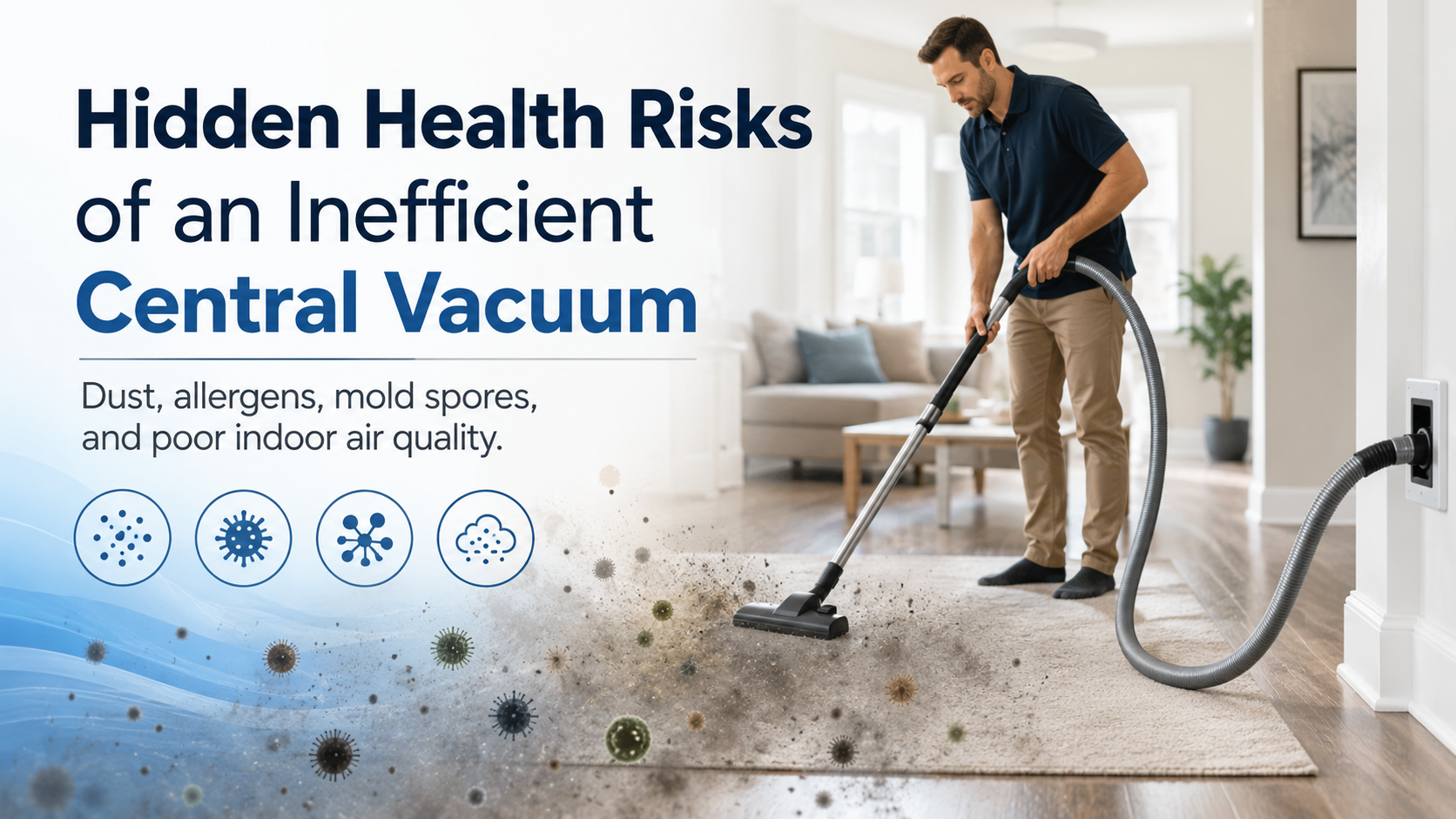
A central vacuum system is often considered a healthier cleaning solution, but when that system is outdated or poorly performing, it can contribute to indoor air quality problems. Central vacuum inefficiency does not just reduce cleaning effectiveness; it can negatively impact your health by redistributing dust, allergens, and mold back into your living space.
Let’s explore the vacuum health risks associated with inefficient systems and how they affect air quality, allergies, and respiratory health.
How Central Vacuum Inefficiency Impacts Indoor Air Quality
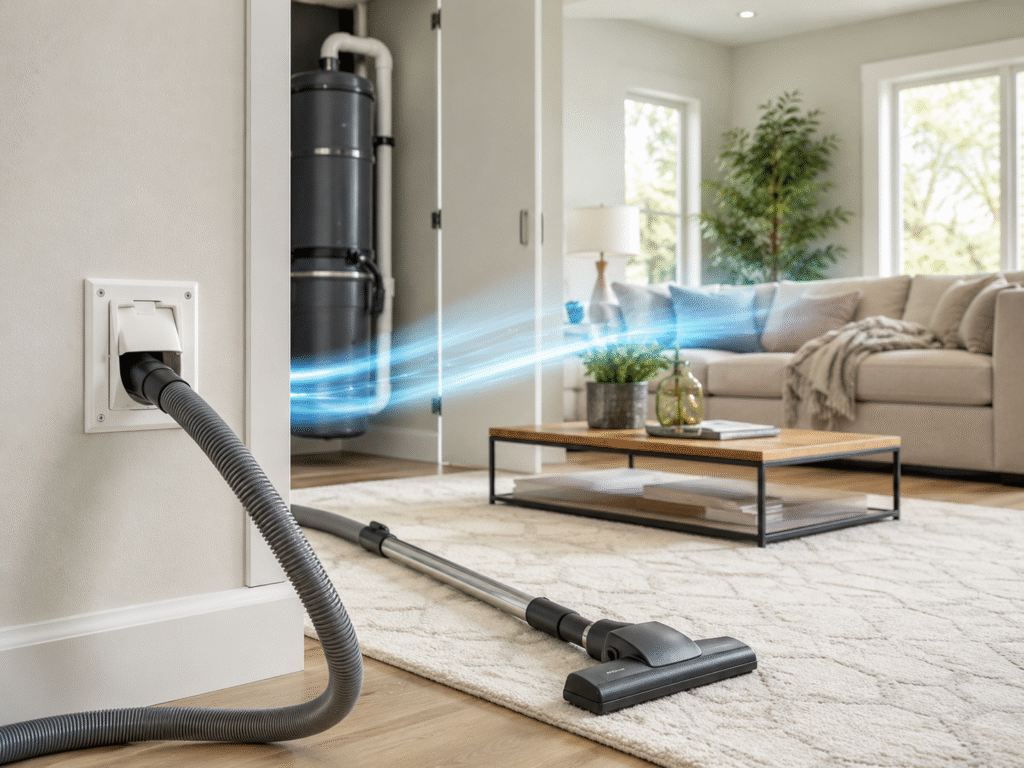
An inefficient central vacuum cleaner may lack proper suction, filtration, or airflow control. When this happens, debris is not fully captured, and microscopic particles can be released back into the air.
If your system is losing suction or no longer cleaning the way it should, Gator Vacuum offers central vacuum parts, repair, and service for homeowners who need help restoring performance.
Common causes of inefficiency include:
- Worn or clogged filters
- Leaking hoses or pipe connections
- Weak motors or poor airflow
- Outdated filtration systems
These issues contribute directly to poor air quality, especially in homes with high foot traffic, pets, or allergy-sensitive family members.
Dust Mites and Allergens Are Left Behind
Dust mites thrive in carpets, upholstery, and bedding. When a vacuum lacks sufficient suction or agitation, it fails to remove them effectively.
An inefficient system may:
- Leave dust mite waste embedded in carpet fibers
- Spread allergens instead of capturing them
- Trigger allergic reactions during and after cleaning
For individuals with sensitivities, routine vacuuming can become a hidden health hazard rather than a solution.
Vacuuming Can Spread Mold Spores
In homes with humidity or moisture issues, mold spores may already be present in carpets, floor cracks, or other hidden areas. A poorly sealed or inefficient central vacuum can pull mold spores into the system and exhaust them back into the home.
This can increase:
- Respiratory irritation
- Allergy flare-ups
- Long-term indoor air contamination
Proper filtration and airtight system performance are essential to help prevent mold spores from becoming airborne during cleaning.
Asthma and Cleaning: A Risky Combination with Inefficient Vacuums
For people managing asthma, cleaning should improve air quality, not make it worse. Unfortunately, asthma and cleaning often conflict when vacuums lack adequate filtration or suction.
Inefficient vacuums can:
- Release fine dust particles back into breathing zones
- Trigger coughing, wheezing, or chest tightness
- Cause delayed asthma symptoms hours after cleaning
This is especially concerning for children, seniors, and anyone with chronic respiratory conditions.
Poor Air Quality Can Affect the Whole Household
Even if symptoms are not immediately noticeable, ongoing exposure to airborne particles can affect long-term comfort and health inside the home.
Potential consequences include:
Sleep disturbances
Increased respiratory irritation
Chronic sinus issues
Headaches and fatigue
Over time, these vacuum health risks can quietly reduce the overall quality of life for the entire household.
Signs Your Central Vacuum May Be Inefficient
Watch for these warning signs:
- Dust settles quickly after vacuuming
- Musty odors appear during or after use
- Suction feels weaker than normal
- Airflow is inconsistent from room to room
- Allergy or asthma symptoms increase after cleaning
If you notice these issues, your system may be contributing to poor air quality rather than improving it. A professional central vacuum tune-up can help identify suction problems, worn parts, clogs, or maintenance issues before they become bigger headaches.
How to Reduce Health Risks from Your Central Vacuum
To protect your home and health, regular maintenance matters. A central vacuum system works best when airflow, suction, hoses, seals, and filtration are all doing their job.
To reduce health risks:
- Replace or clean filters regularly
- Make sure hoses and connections are airtight
- Use high-quality filtration or HEPA-rated components when available
- Address weak suction or strange odors quickly
- Upgrade outdated central vacuum units when needed
For homeowners maintaining older systems, replacing worn bags and filtration products can make a major difference. Gator Vacuum carries vacuum bags and filters for many makes and models.
Final Thoughts: A Clean Home Should Support Healthy Living
Vacuuming should make your home healthier, not put your family at risk. An inefficient central vacuum cleaner can unknowingly spread dust mites, mold spores, and allergens, worsening indoor air quality and triggering respiratory issues.
By addressing central vacuum inefficiency and maintaining or upgrading your system, you can reduce vacuum health risks and create a cleaner, safer environment for everyone in your home.